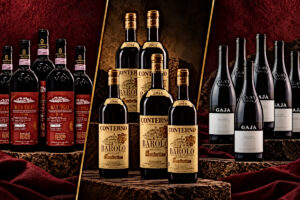







If the wine market as a whole is still moving at a slower pace than in the past, the world leading fine wines continue to look for a recovery which remains modest but is nonetheless meaningful and widespread, particularly when looking at the last 12 months and the Liv-Ex indexes, the benchmark platform for the global secondary wine market and wine collecting, where Italy plays a leading role. WineNews analyzed these indexes, including the Liv-Ex 100 - the platform flagship index, which currently includes for Italy: Barolo 2019 by Bartolo Mascarello, Barolo Falletto Vigna Le Rocche Riserva 2016 by Bruno Giacosa, Barbaresco 2019 by Gaja, Barolo Monfortino Riserva 2015 and 2019 by Giacomo Conterno, Masseto 2021 and 2022 and l’Ornellaia 2021 (Gruppo Frescobaldi), Sassicaia 2016, 2021 and 2022 by Tenuta San Guido, Solaia 2021 and Tignanello 2021 and 2022 by Marchesi Antinori, and 100% Sangiovese Igt Toscana 2020 by Soldera Case Basse - the index posted a gain of +0.4% in the first 7 months of 2026, a result which should be viewed within the context of a much stronger +3.3% increase over the past 12 months.
The Liv-Ex 1000, the broadest index on the platform, is broadly in line in 2026 (+0.3%) but trails over the 12-month period (+1.2%). Particularly noteworthy, both in 2026 and over the last year, are the performances of the Champagne 50 (+1.6% and +2.6%) and, above all, the Italy 100, now composed of Barolo di Bartolo Mascarello of vintages from 2012 to 2021, then Barolo by Bruno Giacosa, with Barolo Falletto Le Rocche del Falletto Riserva 2007 and 2008, Barolo Falletto Le Rocche del Falletto di Serralunga d’Alba Riserva 2001 and 2004, and Barolo Falletto Vigna le Rocche Riserva 2011, 2012, 2014, 2016, 2017 and 2020; and, still, of Barbaresco di Gaja of vintages from 2013 to 2022, from Barolo Monfortino Riserva by Giacomo Conterno of vintages 2002, 2004, 2005, 2006, 2008, 2010, 2013, 2014, 2015 and 2019; of all vitages from 2013 to 2022 of the most famous Super Tuscans, from Sassicaia by Tenuta San Guido to Solaia and Tignanello by Marchesi Antinori, to l’Ornellaia and to Masseto di Frescobaldi; and of all vintages from 2011 to 2020 of 100% Sangiovese Igt Toscana by Soldera Case Basse. The index has risen +1.5% since the start of 2026 (despite a slight decline in July) and +2.9% over the last 12 months. This is significantly better than, for example, the Burgundy 150 (+0.8% and +1.9%) and especially the Liv-Ex Bordeaux 500, which remains negative both in 2026 (-0.3%) and over the past year (-0.4%).
According to Liv-ex analysis, the positive medium-term performance of the Italy 100 is primarily linked to the stability of Tuscany wines. While the “Top 5” best-performing labels in terms of appreciation during 2026 feature a perfect alternation between Piedmont and Tuscany, led by Barolo Monfortino Riserva 2005 by Giacomo Conterno at +25.2%, 100% Sangiovese Toscana Igt 2020 by Soldera Case Basse at +20.5%, Masseto by Frescobaldi (+18.7% for the 2016 vintage and +16.8% for the 2022 vintage), and Barbaresco by Gaja 2022 at +16.5%, the resilience of the Italy 100 “has been supported by the Tuscan components of the index. Piedmont wines, which are generally more expensive and rarer, experienced sharper declines. The strong price stability of these wines has been backed by solid trading activity: Tuscany market share has grown alongside the stabilization of the index representing the region”, explains Liv-Ex.
Liv-Ex further notes that “since the beginning of the year, 157 Tuscan wines have been traded, considering multiple vintages for each label. Nevertheless, just nine wines account for more than 80% of the region total traded value. Concentration has increased compared with last year: among the 282 Tuscan wines traded, 21 represented 80% of the total value. In 2024, 24 wines fell into this category. In the early 2000s, it was not unusual for the leading Super Tuscans to account for 100% of all Tuscan wine trading. The share of the five Super Tuscan components of the Italy 100 - excluding Soldera Case Basse - declined between 2013 and 2021, giving way to a broader range of wines from the region”.
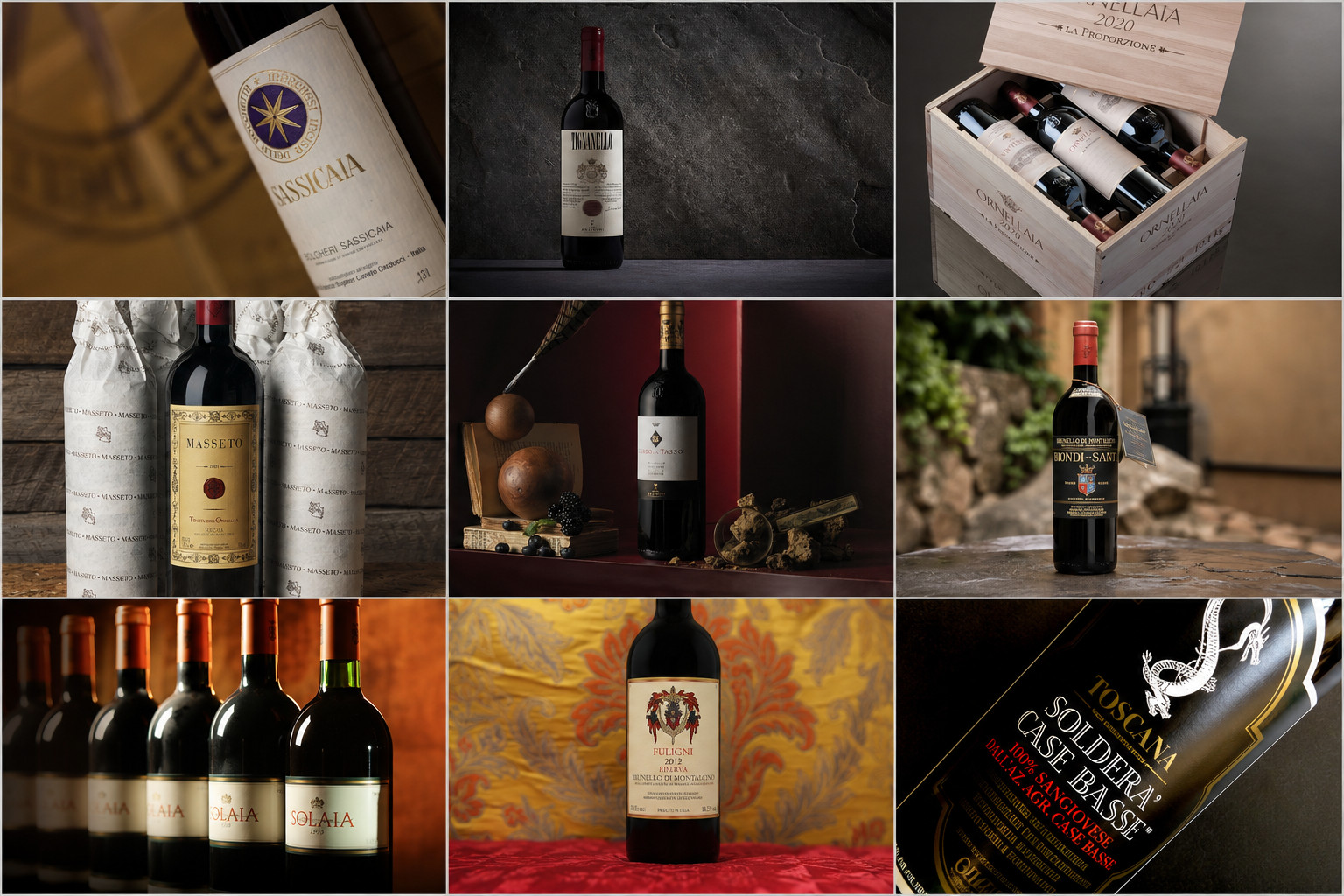
Looking at the most actively traded Tuscan wines by value in 2026, the top 9 wines, which together represent 80% of the region traded value, are Sassicaia, followed by icons such as Tignanello, Ornellaia, Masseto, Guado al Tasso, Biondi-Santi Brunello di Montalcino, Solaia, Fuligni Brunello di Montalcino, and 100% Sangiovese Toscana Igt by Soldera Case Basse.
Copyright © 2000/2026
Contatti: info@winenews.it
Seguici anche su Twitter: @WineNewsIt
Seguici anche su Facebook: @winenewsit
Questo articolo è tratto dall'archivio di WineNews - Tutti i diritti riservati - Copyright © 2000/2026