






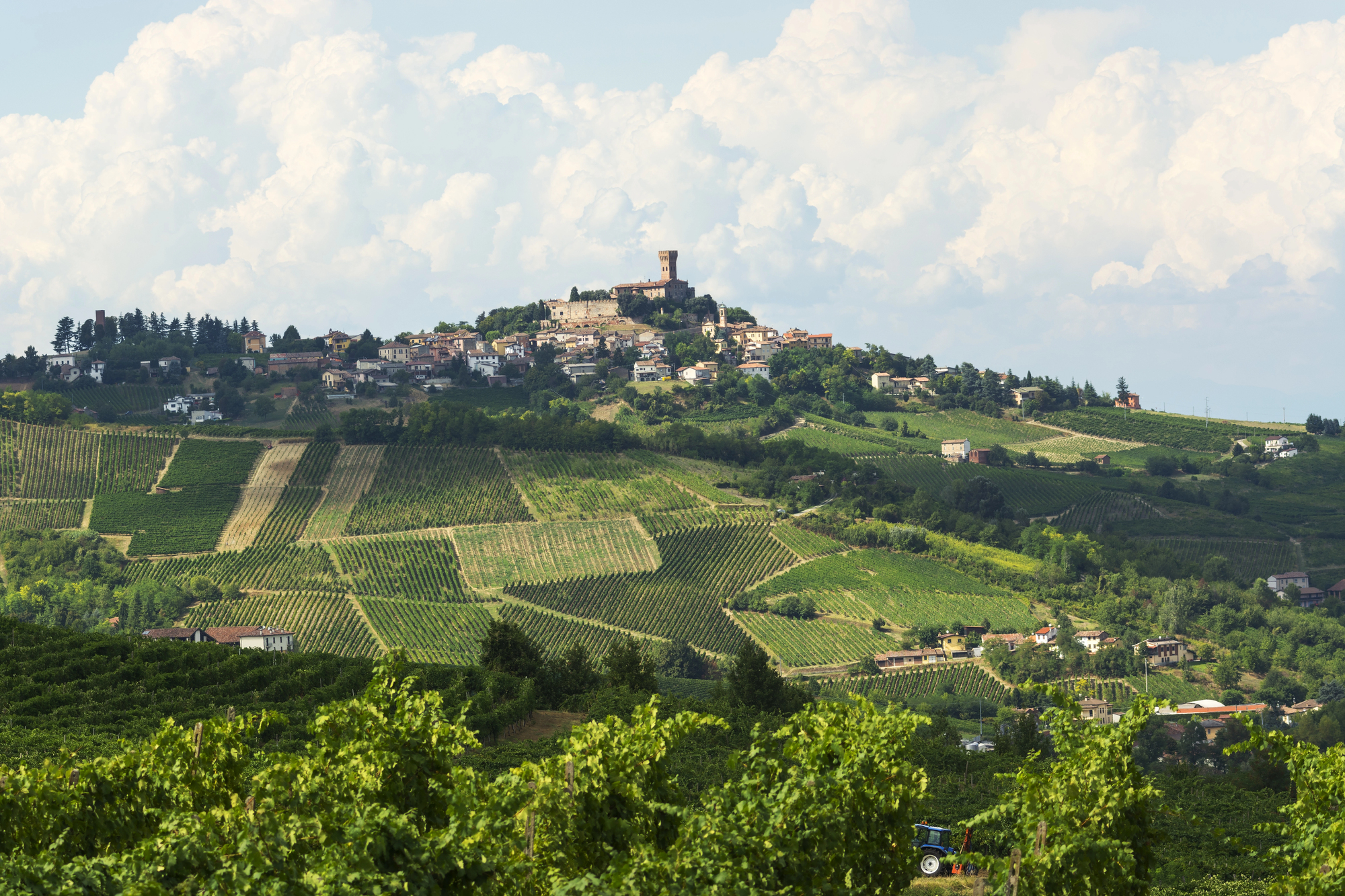
While it is certainly true that for years the Oltrepò region, a district renowned for its Pinot Noir, has been seeking a definitive revival, it is also true, at least judging by the numbers, that some concrete results have already been achieved. For example, wine exports from the province of Pavia (which for the most part coincides with the Oltrepò Pavese region) have grown by nearly 60% over four years, rising from 25.2 million euros in 2021 to 40.2 million euros in 2025. The average annual growth rate was +9.5%, nearly six times the +1.6% recorded by Italian wine during the same period. This is one of the regional data points highlighted in the strategic report “Visione Vino 2026 - Radici profonde, sguardo lontano” by The European House Ambrosetti Group, presented at the “Visione Vino Community” Forum.
According to the analysis contained in the report, 99% of the companies in the beverage sector in the province of Pavia are wine producers, confirming the region’s strong specialization. In particular, the report notes that, with over 11,500 hectares of vineyards, the Oltrepò Pavese region has the largest vineyard area in Lombardy and accounts for 48% of the wine produced in the region. The region is also Italy’s leading producer of Pinot Noir, with approximately 3,000 hectares, accounting for 29% of the national total. In recent years, sparkling wine production has also grown, rising from 10,000 to 19,000 hectoliters by 2025. The new regulations for the Metodo Classico DOCG have also revived the historic name “Classese” on national and international markets, linked to the promotion of Pinot Noir from the Oltrepò Pavese region (which has also chosen to tell its story through its “valleys”, as we showed in this video).
“Data indicate that the Oltrepò Pavese region has a production base and export momentum capable of supporting a significant leap in its market positioning”, emphasizes Benedetta Brioschi, Partner and Head of Food & Retail at Teha Group, “but the key is to create a cohesive system: to better connect businesses, the local area, tourism, and the stories behind the appellations, transforming the Oltrepò’s reputation into knowledge and value for its wines. Growth in foreign markets and the appeal of wine tourism can go hand in hand, strengthening the entire Lombardy wine industry”.
Furthermore, the region’s fame has not yet fully translated into awareness of its local products. A survey by “Community Visione Vino”, conducted on a representative sample of Italian consumers, reveals a 25-percentage-point gap: 83% say they are familiar with the Oltrepò Pavese region, while 58% are familiar with its wines. At the same time, 72% of respondents say they are interested in visiting the region on a food, wine, and cultural tour: 23% plan to do so within the next 12 months, and 49% in the near future. An additional 18% would like to explore this possibility further.
According to The European House Ambrosetti, wine tourism can, therefore, serve as a bridge between the region’s reputation and awareness of the product, fostering a more direct relationship between wineries, consumers, and production sites. Looking at the Oltrepò Pavese region, we are talking about a significant production system: the Consorzio Classese Oltrepò Pavese, led by President Francesca Seralvo (Tenuta Mazzolino) and General Manager Riccardo Binda, now brings together 150 direct member wineries and hundreds of indirect members who supply the cooperatives. The production in question comes from 11,539 hectares and amounts to approximately 25 million bottles per year. All of this is part of Lombardy, which has a total of 22,463 hectares of vineyards. And the connection to wine is also evident in household spending: in the Lecco, Pavia, and Milan areas, the Report records average figures of 248, 239, and 236 euros per household, respectively, all significantly higher than the Italian average of 148 euros. This data reinforces Lombardy’s role not only as a wine-producing region but also as a market with a strong wine culture.
Copyright © 2000/2026
Contatti: info@winenews.it
Seguici anche su Twitter: @WineNewsIt
Seguici anche su Facebook: @winenewsit
Questo articolo è tratto dall'archivio di WineNews - Tutti i diritti riservati - Copyright © 2000/2026