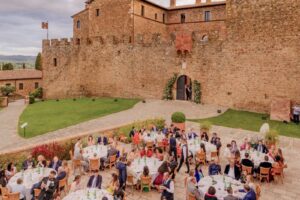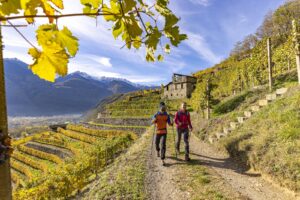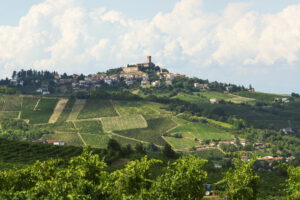








For those planning a short getaway between fall and winter 2026, amid long weekends, the Feast of the Immaculate Conception, and other holidays, without falling victim to overtourism or having to weave through crowds just to enjoy any activity, an authentic wine and culinary experience is by far the best choice. This is according to the intriguing “2026 Index of Italy Without Crowds”, a report by the Italian platform Dolcecharm, which is based on data from ISTAT and the Ministry of Culture. It explains that food and wine tourism is the type that keeps travelers furthest from the crowds, since 66% of these authentic experiences (the highest percentage) related to food and wine are located more than 20 km from Italy’s 100 most-visited municipalities, while 43% are situated in small villages (with fewer than 5,000 inhabitants), 39% in inland areas, and 8% in municipalities at an altitude above 600 meters. Next comes nature tourism, with 65% of authentic experiences located more than 20 km from one of Italy’s 100 most-visited municipalities, followed by wellness (56%), boating and beach activities (48%), and city tours (25%). Overall, authentic experiences are spread across 595 municipalities in all 20 regions.
Dolcecharm’s work in compiling its Index is based on a fundamental assumption: in 2024, the 453 state-owned museums, monuments, and archaeological sites attracted 60.9 million visitors, with the top five (the Colosseum, the Uffizi, Pompeii, the Pantheon, and the Galleria dell’Accademia) accounting for 50.2% of all tourists (the Colosseum alone accounting for 24.2%). And counting all 4,677 open museums, in 2025, Lazio, Tuscany, and Campania accounted for 50.1% of the 140.8 million admissions. The same pattern holds true for vacations: in 2025, the 100 most-visited municipalities, out of nearly 8,000, accounted for 51% of arrivals at hotels and other tourist accommodations. This is the most visible form of overtourism: large numbers of visitors concentrated in the same places at the same times, while the rest of the country remains largely unvisited. The Index’s goal, in fact, is not to determine how many tourists there are in Italy, but to identify where one can have an authentic experience away from the crowds.
In fact, for 10 of the most popular destinations, the study’s authors proposed a nearby alternative with much lower tourist traffic, again according to ISTAT data. So, instead of going to Varenna on Lake Como, you can visit Lecco, 19 km away, home to the monumental Laorca cemetery, terraced into the rock, and the Ferro del Gerenzone Valley. Instead of San Vito Lo Capo, there’s Trapani (25 km) with its Palazzo della Giudecca and the salt flats featuring the Mulino di Nubia; instead of Barolo, there’s Alba (12 km) with the wooden choir of the Cathedral of San Lorenzo and the underground ruins of Roman sites beneath the city. Not Venice but Treviso (26 km) to visit the Buranelli Canal and the Chapter House of San Nicolò, and so on.
In general, most of Italy’s 100 most-visited municipalities are located in Trentino-Alto Adige, Veneto, and Tuscany, including the Dolomites, Lake Garda, Venice, the beaches of Veneto, the cities of art, and the Tuscan coast. And, in fact, it is in these regions that experiences away from the crowds are fewer and farther between and where, therefore, choosing where and how to go matters most. Meanwhile, in Abruzzo, Basilicata, Molise, and Valle d’Aosta, all experiences are away from the crowds.
Copyright © 2000/2026
Contatti: info@winenews.it
Seguici anche su Twitter: @WineNewsIt
Seguici anche su Facebook: @winenewsit
Questo articolo è tratto dall'archivio di WineNews - Tutti i diritti riservati - Copyright © 2000/2026