






“I remember a great Ais National Congress in 1973, in Orvieto, because I was then president of the Orvieto Wine Consortium. I remember it very well because Luigi Veronelli, the great Gino Veronelli, was also invited. One evening, at dinner at Castello della Sala, I wanted him to taste a wine which had just been bottled. He was impressed and asked me, “what is this?” I replied that it was difficult to explain because it came from a vineyard in Chianti Classico, but it could not be called Chianti Classico because it had not been made according to the denomination production regulations. In fact, I said, I am also a little embarrassed because I do not know what to call it or how to classify this wine. And he told me to give it the name of the vineyard. I would, too, I replied, but it is such an ugly and difficult name to pronounce that it would be hard to do: it is called Tignanello. Look, don’t worry, said Veronelli, if wine is good, even the name will become more beautiful. It is an episode linked to Ais, but if that congress had not happened, perhaps Tignanello would never have existed”.
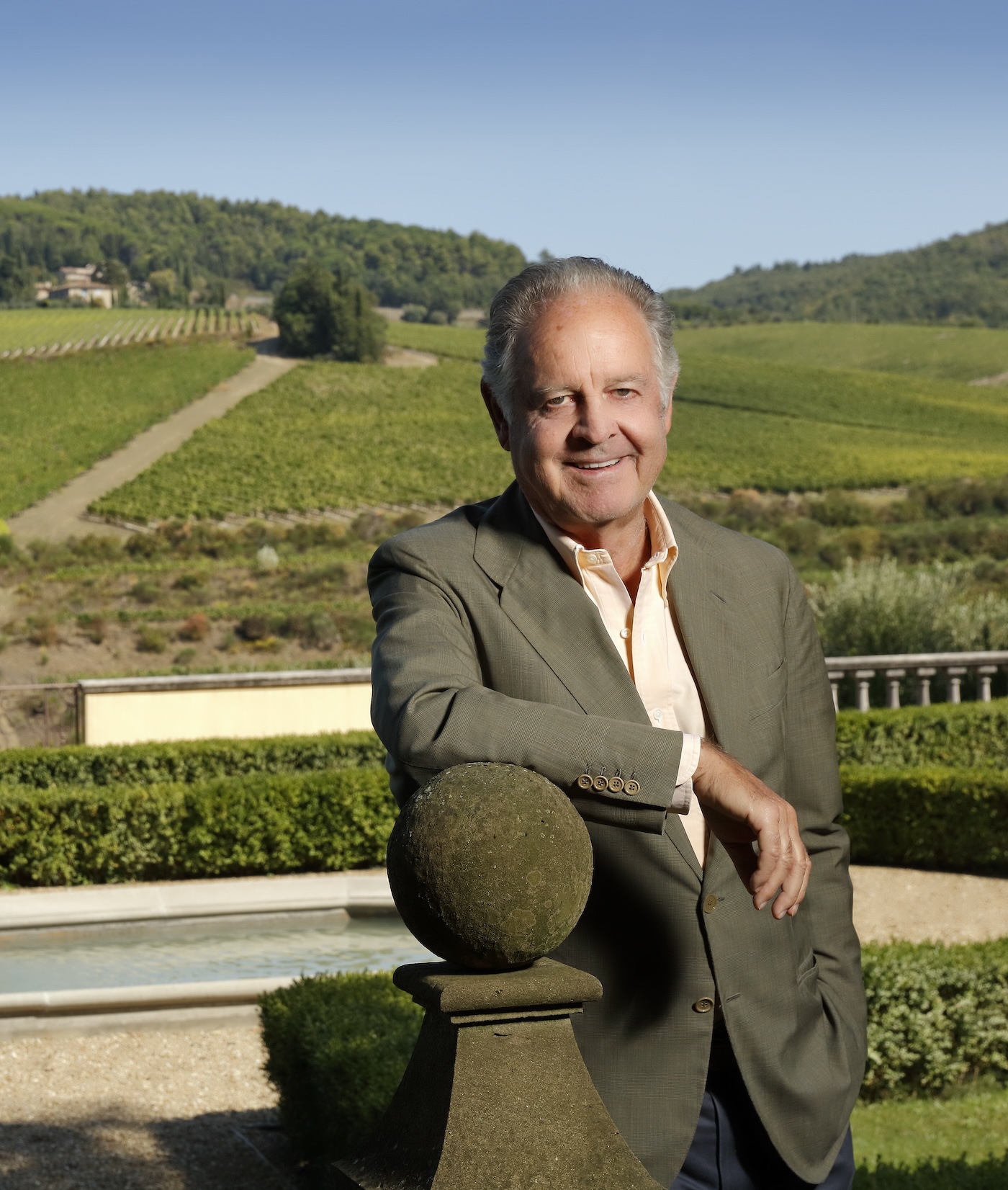
Indeed, being one of the noble “founding fathers” of the renaissance of Italian wine also means this: having countless fascinating stories to tell, as is the case with Marchese Piero Antinori, a true pioneer in Italy. Today honorary chairman of the family company Marchesi Antinori, the historic Italian wine dynasty spanning 26 generations, dating back to 1385 when Giovanni di Piero Antinori joined Florence Guild of Wine Merchants, the company is now led by his daughters Albiera, Allegra and Alessia alongside ceo Renzo Cotarella. Antinori influence, however, extends far beyond Italy and across the global wine world (a hero of the two worlds” as defined by WineNews in “Top 100” 2026 by “Wine Spectator” where Cabernet Sauvignon Stags Leap District Fay 2023 by Stag’s Leap Wine Cellars, winery-symbol of California acquired by Marquis of his friend Warren Winiarski is No. 6, and it is not the only wine of the brand in the classification, ed).
Tignanello, a wine which pioneered the Super Tuscan movement and sparked a revolution in Italian winemaking, was described by the American magazine “Wine Spectator” as “the most influential wine in the history of Italy”, and not only, was also the first iconic wine to bear the signature of Piero Antinori, created in complete harmony with one of the greatest winemakers of all time, Giacomo Tachis, when Antinori had only recently become president of the family business. The years from the 1970s onward laid the foundations for the rebirth and success of Italian wine throughout the 1980s and 1990s, ultimately transforming it into one of the defining symbols of made in Italy. That remains true even in today challenging context of climate change, economic uncertainty and evolving consumer habits. Yet, talking recently at “Vitae in deguStazione”, the national event for the Ais Guida Vitae 2027 in his native Florence, Piero Antinori offered some simple advice to young producers: “I tell them that, first and foremost, there is one indispensable thing in our sector: passion. You have to fall in love with this product, this industry and this profession. Without love, without passion, you achieve nothing. But I would also advise them to be courageous, because even in our sector we must respect tradition and history while at the same time being capable of innovation. Not reckless courage, of course, because we need to know our product, our industry and our market thoroughly. You must believe deeply in your project and be willing to put your heart on the line”.
From Tignanello and Tenuta Tignanello, whose anniversary No. 50 was celebrated through support for the restoration of Florence Ponte Vecchio in keeping with the Antinori family centuries-old tradition of patronage, to Solaia, the first Italian wine ever to be ranked No. 1 in the world in “Top 100” by “Wine Spectator” (with the 1997 vintage in 2000); from Guado al Tasso in Bolgheri to Badia a Passignano and Pèppoli in Chianti Classico; from Pian delle Vigne in Montalcino to Castello della Sala in Orvieto; from Villa Antinori in Tuscany to Tormaresca in Puglia; from Tenuta Montenisa in Franciacorta to Prunotto in the Langhe; from Antinori nel Chianti Classico, “Palazzo Antinori” of the new millennium and a winery in the heart of Florence widely acclaimed for its architectural beauty, named as the most beautiful winery in the world, all the way to Napa Valley and beyond, the story of Antinori is inseparable from that of modern wine itself.
“Wine has truly been the love of my life - recalled Marchese Antinori with his trademark irony - and therefore I must admit that at times it may even seem like an obsession. As my wife once said, perhaps I should have seen a psychologist”. Yet, it is true that, “like every industry, ours constantly requires study and updating, even though we ultimately depend on Mother Nature. I would say that the greatest difference between winemaking 50 years ago, when I began making wine, and modern winemaking lies precisely here. Back then, grapes often arrived at the winery in less-than-ideal condition, and the winemaker role was to correct their flaws. Today, the philosophy is the exact opposite: grapes must arrive at the winery in optimal, perfect condition, and the winemaker intervention is confined to details rather than altering the characteristics that Mother Nature has bestowed upon them”.
Different are also the patterns of wine consumption, especially among younger enthusiasts. According to Piero Antinori, “the recent trend toward producing wines with very high alcohol levels probably does not fully match the style and preferences of younger consumers. In my view, we should strive to produce wines of the highest quality while also achieving lower alcohol levels. That being said, wine is not an alcoholic product; rather, it is a product that, through natural fermentation, also produces a certain amount of alcohol. However, I believe that, in order to be considered wine, it must necessarily contain some alcohol. Personally, I do not think dealcoholized wines are part of our cultural approach, also because we are fundamentally farmers, and wine should be a natural product of the land. The moment it is subjected to industrial transformation, it loses the characteristics of a natural wine and of an agricultural product”.
“The projects for the future - underlined Marchese Antinori - are to continue along this path, constantly striving to improve our quality while maintaining our roots in Tuscany, where we were born. This doesn’t prevent us from pursuing experiences outside Tuscany for the benefit of our team, our technicians and our winemakers, because they represent a source of cultural enrichment. When I say Tuscany, I also mean, to some extent, Umbria, because our history is deeply connected to Umbria as well. Sometimes I tell our dear Renzo Cotarella that Umbria is a sort of extension of Tuscany, but he doesn’t like to hear that,” he added jokingly, of course.
To Albiera, Allegra and Alessia, “I always say that, in order to excel in this business, you truly have to be in love with it. I encouraged them to pursue whichever roles within the company they enjoyed most, whether staying close to nature and working in agriculture or traveling the world and exploring international markets, because this profession offers both opportunities. So, ours is a wonderful vocation precisely because it encompasses such a wide range of activities and gives everyone the chance to express themselves according to their own talents, aptitudes and ambitions”.
And when Marchese Piero Antinori is asked what the “best vintage” of his life has been, his answer is immediate: “the one yet to come, because we always try to do better than what was done before us. However, there is one vintage that holds a special place in my heart, regardless of its quality, although, needless to say, it was an outstanding year: 1967, because it was the first vintage produced under my responsibility (as he explained also in the past to WineNews). Naturally, I was extremely concerned and nervous, but fortunately, thanks in part to Mother Nature, it turned out to be a great vintage. In fact, no more than ten days ago, I happened to open a bottle from 1967, and I must confess that it moved me deeply. What bottle was it? A Villa Antinori Chianti Classico 1967”. How wonderful it must be to have a bottle like that waiting at home.
Copyright © 2000/2026
Contatti: info@winenews.it
Seguici anche su Twitter: @WineNewsIt
Seguici anche su Facebook: @winenewsit
Questo articolo è tratto dall'archivio di WineNews - Tutti i diritti riservati - Copyright © 2000/2026