







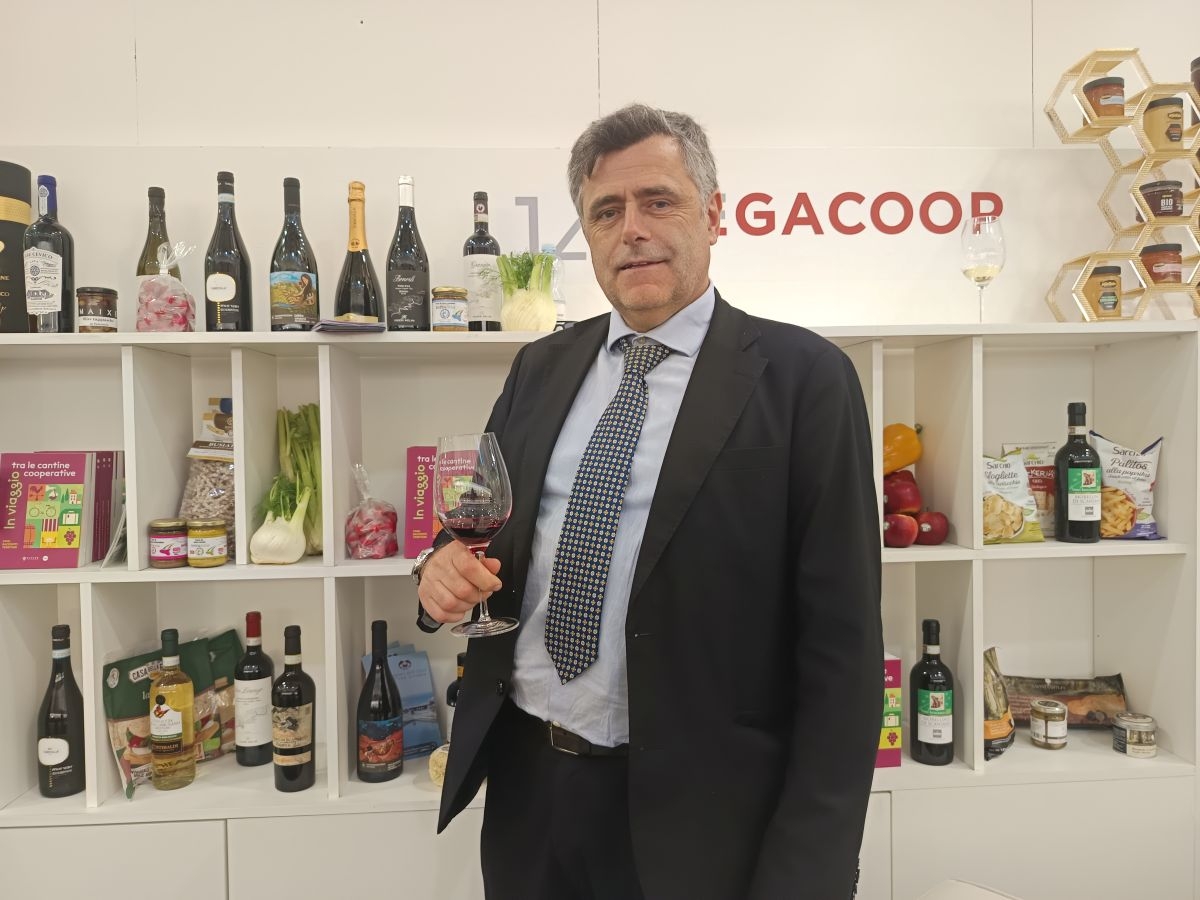
Lower yields due to global warming, a grape harvest starting earlier than ever before, uncertain international markets amid tariffs and geopolitical tensions, and changing consumption patterns. These are the open fronts on which the future of one of the most iconic sectors of the Italian agri-food industry is being played out: wine. Legacoop Agroalimentare, the association representing more than 60 wine cooperatives across Italy, takes stock of the situation, as planning resumes for the institutional advertising campaign dedicated to Italian wine and promoted by the Presidency of the Council of Ministers. Together, these cooperatives generate 2 billion euros in production value, accounting for nearly 13% of the Italian wine sector turnover, with export revenues of 620 million euros and more than 2,700 employees. “The wine sector is deeply rooted in our culture and history, but several issues, including global warming, are putting at risk a sector that is fundamental to our country agri-food economy - declares president Cristian Maretti - we welcome any initiative that helps communicate the value of Italian wine around the world. However, promotion alone is not enough: the sector needs policies capable of supporting it in the face of multiple, overlapping challenges. We should all enjoy this end of August with a good glass of wine”.
The main issue is climate. As Maretti points out, global warming is no longer an abstract threat but a factor already affecting yields and production quality, particularly in hilly areas where low yields make targeted interventions necessary, starting with improved irrigation infrastructure. Another concern for the president of Legacoop Agroalimentare is the proliferation of new vineyards: the current system allows for the planting of nearly 7,000 new hectares each year, a pace that Legacoop Agroalimentare Wine Coordination Committee has long called for to be temporarily suspended, together with stronger liquidity support measures for cooperative businesses. On the foreign trade front, uncertainty surrounding U.S. tariffs on European wine remains a significant concern. These tariffs affect a market worth 4.88 billion euros, representing 28% of the total value of European Union wine exports. The United States is also Italy largest export market and, in May 2026, imports into the U.S. totaled 709 million euros, marking a 15.4% decline compared to the previous year, according to Istat data analyzed by WineNews.
The situation is further complicated by geopolitical tensions, rising energy prices, and increasing transportation costs. “However, we are beginning to see some positive signals from the Brazilian market, a ray of hope in an otherwise challenging period”, commented Maretti. Brazil is in fact the main gateway to South America for Italian and European wine companies, especially in light of the Mercosur agreement. According to Secex Brasil data analyzed by the Spanish Wine Interprofessional Organization (Oive), Italian wine imports into Brazil in the first half of 2026 reached 79.4 million liters (+9.1%), worth 234.3 million euros (+5.9%), at an average price of 2.95 per liter euros (-2.9%).
Finally, Maretti highlighted how changing consumer preferences are affecting higher-alcohol red wines, a trend that is leading cooperative wineries to focus increasingly on dealcoholized and partially dealcoholized wines, a segment already worth more than 2.4 billion dollars globally and expected to reach 3.3 billion dollars by 2028.
Across all these areas, Legacoop Agroalimentare is calling on institutions to take rapid and coordinated action, ranging from the prompt implementation of the recently agreed European Wine Package, to ensuring certainty regarding the future of the Wine Common Market Organization (Cmo) within the post-2027 Cap reform, as well as keeping extraordinary measures - such as distillation and vineyard extirpation - ready for the most acute crisis situations.
“Italian wine continues to be an ambassador for our country around the world - concludes Maretti - but for this story to remain true in the years ahead, coherent choices are needed: supporting those who have invested in innovation, protecting winegrowers’ incomes, and addressing the effects of the climate crisis with concrete tools. Legacoop Agroalimentare will continue to bring these issues to institutional discussion tables, alongside cooperative wineries throughout Italy”.
Copyright © 2000/2026
Contatti: info@winenews.it
Seguici anche su Twitter: @WineNewsIt
Seguici anche su Facebook: @winenewsit
Questo articolo è tratto dall'archivio di WineNews - Tutti i diritti riservati - Copyright © 2000/2026