


Wednesday 7th of October 2026 - Last Update: 19:20






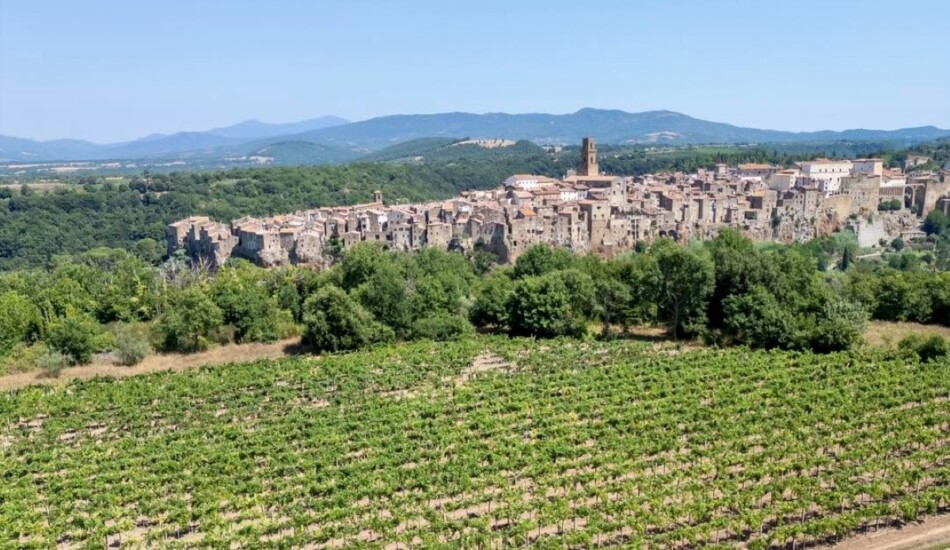
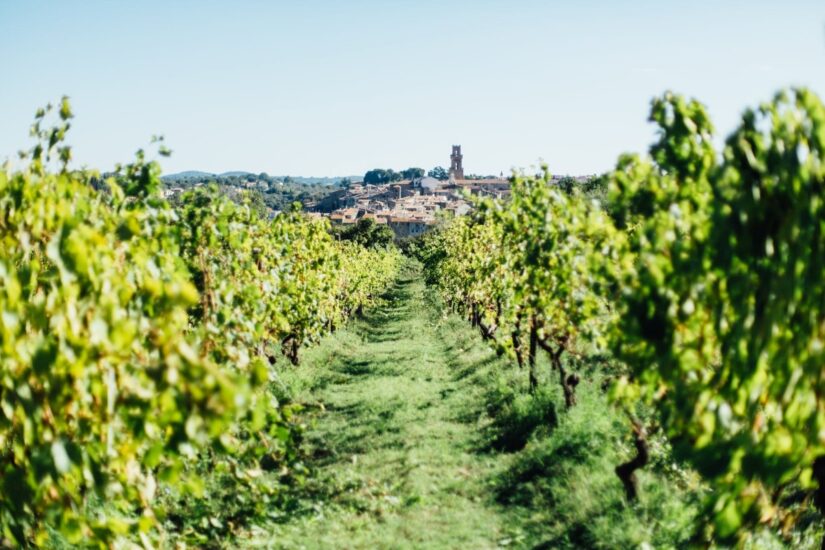
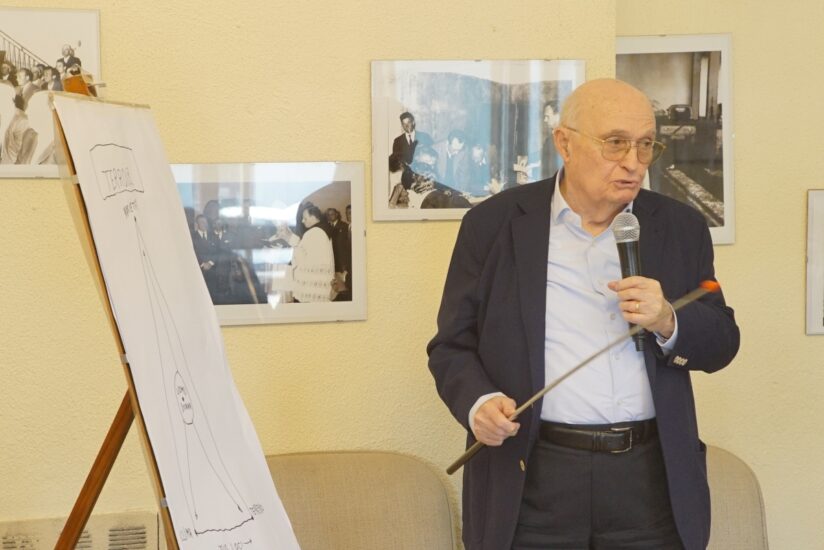
Sixty years since the creation of the denomination, yet with a millennia-old history whose vine-growing roots run deep into the tuff soils dating back to the Etruscan, Greek, and Roman periods. Its winemaking tradition has been handed down through the centuries, surviving the vicissitudes of the Aldobrandeschi family and later the Orsini family. This is a territory which endured two world wars and that, during the twentieth century, gained national recognition thanks to the decisive contribution of Cantina Sociale - Cooperative Winery of Pitigliano in 1954, which standardized production techniques and brought producers together, improving both the quality and standards of the wines produced in the area. This process culminated in the official recognition of the Controlled Designation of Origin (DOC) for wines produced in the region on March 28th, 1966. Today, the Bianco di Pitigliano DOC produces around 15,000 hectoliters annually - thanks in part to the contribution of the same Cantina Sociale di Pitigliano, one of the area leading producers and a key player within the DOC system. The cooperative includes 254 winegrower members and also produces Sovana DOC (a “sister” denomination recognized in 1999 that yields approximately 8,000 hectoliters of wine each year) - recently, Bianco di Pitigliano DOC celebrated its sixtieth anniversary (with a conference organized by Consorzio di Tutela Bianco di Pitigliano e Sovana DOC entitled “60 anni della Doc Bianco di Pitigliano - Un patrimonio millenario che guarda al futuro” - “60 years of Bianco di Pitigliano DOC - A millennial heritage looking to the future”. The event provided an opportunity to reflect on the roots, identity, and future prospects of one of Tuscany historic denominations, and the sixth, in chronological order, to be officially recognized in Italy, ed). This was not merely a celebratory occasion. The conference also wanted to place the human history of the denomination back at the forefront: the story of the growers, wineries, and generations who have helped build and sustain it over time. It is a journey marked by vision, courageous choices, and at times significant challenges, enabling a relatively small wine-producing area to navigate six decades of transformation without losing its deep connection to the land. This theme was the focus of the presentation delivered by professor Mario Fregoni, one of the most distinguished figures in viticultural science and research. For fifty years, he taught and carried out research in Viticulture at the Catholic University of the Sacred Heart in Piacenza and also served as president of the International Organization of Vine and Wine (Oiv), the Italian National Wine Committee, and numerous other institutions. In his address, he explored the concept of terroir, explaining how the uniqueness of a wine “stems from the interaction of three fundamental elements: grape varieties, climate, and soil, to which must be added the role of human expertise, capable of influencing approximately 20% of the final result”. Starting from these premises, professor Fregoni identified the Pitigliano area as an example of extraordinary uniqueness, underlining the distinctive value of its tuffaceous origins and suggesting that this identity should be promoted even more strongly. He went so far as to envision an denomination capable of highlighting its most characteristic feature: the “Tuffaceous Rock”. It was a powerful message that resonated throughout the conference and reaffirmed the inseparable relationship between wine and the territory from which it originates.
Reflecting on sixty years of history also revealed a shared determination to open a new chapter for both the denomination and the wider territory, one founded on quality, the enhancement of local identity, and collaboration among producers. This vision aims to increase the value of Bianco di Pitigliano by emphasizing its uniqueness and strengthening the bond between wine, landscape, history, and community. In this area, as stated in the technical dossier for the denomination published on the Italian Ministry of Agriculture website, evidence of vine cultivation dates back to the Etruscan, Greek, and Roman periods. It was under Roman rule, however, that significant advances were made in winemaking techniques, which remained unsurpassed until the Middle Ages.Thereafter, the winemaking tradition of the Pitigliano and Sorano area continued to be passed down through the centuries, shaped by the fortunes of the Aldobrandeschi family and, later, following the division of that family into the two branches of Sovana and Santa Fiora, by those of the Orsini family. This continued until the long war fought between the Orsini and Siena, which ended in 1410 with the definitive annexation of Sovana into the territories of Siena and the consequent depopulation of Sovana in favor of the nearby towns of Pitigliano and Sorano. During the subsequent historical period, marked by two world wars and two decades of political dictatorship, viticulture in the Pitigliano and Sorano area experienced a phase of stagnation. However, by the mid-twentieth century, thanks in part to the initiatives of many local landowners, a period of revival began. Although this revival was initially somewhat fragmented, the contribution of the Cantina Sociale di Pitigliano proved fundamental. Its purpose was to collect and process grape production from the surrounding area in order to bring wines to market that were consistent in style, improved in quality, and standardized in their presentation. Later, several scientific publications dedicated to Italian wines made an important contribution to promoting and enhancing the reputation of the wines of the area (one notable example is “Vini Tipici e Pregiati d’Italia” by R. Capone, published in 1963, which specifically describes the characteristics of the wines of Pitigliano). These developments laid the foundations for the growing awareness that the territory of southeastern Maremma could legitimately aspire to official recognition through a Controlled Designation of Origin (DOC) for its wines. This recognition was granted in 1966 for Bianco di Pitigliano, a wine based primarily on the grape varieties Trebbiano Toscano (locally known as Procanico), Greco, Grechetto, Malvasia Bianca Lunga, and Verdello. Nearly twenty-five years later, the Superiore and Spumante versions were added to the denomination. Finally, following amendments to the production regulations in November 2011, the traditional Vin Santo category was introduced, together with a simplification of the denomination ampelographic base. While Trebbiano Toscano remained the principal grape variety, greater space was given to complementary varieties, including Ansonica and Viognier.
Copyright © 2000/2026
Contatti: info@winenews.it
Seguici anche su Twitter: @WineNewsIt
Seguici anche su Facebook: @winenewsit
Questo articolo è tratto dall'archivio di WineNews - Tutti i diritti riservati - Copyright © 2000/2026