






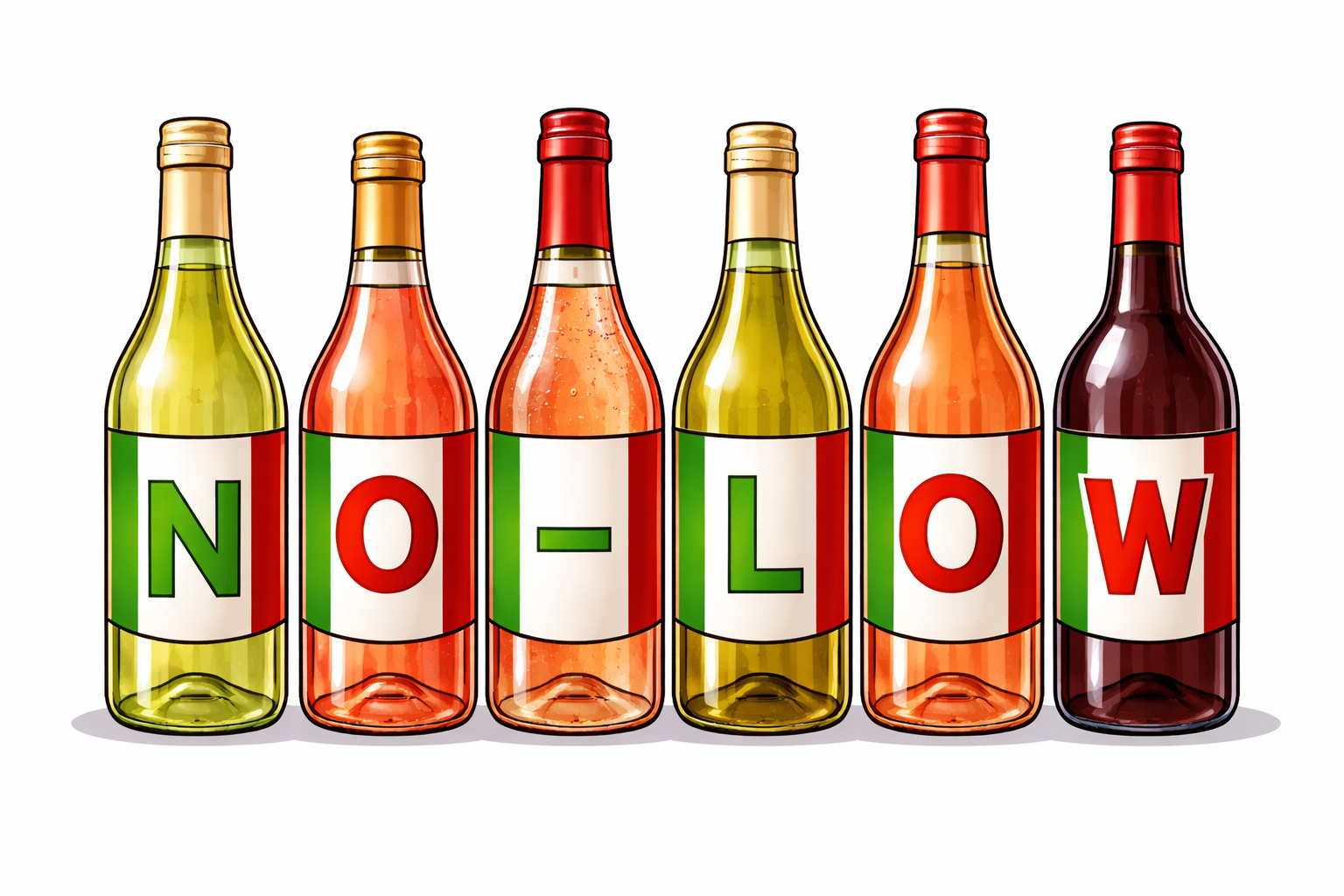
From the first decree in December 2024 whcih opened the possibility of producing no alcohol wines in Italy, to the “fiscal” decree signed yesterday by the Ministries of Agriculture, headed by Francesco Lollobrigida, and Economy and Finance, headed by Giancarlo Giorgetti, which effectively unlocks the ability to produce these products within the national territory, almost a year has passed. But finally, according to Minister Lollobrigida and all industry organizations, there is now a clear regulatory framework which will allow producers in Italy to manage the entire supply chain in Italy (whereas until now, those who wanted to invest in these still niche but rapidly growing products, already worth 2.4 billion dollars and expected to reach 3.3 billion dollars by 2028, had to carry out dealcoholization in other European countries with more advanced regulations, France and Germany leading).
And if yesterday Unione Italiana Vini - Uiv, through its secretary Paolo Castelletti, commented positively on the signing of the decree, defining it “good news at the end of a troubled 2025” underlining that “more and more Italian companies are ready to invest in the no-alcohol category, and this measure represents a turning point for operating under competitive conditions equal to other European producers”, in recent hours unanimous support has come from other industry organizations.
“The signing of the decree represents a significant step for the Italian wine sector because it provides regulatory certainty for an evolving segment capable of meeting changing consumer needs, particularly in foreign markets”, comments Gabriele Castelli, dg of Federvini, who “expresses appreciation for the work carried out by the competent Ministries and for the dialogue process which led to an important and long-awaited result for the sector. This clear framework allows operators to plan the development of innovative products with greater confidence while maintaining the quality and identity of our wine production. It is important that the no-alcohol wine market grows without distorting our tradition: innovation and quality can coexist, offering new opportunities without replacing the wines that have helped build Italy gastronomic reputation worldwide”, adds Federvini dg, who “confirms its willingness to collaborate with institutions and the entire supply chain to support the implementation of the decree and promote balanced growth of the sector, in the name of quality and enhancement of Italian products”.
“The publication of the interministerial decree setting the rules to allow Italian producers to make no alcohol and partially dealcoholized wines is good news at the end of a particularly complex year for the wine sector on the market front”, underlines Luca Rigotti, president of the Wine Sector of Confcooperative Fedagripesca. “This is a fundamental step - explains Rigotti - which will allow Italian companies, starting with cooperative wineries which represent a significant component of national wine production, to finally operate under competitive conditions equal to other European producers who have long been active in this segment. Our federation has actively participated in recent months in a long and structured institutional dialogue, with the aim of providing cooperative wineries with a new tool to tackle markets, especially international ones, where the demand for lower-alcohol wines can no longer be considered a fad but a long-term behavioral change”. According to Confcooperative Fedagripesca estimates, concludes Rigotti, “this phenomenon involves millions of consumers worldwide. A demand destined to grow in parallel with trends related to health and wellness, driven by curiosity, the desire to adopt healthier lifestyles, and the intention to limit alcohol consumption without giving up the pleasure of wine”. Coldiretti and Filiera Italia talk about “a long-awaited step that helps provide regulatory certainty to an evolving market segment after a particularly complex period for the wine sector, marked by market difficulties, cost pressures, and changes in consumption”, explains a note, that these organizations “have followed the entire process leading to the adoption of the measure with attention and responsibility, maintaining a clear and consistent position over time: supporting innovation without distorting the identity of Italian wine, protecting denominations, the cultural value of the product, and the work of agricultural enterprises. On several occasions, Coldiretti and Filiera Italia - explain the organizations - have reiterated the need to clearly distinguish between wine and products obtained through dealcoholization processes, avoiding ambiguities which could confuse consumers or weaken the PDO and PGI system”. At the same time, they stressed that “the growth of no- and low-alcohol products is a market phenomenon whcih must be governed with clear rules, ensuring fair competition conditions for Italian companies compared to other European countries”.
Also the comment from Legacoop Agroalimentare is positive, headed by Cristian Maretti, who highlights that “the Italian market for non-alcoholic wines has exploded, passing from 8 million euros in 2021 to 55 million euros in 2024, with forecasts of a further 60% increase this year”.
According to Legacoop Agroalimentare research on member cooperative wineries, 11% already produce no-alcohol wines, and another 22% are preparing to do so. “These figures demonstrate attention and adaptability - adds Maretti - and the professional skills present in cooperative wineries will also be able to express themselves at their best on innovative products like these”. Particularly, according to Legacoop Agroalimentare, in a complex phase for the wine sector, no- and low-alcohol wines can represent an important stimulus to start broader reflections on different market segmentations. “There are no miracle solutions valid for everyone - concludes Maretti - it is necessary to start from the most struggling markets and build specific paths which also involve the choices of protection consortia, both in terms of promotion and new consumption methods, and in terms of production control. Certainly, introducing new restrictive measures for table wine will not solve the problems of other segments”.
Copyright © 2000/2026
Contatti: info@winenews.it
Seguici anche su Twitter: @WineNewsIt
Seguici anche su Facebook: @winenewsit
Questo articolo è tratto dall'archivio di WineNews - Tutti i diritti riservati - Copyright © 2000/2026