


Wednesday 28th of October 2026 - Last Update: 17:39





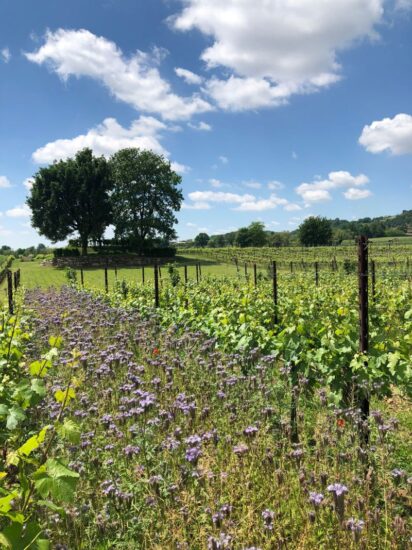
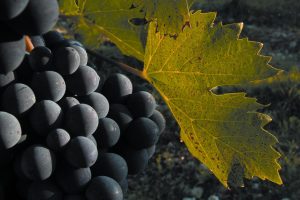
If in the past the coexistence of woods and cultivated land, particularly vineyards, but not only, was the norm, there has been a more recent phase in which the practice of “specialized cultivation” became established, leading to the growth, in many areas, of true quasi-monocultural zones. Yet, especially in recent years, in the world of wine, the importance of the proximity and synergy between forests and vineyards has been rediscovered, with company or territorial projects such as those we have reported on over the years, among others, at Castello di Meleto in Chianti Classico, and at Fontanafredda in the Langhe with the “Bosco Vigna”, among the many possible examples. After all, that there is a useful and positive relationship between trees, forests, and vineyards—thanks to biodiversity, “thermal” effects, and more, has now been firmly established, as explained by professor Attilio Scienza, one of the world leading experts in viticulture, and agroforestry specialist Stefano Lorenzi. Likewise, Italian landscape architect Paolo Pejrone, in an interview with WineNews, encouraged planting woodland whenever establishing a vineyard.
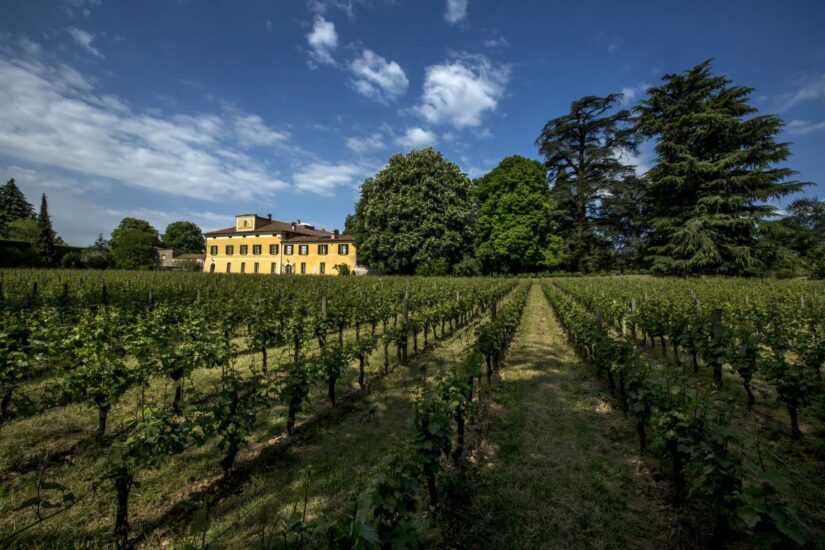
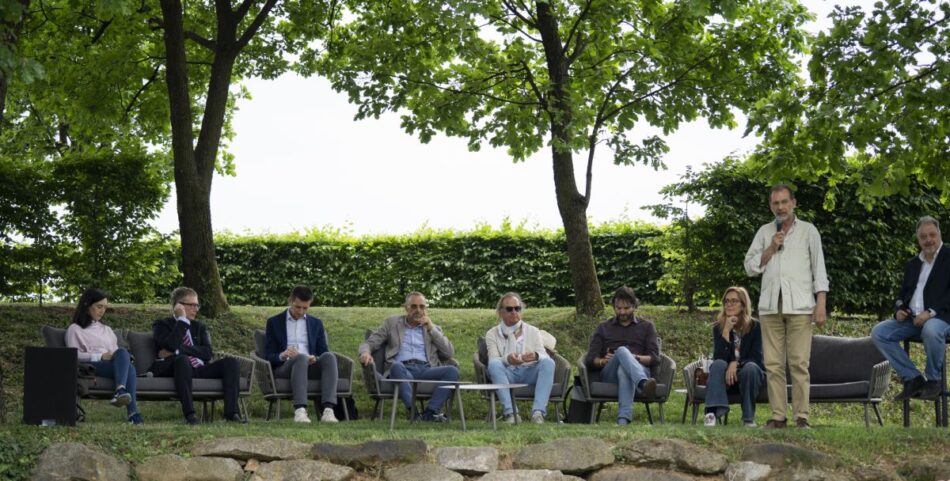
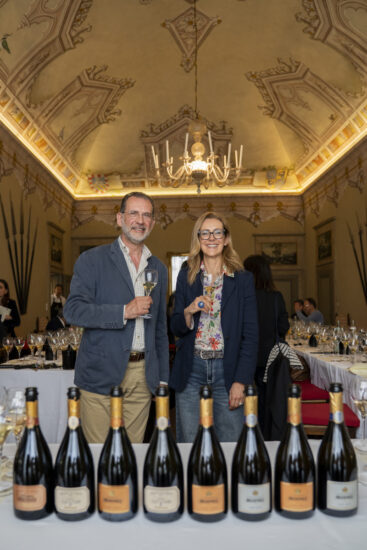
A topic increasingly more in the spotlight, it was also central to the celebrations of the anniversary No. 190 of Mosnel, one of the oldest and most renowned wineries in Franciacorta. The siblings Lucia and Giulio Barzanò, the fifth generation running the estate, reflected on how to preserve what has been built over nearly two centuries. In the tradition of the Camignone “house”, which helped shape the history of Franciacorta alongside Emanuela Barzanò Barboglio, the answer could only be forward-looking. Following a vertical tasting of EBB (named after their mother, to whom this Extra Brut is dedicated) and Parosé (with vintages 2008, 2010, 2016, and 2019 tasted in parallel), discussions in recent days focused on memory, responsibility, and the future during the conference “Agroforestazione. Alla ricerca della viticoltura del domani” - “Agroforestry: Looking for the viticulture of tomorrow”. The event addressed a highly topical issue: safeguarding grape quality and vineyards in the face of climate change. This theme takes on broad, interdisciplinary meanings when the vineyard is viewed not only as a place of production but also as a site for shaping the landscape, beauty, and wellbeing, where one can find an emotional connection to nature.
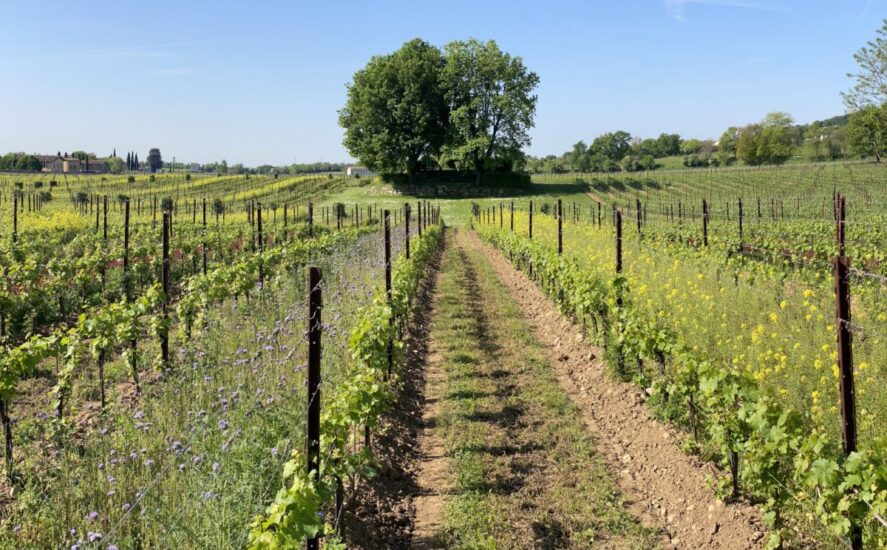
Agronomists, researchers, and scholars gathered in Camignone reflected on a model, among the pioneering ones in Italywhich has been a reality at Mosnel for over 10 years. “In our vineyards - explained Giulio Barzanò - there are already trees and hedges arranged according to precise criteria and practices linked to family tradition and to our mother teachings, who promoted respectful organic cultivation, something even more important today to pass on to new generations”. So much so that “this attention to nature has become a moral and practical legacy for us - confirmed Lucia Barzanò - and after 190 years, the same concept still guides all our choices: the pursuit of balance starting from respect for the environment. Everything must be in harmony, from vineyard care to the cellar, all the way to the glass”.
Mosnel is one of the companies involved in VitiSilva, an initiative by Sata Studio Agronomico which proposes an integrated approach between agroforestry and regenerative viticulture. Building on this work, the Lombardy Region has funded a project of the same name involving the Universities of Milan and Modena and Reggio Emilia. The goal is to scientifically measure and understand the benefits of “vine-forestation” in three key areas: above-ground biodiversity, mitigation of climate change effects, and soil regeneration in interaction with cultivation practices. Over 3 years, microclimate and soil fertility near tree rows and individual trees in vineyards will be monitored, with the aim of producing concrete data and future guidelines.
Today vineyard landscape is quite different from the past, when vineyards were embedded in complex ecosystems rich in trees, hedges, and varied vegetation. In many areas, vineyards have effectively become monocultures: a necessity from a management and economic standpoint which has nonetheless led to the loss of biodiversity and interactions with other plant species. These interactions are now sorely missed, especially for mitigating global warming effects and controlling pests and diseases, needs for which agroforestry offers a “corrective” tool. “In medieval cadastral records of Burgundy - recalled wine critic and writer Armando Castagno, moderator of the meeting - out of 1,200 historical climats, at least 90 are named “Les Charmes”, a term referring to the hornbeam, a tree once present in vineyards, and not, as one might think, to the “charm” of the place. Today, only place names remain to remind us of that lost biodiversity, like a ghost of the ancient coexistence between vines and woodland”.
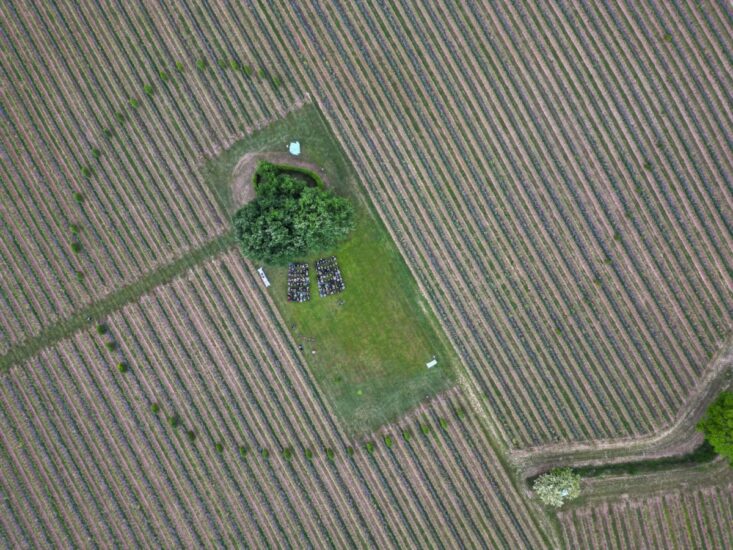
To explore the meaning of VitiSilva activities, the philosophy guiding it, and the agronomic challenges to be faced, Pierluigi Donna talked, one of the founders, 36 years ago, of Sata Studio Agronomico, a network of agronomists and enologists who works in continuous contact with universities, spin-offs, and research institutes on highly topical scientific issues, particularly in monitoring greenhouse gas emissions and biodiversity within ecosystems. “The approach to research must be humble: in open fields, interactions among natural factors are infinite and exponential - began Pierluigi Donna began - the uncertainty principle of Heisenberg (the German theoretical physicist, fundamental to the birth of quantum mechanics, ed) comes to mind: we can’t know everything; we must accept complexity and adapt. This is the case with agrochemicals, which constantly present us with difficulties. Declines in effectiveness and the adaptation of pathogens remind us that nature responds to every pressure. Increasing biodiversity is our ally, because the more organisms live in an environment, the less space there is for parasites and aggressors”. “While examples of agroforestry exist in tropical crops, where the practice is now well established, in the vineyard sector such examples are very few and guidelines are practically nonexistent, so every project begins as a research path - explained Marta Donna, agronomist at Sata - our goal is to combine the vineyard with plant elements that, without reducing productivity, contribute to climate mitigation, increase soil fertility, and enhance ecosystem stability. We must select trees with deep roots that help recover moisture during dry periods without competing with vine roots, that provide shade to protect rows from heat stress without compromising grape quality”. One example at the Mosnel estate is the spiral-shaped “biodiversity corridor” with hornbeams and hawthorns, which facilitates the movement of insects, fungi, and beneficial microorganisms between different areas of the estate, and which in the future will also connect to other green areas, such as the shrub hedge composed of 56 species. “At the core of VitiSilva there is also an aesthetic and cultural vision - continued Pierluigi Donna - for example, we chose the logarithmic spiral in arranging plant species because it unites nature and culture: it appears in snails, in the arrangement of sunflower seeds, in fractals, and even in galaxies. It is a fluid figure that represents natural and mathematical harmony and contrasts complexity with simplification, reducing environmental impact and increasing beauty. The guiding thread of the project is the will to improve the environment and adapt to climate change by learning from nature. The choices we made five years ago are not always valid today: each season confronts us with new conditions. Being pessimistic doesn’t make us more intelligent, it only makes us more tired. Instead, we want to continue, with enthusiasm, to seek sustainable and beautiful solutions”.
Research, biodiversity, and beauty aren’t merely technical tools but represent a philosophy of life and work, capable of improving the environment and leaving future generations a richer heritage than the one received. “I believe that, beyond agronomic and enological improvement, there is an equally important aspect: the emotions that the environment we inhabit evokes, including the vineyard - said Valperto degli Azzoni Avogadro, mathematician and wine producer (Degli Azzoni Wines, ed), who then described two projects undertaken in his company in the Marche region - we planted a 5-hectare Etruscan vineyard, with vines trained to climb trees, and a 20-hectare sustainable forest which protects the rows and represents a space of wellbeing for the community. People will be able to enjoy it and reconnect with their emotions. I am convinced that we need places that bring us closer to nature and to ourselves. The goal is to create an environment that is replicable, economically sustainable, and capable of improving the local microclimate. The perspective of these projects must transcend generations. Like the cathedral builders of the 14th century, we know we will not see the completion of what we build, but we want to pass on its utopian vision to our children”.
Giorgio Vacchiano of the University of Milan, a specialist in sustainable forest management, explained what happens from a physical, biological, and chemical perspective when vines are combined with other plants. “There is a very important ecological principle, discovered in 1949, called the “stress gradient hypothesis”. It means that living beings coexist along a continuum of conditions, from the most favorable to the most stressful. Contrary to what is commonly thought, competition exists mainly when resources are abundant, whereas under difficult conditions it tends to transform into facilitation, that is, into mechanisms through which living beings contribute to each other wellbeing. I don’t attribute human intentions to plants, but this phenomenon truly exists. And today we live in ecologically stressful times, with extreme weather events. Higher temperatures, longer summers, hailstorms, and intense rainfall put vines, and vine growers under stress. Every additional degree advances ripening by 3 to 6 days. The effects of prolonged heat and drought are evident: heat concentrates sugars, reduces acids, alters the phenolic profile and the aromas of wine. If drought is intense, the vine closes its “ports” (stomata, ed) to avoid losing water, but in doing so it interrupts photosynthesis and risks entering a nutritional deficit: it doesn’t die of thirst, but can die of hunger. In this context, agroforestry offers concrete solutions. Trees cool the environment through the evaporation of water that removes heat, functioning with the same mechanism by which sweating cools us, so by distributing plants within vineyards we can reduce thermal stress. In addition, vines could be helped by the upward movement of water to the surface at night by trees, a phenomenon which is still being studied. The role of biodiversity, however, is well established: grassing between rows protects the soil from erosion, increases organic matter and thus the capacity to retain water, creates ecological corridors for beneficial fauna, and limits the proliferation of pests. Many of these phenomena are invisible to the eye, but they are measurable and fundamental for the future of viticulture. We will monitor them during the VitiSilva project of the Lombardy Region, a project of public interest, and formulate concrete recommendations”. The project is designed to extend its effects beyond company boundaries and draws strength from diverse expertise. Agronomic, forestry, and architectural disciplines engage with the humanities and communication sciences, which act as a strategic connector within the working group and help adapt the various projects to the specific characteristics of local operational contexts.
“Place and beauty are the starting points for every architectural project - said Willem Brouwer, a Dutch-born architect who has also worked on major projects in Italy - if one designs while ignoring the context, it is no longer architecture but mere construction. Today, design is an exercise in creativity in which natural elements are integrated to respond to new needs and expectations, especially of younger generations, for whom psychological, social, and environmental well-being matter more than mere economic comfort. The “Bosco Verticale” in Milan, for example, has shown that bringing nature into living spaces has a deep positive impact. It isn’t just about inserting plants or trees, but about designing places for listening, activity, and contemplation, spaces that foster sensory experience and regeneration”.
The environment also influences human beings even at a neural level. “Modern humans - explained Andrea Bariselli, a neuroscientist specializing in interactions with the environment - have moved away from their original habitat. We spent most of our evolutionary time as hunter-gatherers; our cognitive and physiological systems are still shaped by natural environments, yet we live in front of screens, receive thousands of stimuli every day, and have lost direct contact with them. We have traded direct interaction with the environment for modern convenience, and this deprives us of part of our biological identity. A brain exposed for ten hours a day to screens and to 4,000 daily notifications struggles to find well-being; in nature, instead, the volume of stimuli is compatible with who we are. Our brain still reacts in an ancestral way to natural stimuli, which reduce cognitive load and generate wellbeing. That is why a walk in the woods or encountering a spring can make us feel at home. Studies show that some molecules released by plants remain in our bodies for weeks, improving our psychophysical state. It is necessary to reflect on the need to live with awareness of the fracture of our time, between a world that is disappearing and one we still struggle to understand”.
The hope which emerged at the end of the meeting is that in Franciacorta, as elsewhere, the monoculture of vines can be overcome in favor of a broader interpretation of terroir “by adding biodiversity to the three factors that define it: climate context, genetics, and humans”, underlined Pierluigi Donna. Moreover, the 1999 definition of terroir doesn’t specifically refer to interaction with humans, but rather to a “system of interactions” such as those existing between vines and the surrounding natural elements.
Copyright © 2000/2026
Contatti: info@winenews.it
Seguici anche su Twitter: @WineNewsIt
Seguici anche su Facebook: @winenewsit
Questo articolo è tratto dall'archivio di WineNews - Tutti i diritti riservati - Copyright © 2000/2026