








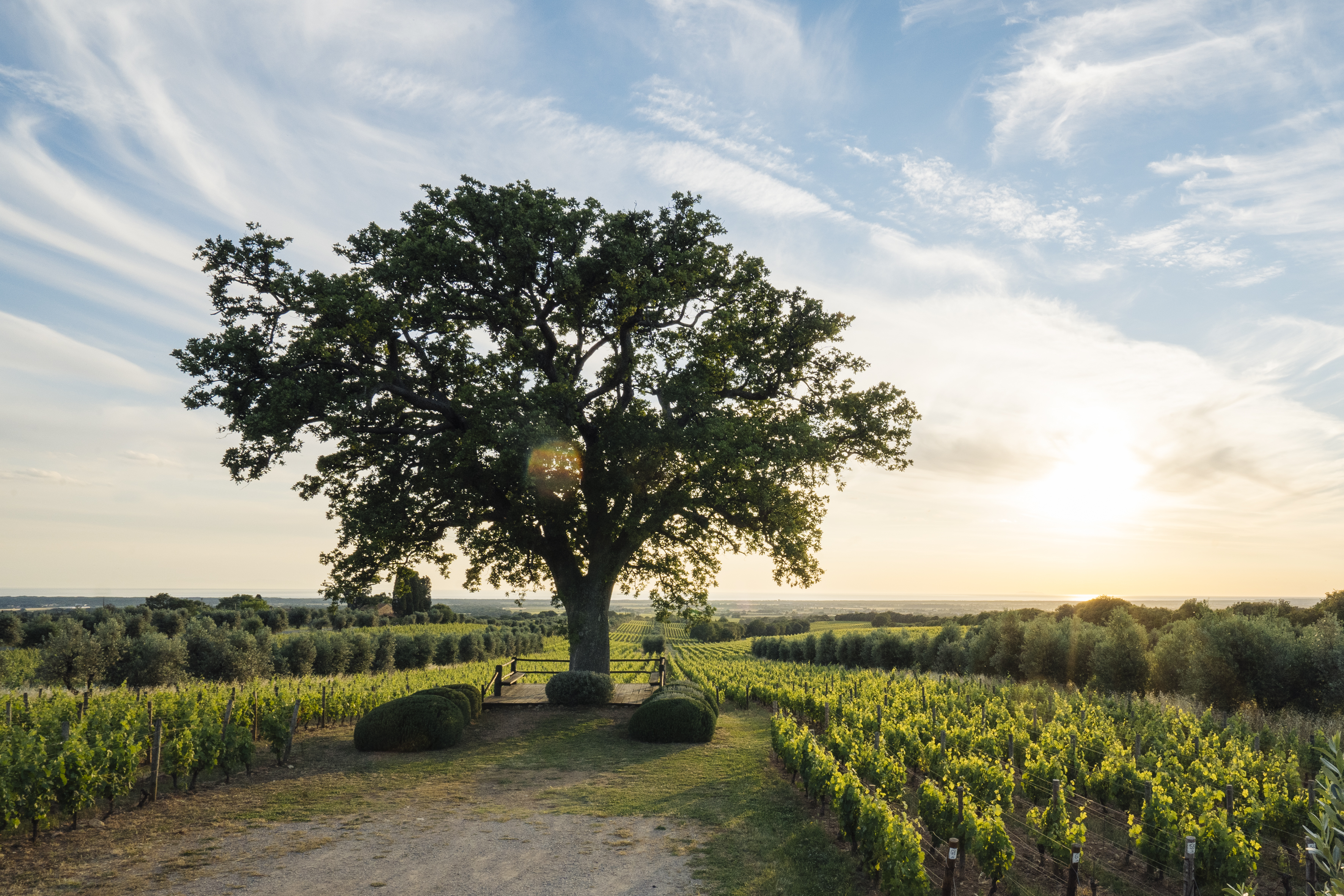
Higher-quality grapes, wines with deeper colors, and more pronounced aromas thanks to targeted applications of ultraviolet light directly in the vineyard: a technology already used to control vine diseases and reduce the use of chemical products, but one which also opens new perspectives for more sustainable viticulture which is attentive to climate change. These are the observations of the University of Pisa following a study published in the scientific journal “Plants” and carried out among the Cabernet Sauvignon rows at Tenuta dell’Ornellaia, one of Bolgheri jewels within the Frescobaldi Group, an estate where quality is certainly not missing, yet positive innovations are always welcome. The research - coordinated by Claudio D’Onofrio, professor of Viticulture at the University of Pisa - demonstrated that additional applications of Uv-C light during the grape-ripening phase stimulate the plant to produce greater quantities of anthocyanins and flavonols, natural compounds which contribute to give wines a more intense and stable color over time, as well as greater aromatic complexity. All this without significant differences in the vine vegetative or productive indices, without reducing yield, and without radically altering agronomic practices.
“We already knew that Uv light can stimulate the plant to produce molecules linked to wine quality, but until now these effects had been observed mainly in the laboratory - explains D’Onofrio - in this study, however, we demonstrated that even under real vineyard conditions it is possible to increase the color and aromas of grapes without penalizing production. It is an interesting result because it uses an existing technology in a more conscious and targeted way”.
Uv-C technologies are already used in vineyards to contain certain diseases, such as molds and downy mildew, and this research simply tested a different protocol, adding a few targeted interventions during the ripening phase with the aim of improving the fruit content of secondary metabolites: higher quality in the vineyard, reduced use of plant-protection products.
“The results suggest that Uv-C light could become an additional tool to improve grape quality while simultaneously reducing the environmental impact of viticulture, an increasingly more relevant issue for a sector which must reconcile sustainability, innovation, and quality in an ever more complex climatic context”, concludes D’Onofrio.
Copyright © 2000/2026
Contatti: info@winenews.it
Seguici anche su Twitter: @WineNewsIt
Seguici anche su Facebook: @winenewsit
Questo articolo è tratto dall'archivio di WineNews - Tutti i diritti riservati - Copyright © 2000/2026