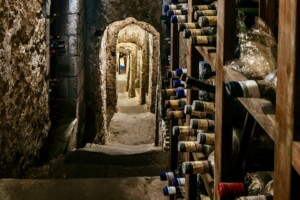









The fact that in Italian wineries, there is much wine (or too much, according to many) is a fact. Certainly, the increase compared to last year can also be linked to the succession of harvests with different volumes (very poor in 2023, more generous in 2024, even more abundant in 2025), but the reality that sales and consumption are slowing down, among health trends, tariffs, and economic difficulties, is something that almost all producers, regardless of size, denomination, or prestige, are experiencing firsthand. And, looking at the territories, the rise in stock levels, though with distinctions, seems to affect everyone, from prestigious denominations to niche ones, from large production areas, but also territories with lower production potential. This emerges from the comparison of data across various denominations in “Cantina Italia”, updated on November 30th, 2025 (53.4 million hectoliters, +8.6% compared to the same period in 2024, to which 9.5 million hectoliters of new wine still in fermentation, and 9.7 million hectoliters of must have to be added), which WineNews compared with figures from November 30th, 2024. In other words, two data points that essentially cover the entire harvest of the reference year.
On November 30th, 2025, all of the top 10 largest denominations in terms of wine “stocks” have seen their stocks increase over the past year, with the only exception of Igp Puglia. In order, Prosecco Doc leads the list, which alone accounts for 11.6% of Dop and Igp wine in cellars, with 5.03 million hectoliters (+2.8%), followed by Puglia Igp (1.78 million hectoliters, -0.7%), which is dropping, but then rising again with Igp Toscana (1.69 million hectoliters, +18.1%) and, in position No. 4, Doc Delle Venezie (1.64 million hectoliters, +20.5%). The highest growth among the top 10 denominations with the highest stocks is of Igp Terre Siciliane (1.54 million hectoliters, +31.3%), but increases also affect Igp Veneto (1.47 million hectoliters, +13.5%), Rubicone (1.35 million hectoliters, +1%), Chianti, the largest red denomination in Tuscany (1.28 million hectoliters, +19.9%), Doc Sicilia (1.27 million hectoliters, +9.5%), and Salento Igp (1.23 million hectoliters, +4.5%).
Looking instead at some smaller denominations, but important for prestige or market volume, wine stocks also increase everywhere, but to varying degrees: from Montepulciano d’Abruzzo (951,909 hectoliters, +0.26%) to Conegliano Valdobbiadene Prosecco Superiore, the historic heart of the Prosecco galaxy (935,594 hectoliters, +4.38%); from Chianti Classico (750,251 hectoliters, +12.3%) to Franciacorta (733,752 hectoliters, +16.8%); from Barolo (548,460 hectoliters, +6.1%) to Brunello di Montalcino (445,513 hectoliters, +10.4%); from Amarone della Valpolicella (442,384 hectoliters, +1.7%) to Soave (350,980 hectoliters, +24.1%); from Vino Nobile di Montepulciano (220,014 hectoliters, +2.58%) to Barbaresco (165,378 hectoliters, +9.78%); from Etna (140,292 hectoliters, +17.5%) to Bolgheri (121,671 hectoliters, +11.2%), and Rosso di Montalcino (79,226 hectoliters, +62.8%), whose quantitative growth, in this case, is also linked to the fact that in 2024 the registry of vineyards eligible for the Montalcino Doc was opened, allowing an increase of up to 60% (adding 364 potential hectares to the 519.7 claimed until last year, almost doubling the production potential, ed).
Setting aside the fact that having more wine in the cellar is not in itself synonymous with “crisis”, since there are denominations that, even with abundant stocks, manage to maintain steady and regular outflows, perhaps with some decline in unit prices, the figures still paint the picture of a sector burdened by abundant production which needs to be placed on a market which certainly no longer absorbs as it once did and that, according to many industry studies and experts, will continue to see a more or less significant decline in consumption. And this is a scenario that those doing business in this sector, which also requires substantial investments and long payback periods, will inevitably have to deal with.
Copyright © 2000/2026
Contatti: info@winenews.it
Seguici anche su Twitter: @WineNewsIt
Seguici anche su Facebook: @winenewsit
Questo articolo è tratto dall'archivio di WineNews - Tutti i diritti riservati - Copyright © 2000/2026