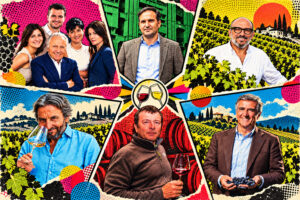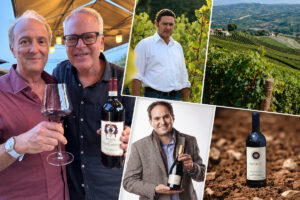







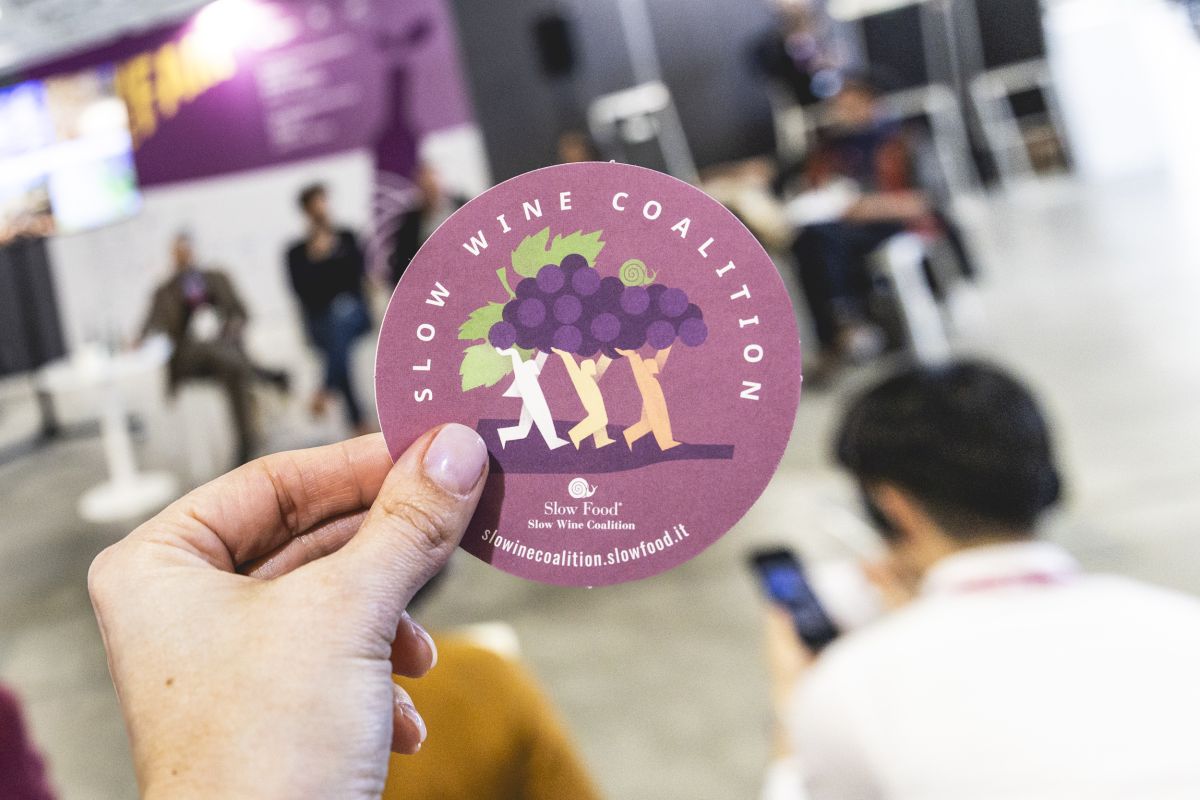
“The climate crisis we are experiencing can no longer be addressed by separating the quality of wine from the health of the territories and the communities who inhabit them. The experiences shared by the producers present here show that the future of wine depends first and foremost on caring for the soil and the land, and on social justice”: this was said by Federico Varazi, vicepresident of Slow Food Italia, during the conference “La viticoltura è un pilastro della strategia per il futuro delle Terre Alte”, - “Viticulture as a pillar of the strategy for the future of high lands”, which closed the Slow Wine Fair 2026 at BolognaFiere, under the artistic direction of Slow Food. He reiterated that “wine production is not just agricultural production: it is stewardship of the landscape, a countermeasure to depopulation, and the ability to build inclusion. When farm work becomes hospitality, integration, and environmental responsibility, it generates value far beyond the bottle, and wine becomes “right”. This is the message we want to send today as we delve deeper into viticulture in the High Lands: defending fragile territories and offering young people a concrete perspective for the future means supporting those who choose biodiversity, respect for people, and the rhythms of nature. Because today, true innovation is not about running faster, but about learning to stay, to safeguard and regenerate our territories through contemporary agriculture, an agriculture capable of holding together respect for the environment, ancestral knowledge, and deep ties with local communities”.
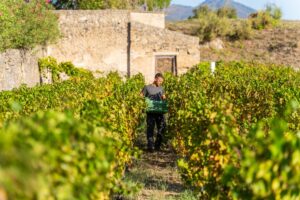
When talking about fragile territories, agriculture plays a key role, both as a vulnerable sector and as a potential guardian for land management and hydrogeological risk mitigation. Vineyards are crucial in preventing hydrogeological instability, especially in hilly and mountainous areas, acting as territorial safeguards through terrace maintenance, soil management, and regulation of rainwater. Sustainable techniques such as green manure, mulching, erosion control through ground cover, and the maintenance of dry-stone walls reduce the risk of landslides and slips in a country where 94.5% of municipalities are exposed to hydrogeological risk, and areas classified as landslide-prone have increased by 15% since 2021 (Ispra Report 2024).
Among the speakers, Donatella Murtas, director of Itla (International Terraced Landscapes Alliance) Italia Aps, said: “our work on terraced landscapes began 30 years ago, when we understood that they were an extraordinarily rich heritage to be protected and whose meaning had to be reconstructed. Within a terraced landscape we find usefulness, fertility, and an idea of agriculture that does not harm the land. When dealing with a terraced landscape, one must adopt a holistic vision. Alongside wine, many other varieties coexist. The community is broad, from Italy to Yemen to Peru. For wines, we created a back label that helps consumers understand they are supporting High Lands viticulture through their purchase viticulture that is not heroic, but courageous, along with grape varieties unique to these regions, which may have previously been discarded. The High Lands can contribute to restoring balance to our planet”.
Heidi Bonannini, winemaker of the Sciacchetrà Slow Food Presidium and president of Slow Food Liguria, recalled that “only 60 years ago the Cinque Terre reached their peak as a terraced landscape: 3,500 hectares cultivated with vines, olives, citrus. In 60 years, 90% of this landscape has been lost, some of it forever. Over those decades, terraced landscapes were abandoned in favor of cities, and along with the landscapes, the territorial identity was lost. Little by little, we saw landscapes disappear and cementification take over. Greater material well-being came with a loss of identity. Fortunately, there has been a reversal of this trend, thanks to organizations and projects that have restored agriculture, landscape, and its protection to the center—along with the maintenance of dry-stone walls and trails. I am now managing a one-hectare vineyard above Manarola, whose ownership was divided among 284 different producers. We must unite, build critical mass, and work with institutions to gain their support. Thanks to the Park, recovery has begun, and we can work on promoting the landscape, wine, and local products such as citrus, olive oil, and heather honey. The Park has worked toward an authentic restoration of the territory and to foster mindful, responsible tourism. It has also supported the integration of migrants into the community, training them in local agriculture and viticulture”.
Claudio Zucchino comes from San Salvador de Jujuy, Argentina, where he produces his wine at more than 3,000 meters above sea level, an extreme territory where he puts his vision into practice. “When I started growing grapes and making wine, I did it naturally, spontaneously, almost childishly - he explained - the altitude of 3,300 meters gives the grapes an extraordinary, unique character. The wine is in deep relationship with the landscape: it is crafted artisanally, organically, naturally. Industrial production would be impossible here. Our wine is kept as pure as possible; it is a distillation of the place where I live. To sustain ourselves, we opened a small hotel with a restaurant. The families who work with me are now about twenty: we work on wine, but also to encourage slow, mindful tourism capable of forming a relationship with the territory and the community”.
Among the producers in the audience, Andrea Peradotto of the Pian di Stintino farm in Tredozio, Emilia-Romagna, contributed: “I come from one of the most depopulated areas in Italy. I am not from a farming family and I started working on vineyards that I rented. Today I have 3 hectares cultivated by hand, organically. The area where I produce wine was devastated by the 2023 flood: the lack of constant maintenance and the weight of abandonment were deeply felt. My dream is for people to return to inhabit these marginal areas, to live in them, and to find ever new ways to belong to these places”.
Finally, Stefano Barberis of Cantine Barberis, in Alta Valle Bormida, recalled the work carried out with the Slow Food Presidium of the Terraced Landscape of Val Bormida: “people told me that my land had no future, and for 20 years I dedicated myself to it to prove this prejudice wrong. Today, the Presidium includes four producers and we make very few bottles. We protect the landscape, enhance dry-stone walls, and promote native and rare grape varieties such as liseriet, rediscovered and recovered from a small vine grown in a pot. This is our idea of the future: a path that is ours, personal and identity-driven”.
Copyright © 2000/2026
Contatti: info@winenews.it
Seguici anche su Twitter: @WineNewsIt
Seguici anche su Facebook: @winenewsit
Questo articolo è tratto dall'archivio di WineNews - Tutti i diritti riservati - Copyright © 2000/2026