


Saturday 24th of October 2026 - Last Update: 19:00






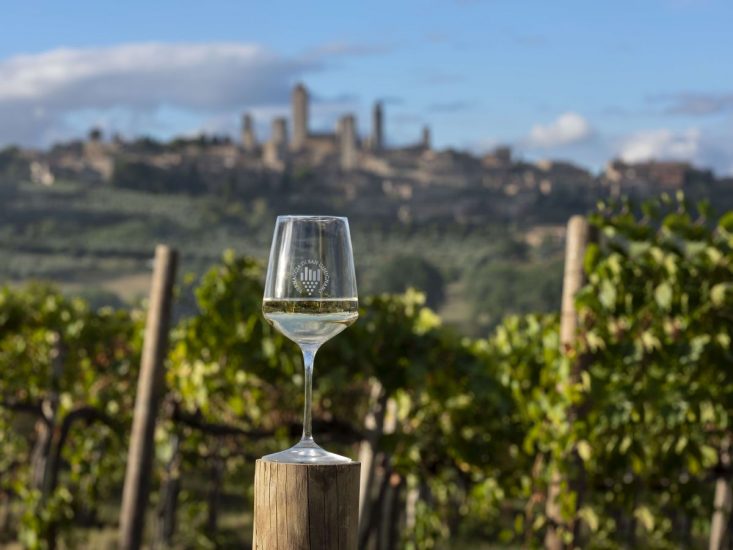
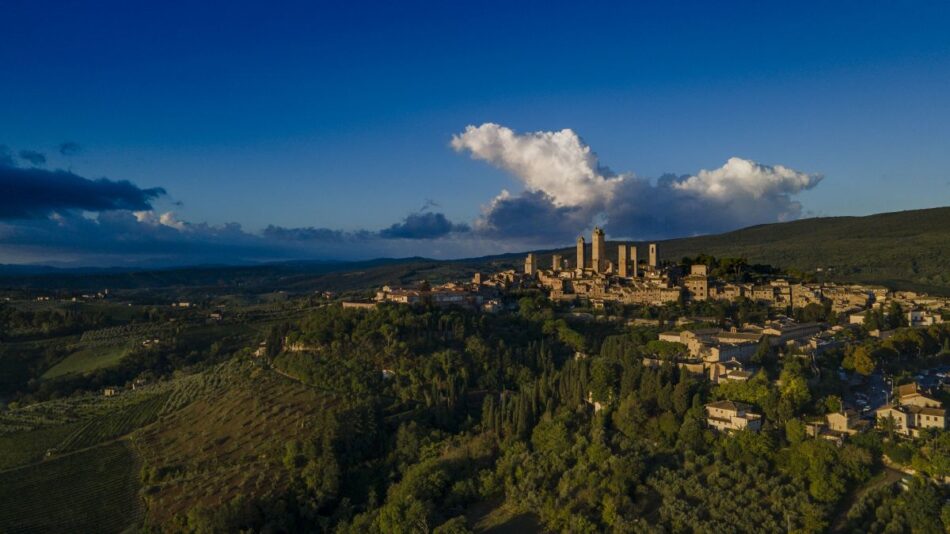
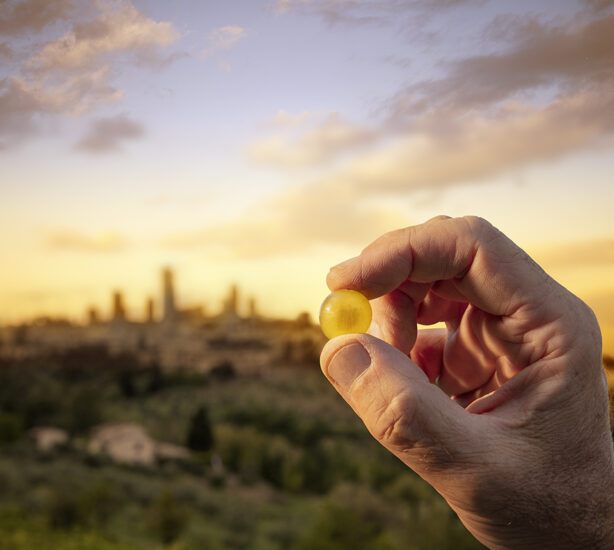
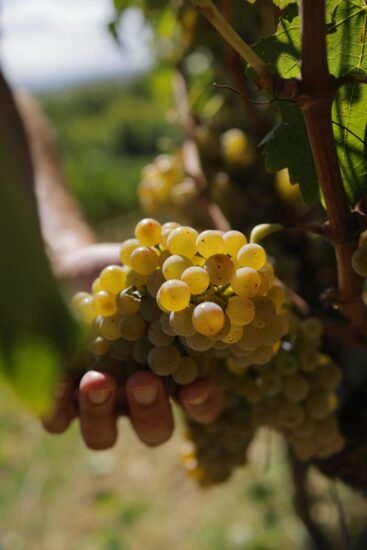
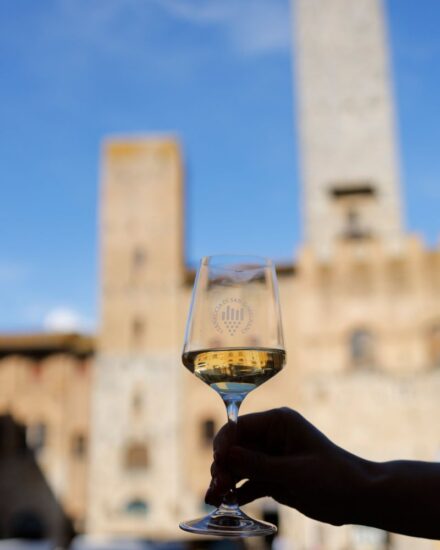
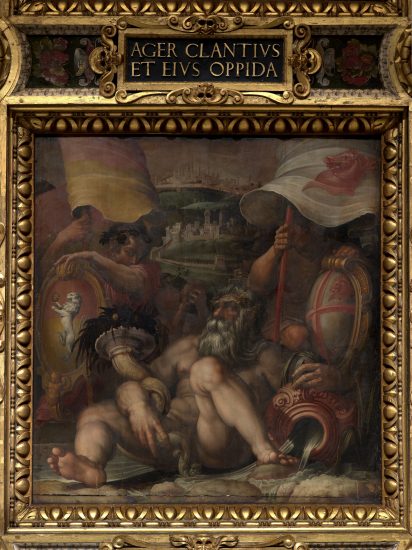
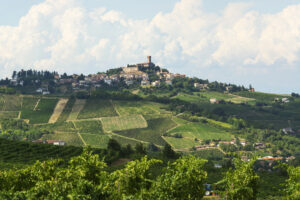
The only Italian wine that can boast such a long history and renown, and one of the very few worldwide, since its name first appeared in 1276 in the Gabelle of San Gimignano, Vernaccia has become the “queen” of the tables of popes and kings throughout Europe. A “regal” and “precious” white wine, and the only wine in Tuscany with a feminine name, perhaps it is also for this reason that it caught the attention of the greatest poets: from Dante, who made it the only wine mentioned by name in the “Divine Comedy” to Boccaccio, who lets it flow in a “little river” in the Land of Plenty in the “Decameron”, from Folgòre da San Gimignano to Cecco Angiolieri, from Eustache Deschamps to Geoffrey Chaucer, from Ludovico Il Moro to Lorenzo the Magnificent, from Francesco Redi, who even curses those who don’t enjoy it in “Bacchus in Tuscany” to Sante Lancerio, sommelier to Pope Paul III Farnese, and from Michelangelo Buonarroti the Younger at the court of Grand Duke Cosimo I de’ Medici, where it was so “admired” that in the sixteenth century Giorgio Vasari depicted it in the Salone dei Cinquecento in Palazzo Vecchio in Florence. The seventeenth century was a “golden age” for both Vernaccia and San Gimignano, the “New York of the Middle Ages”, a Unesco World Heritage Site, with which its history and good fortune overlap, even when in the eighteenth century the wine entered a period of decline, though production never ceased. Its revival began in the 1960s, when naturalists, scientists, and intellectuals recognized that its fine indigenous grape variety, one of the oldest in Italy, deserved to regain its ancient esteem. And so it did: on March 3rd, 1966, exactly 60 years ago, Vernaccia became the first Italian wine to obtain DOC status, an anniversary celebrated today in the “city of 100 towers” at the conference “Vernaccia di San Gimignano: the roots of the future”, promoted by the Consortium in a 2026 that also marks 750 years since the first documented mention of Vernaccia. Granted DOCG status since 1993, and considered a “niche” wine, it is produced exclusively in the territory of San Gimignano across 2,000 hectares of beautiful, meticulously maintained vineyards - 750 designated for Vernaccia DOCG and 450 for San Gimignano DOC in its various types (Rosato, Rosso, Vin Santo Occhio di Pernice, and Vin Santo, among others). These vineyards give life to a long-lived white wine, one of the very few also boasting a Riserva classification. Around 170 producers generate approximately 5 million bottles per year, over 50% of which are exported, mainly to the USA, Germany, and Switzerland - while a remarkable 40% is consumed locally. The denomination looks toward the future with an eye on the global market and new generations.
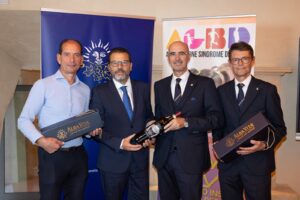
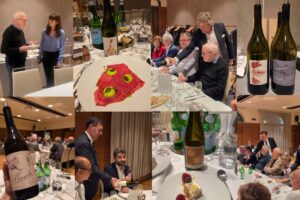
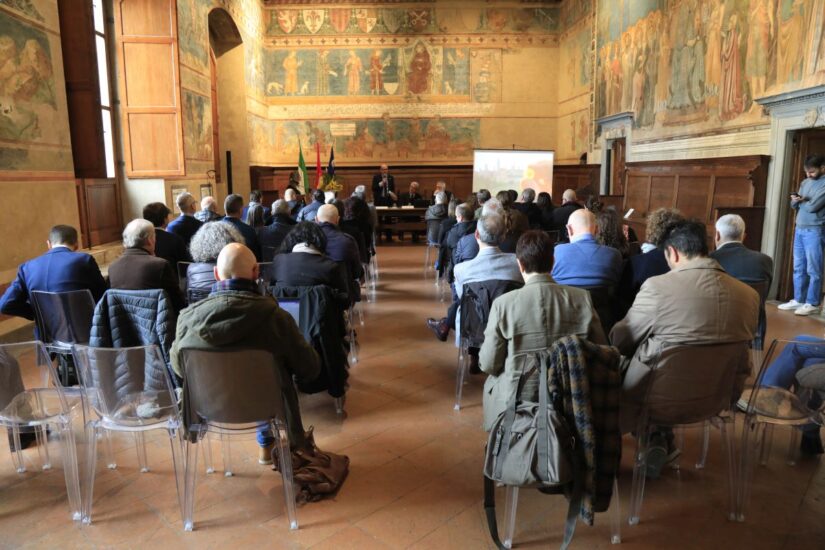
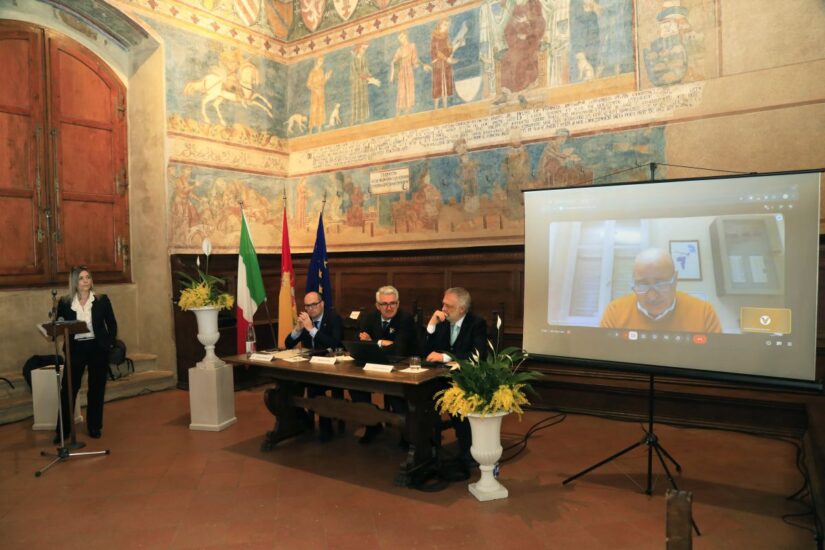
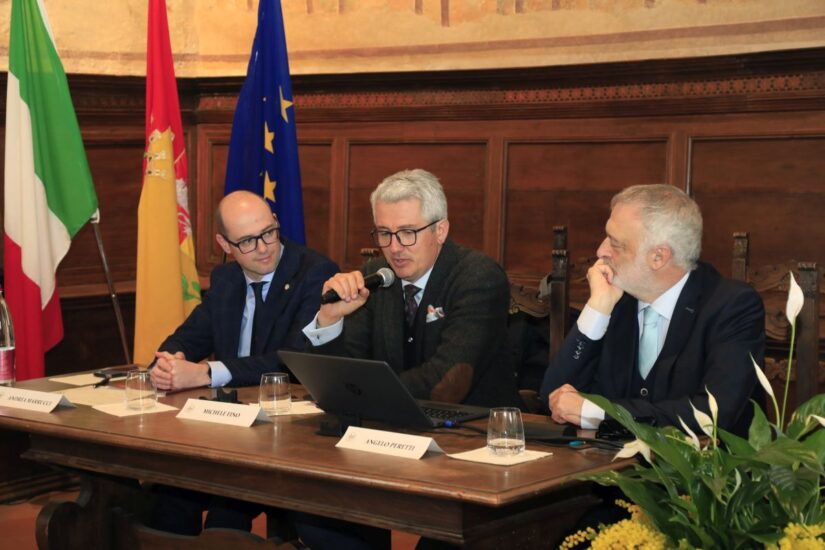
This was the spirit of today moment of collective reflection, which brought together figures from the institutional, academic, and wine communication worlds to chart the course for the coming decades for a wine that is among the oldest witnesses of Italian winemaking history. Its longevity doesn’t belong only to archives but continues to express itself vibrantly in glasses around the world, as recalled by mthe ayor of San Gimignano, Andrea Marrucci, and president of the Vernaccia di San Gimignano Wine Consortium, Manrico Biagini. Filippo Mobrici, vice president of Federdoc, offered a system-wide perspective, addressing with clarity the most pressing challenges for Italian denominations: competitiveness in global markets, sustainability as a strategic lever, digitalization as a tool for visibility and storytelling, and generational renewal, namely, how to bring young consumers closer to a responsible and conscious wine culture. These reflections were complemented by the contribution of Michele A. Fino, professor of Foundations of European Law at the University of Gastronomic Sciences in Pollenzo of Slow Food, who offered a cross-sectional reading of 60 years of the wine market, retracing the transformations which have shaped the sector from the birth of the DOC system to today, a journey woven with social changes, economic dynamics, and new consumer sensitivities. Completing the picture was Angelo Peretti, journalist and wine-industry strategist, who presented the first insights from a Doxa analysis commissioned by the Consortium: an up-to-date snapshot of consumer perceptions of Vernaccia di San Gimignano, offering important insights into its positioning, perceived identity, and the opportunities still to be seized both in Italy and abroad. A common thread ran through all the contributions: the shared desire to combine identity and innovation, preserving the denomination historical value while strengthening its ability to engage with international markets and new generations. Lisanna Boschini, vicepresident of the Consortium, emphasized how this anniversary represents not only a milestone but above all a starting point for the future of the denomination: “sixty years of DOC is not just an anniversary, it is an invitation to look to the future with the same courage and vision that in 1966 led to the official recognition of what the territory had known for centuries. Vernaccia di San Gimignano is a story which spans time, which endures, evolves, and continues to assert itself: a living tradition that, yesterday as today, confirms Vernaccia as the true queen of white wines”. A message which captures the spirit of the meeting and reaffirms the Consortium commitment to guiding Vernaccia di San Gimignano through the challenges of the coming years, supported by seven and a half centuries of history and a clear vision for tomorrow.
Celebrations will continue, again in San Gimignano, from May 30th to 31st, with “Regina Ribelle - Vernaccia di San Gimignano Wine Fest” 2026, the festival dedicated to the famous Tuscan white wine, promoted by the Consortium in collaboration with the Municipality. Together with wine lovers, the event will unfold through contemporary languages, experiences, and content that will shape the happenings in the heart of the city: itinerant tastings, themed masterclasses, meetings with producers, and workshops on food-and-wine pairings, in dialogue with Tuscan gastronomic excellence and the offerings of local restaurateurs, as well as cultural insights and entertainment, including an evocative evening DJ set in the enchanting setting of the Rocca di Montestaffoli. Public events on May 30th - 31st will be preceded on May 28th and 29th by days dedicated to national and international media, with the presentation of new vintages, conferences, and tours of local wineries.
Copyright © 2000/2026
Contatti: info@winenews.it
Seguici anche su Twitter: @WineNewsIt
Seguici anche su Facebook: @winenewsit
Questo articolo è tratto dall'archivio di WineNews - Tutti i diritti riservati - Copyright © 2000/2026