







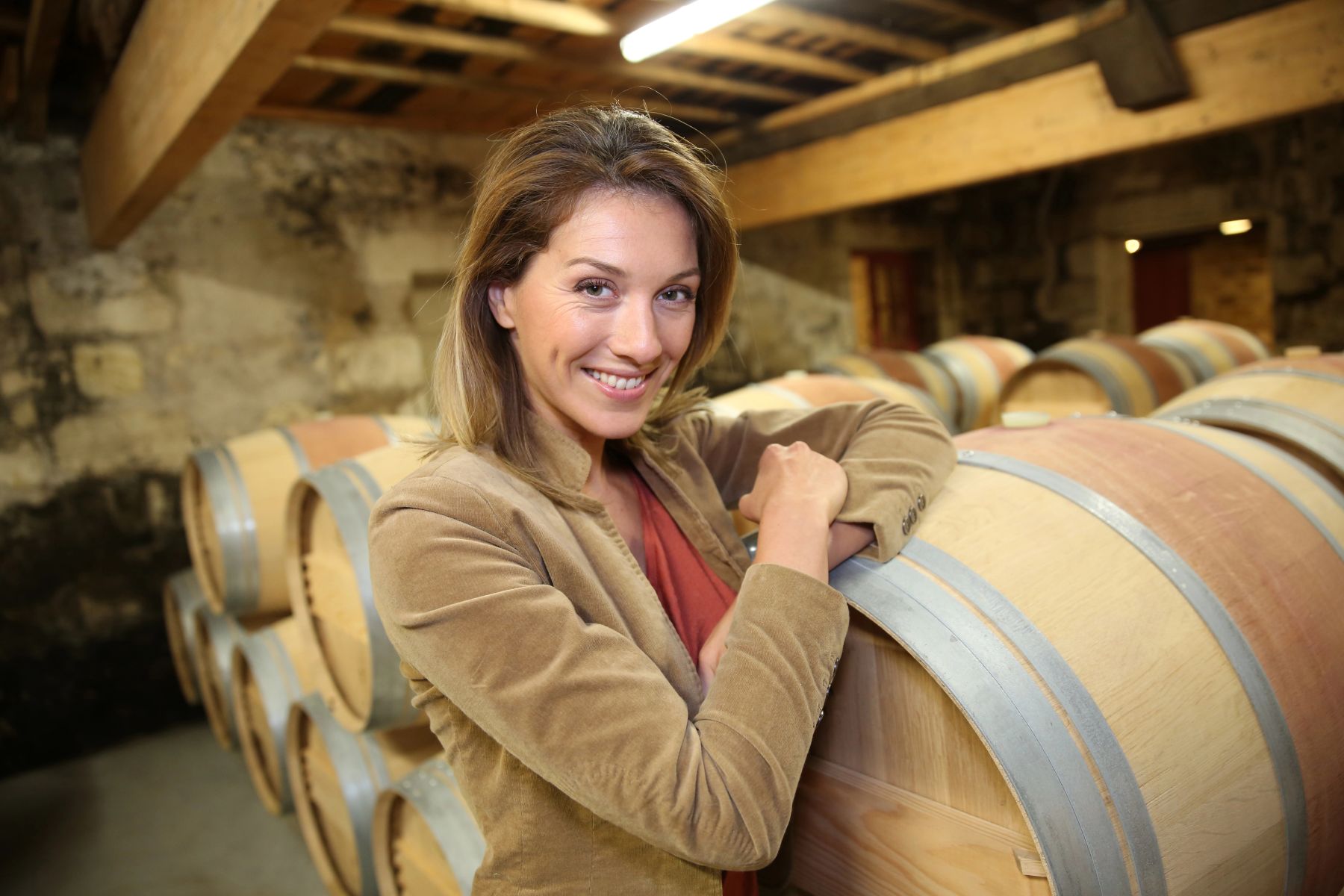
It is not a change of face, but of structure: at a time when the Italian wine sector is facing unstable markets, reputational attacks and growing complexity, a fact emerges forcefully which goes beyond representation and talks to organizational effectiveness. Where female leadership grows, wine companies become stronger, more future-oriented and more attentive to human capital. This is highlighted by the study “Il ruolo delle donne nella trasformazione dei modelli di governance e di leadership nelle aziende vitivinicole” - “The role of women in transforming governance and leadership models in wine companies”, carried out by Mib Trieste School of Management together with the National Association Le Donne del Vino, presented in recent days at Vinitaly. Based on responses from 152 women entrepreneurs and managers, the research describes the move beyond the “single entrepreneur in command” model in favor of more advanced organizations, capable of planning, delegating and working with a long-term perspective.
According to the results, female-led companies show a greater presence of clearly defined roles, structured governance systems and shared decision-making processes, with strong attention to sustainability, identified as a priority by over 75% of respondents - to the enhancement of local territories, considered a strategic asset by around 70% of the sample, and a long-term strategic vision adopted by more than 80% of companies. The focus, therefore, is not only on the product, but on a system of relationships, identity and value. People are also central: talent retention (for about 78%), continuous training and the quality of the internal work environment emerge as true competitive levers, while competitiveness shifts from mere production performance to the ability to attract and develop skills.
The picture, however, is not without shadows. Cultural resistance persists and access to top leadership roles is still not balanced. In particular, the cooperative sector appears to be lagging behind, with limited female representation at the top of large organizations. This remains a critical issue and, at the same time, a crucial area to address for the future of the sector.
“This research shows that female leadership is not a matter of representation, but of effectiveness - says Francesca Poggio, deputy vicepresident of the National Association Le Donne del Vino - wine companies are changing and require more structured models capable of bringing together vision, people and territory. In this process, women are making a concrete and measurable contribution”, while according to Pierpaolo Penco, head of Wine Business Education at Mib Trieste School of Management, “the real issue for Italian wine is not the product but the structure of companies, which are being called to adopt more mature organizational models”.
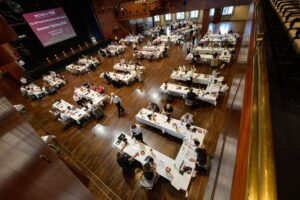
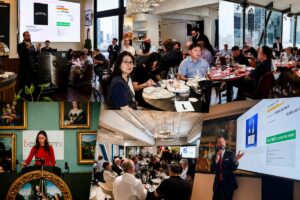
In the debate moderated by Lara Loreti, featuring testimonies from Marina Mortara Marsaglia, Giovanna Prandini and Karoline Walch, the need to work as a system and rethink shared strategies also emerged, in order to face market challenges and institutional weaknesses. This includes enhancing female talent that is still not fully recognized, especially in the cooperative sector, where access to top roles remains limited.
“The complexity of the market and speculation - explains Giovanna Prandini - exacerbated by attacks on the healthfulness of wine and the value of the Mediterranean diet, together with still weak political responses, require companies and consortia to rapidly rethink their strategies. In my experience, I have worked to create a network of companies capable of overcoming size limitations and, at an institutional level, to launch, together with Kpmg (an international professional services firm) a process of analysis and repositioning of the PDO and PGI wines of the 12 Ascovilo consortia. Much can be done together: it is essential to also enhance female talent in agriculture, which even today is not fully recognized”.
“I firmly believe that our task is to preserve what we have received - adds Karoline Walch - to continue building on these foundations and to pass them on to future generations in a state that is just as strong, if not stronger. In this way, each generation leaves its mark, with the awareness of being part of a story far greater than ourselves”, concludes Walch.
The message emerging from the research is clear: it is not about counting how many women sit at the top, but about understanding which business model is taking shape. Female leadership is affirmed as a coherent expression of a new organizational paradigm, capable of integrating vision, people and territory, and of building value over time, concludes the research.
Copyright © 2000/2026
Contatti: info@winenews.it
Seguici anche su Twitter: @WineNewsIt
Seguici anche su Facebook: @winenewsit
Questo articolo è tratto dall'archivio di WineNews - Tutti i diritti riservati - Copyright © 2000/2026