


Wednesday 9th of September 2026 - Last Update: 19:29





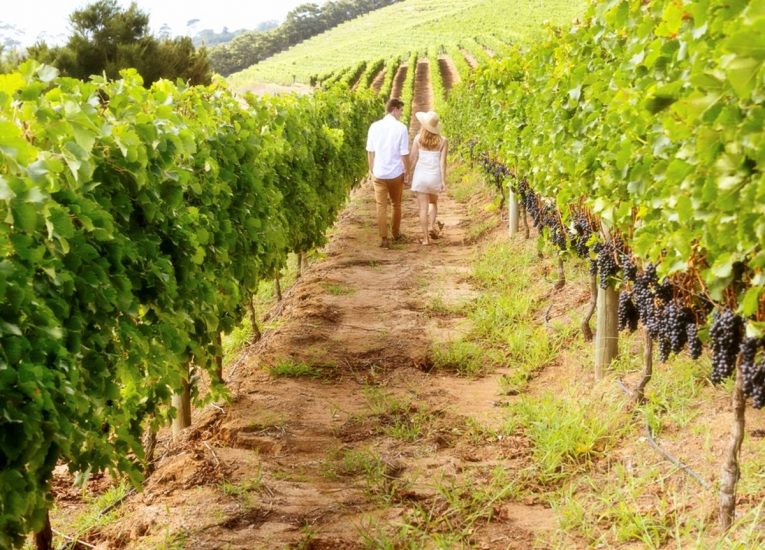
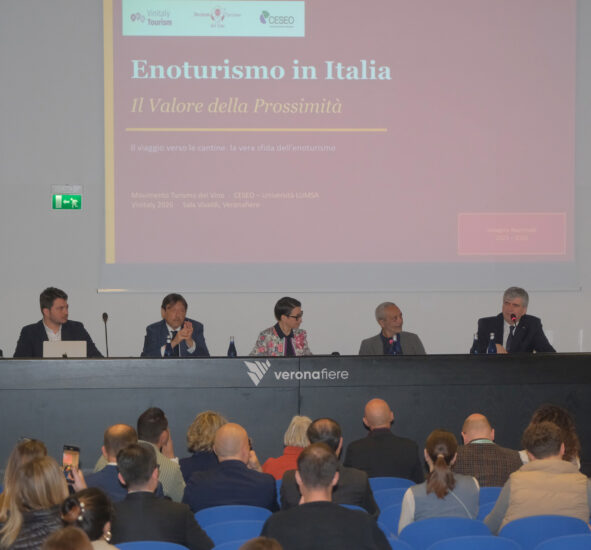
One of the keys to the future of Italy’s wine sector, and also one of the central themes of Vinitaly 2026 in Verona, is wine tourism, which takes center stage at Veronafiere’s Vinitaly Tourism. It is a growing phenomenon (worth 3 billion euros, ed.), but one that faces certain obstacles that must be addressed in order to develop further. These challenges range from physical accessibility to wineries to fostering better communication between producers and intermediaries, such as local travel agencies and tourism offices, not to mention a greater focus on visibility to ensure they are easily found on-site and thus satisfy the “desire for wine tourism” that is undeniably strong in Italy and around the world. These are some of the key points that emerged during the meeting “Wine Tourism in Italy: The Value of Proximity. The Journey to the Wineries Is the True Challenge of Wine Tourism”, organized by the Wine Tourism Movement. The event focused on data from the new survey (conducted on a sample of 300 wineries affiliated with the Movement, where the presence of foreign tourists reaches 35–40%), carried out by the Center for Wine and Olive Oil Tourism Studies (Ceseo) at Lumsa University, edited by Professor Antonello Maruotti, with the participation of the president of the Wine Tourism Movement, Violante Gardini Cinelli Colombini, and the president of Ceseo, Senator Dario Stefàno. The meeting, moderated by Stefano Carboni (Tor Vergata University), also featured a visit by the new Minister of Tourism, Gianmarco Mazzi, and a presentation by Barbara Ferro, at VeronaFiere.
Italian wine tourism is a growing sector and has everything it needs to take a significant step forward, thereby evolving, becoming more structured, and attracting new streams of tourists. Yet, as Federico Guzzo (Lumsa University) explained, out of the 104 million foreign tourists welcomed in 2025, less than 10% visited a winery. The demand is there, but opportunities for access are lacking. This is the “crux” of the challenge for the sector: it is not about attracting visitors, but about making them accessible. This is also because, based on the share of revenue from tourism in 2025, wine purchases at retail locations or via shipping are the largest category, ahead of visits or other paid activities. According to the study, direct sales and the HORECA channels are the strongest channels in the wine sales landscape, ahead of exports, and are significantly more productive than large-scale retail and e-commerce.
Among the wineries featured in the study, there are certainly those that exceeded 5,000 visitors per year in 2025: 12% are located in Central Italy, 10% in the South and Islands, and 7% in the North. Nineteen percent of wineries in the South and Islands, 18% in Central Italy, and 12% in the North fall within the 2,000 to 5,000 visitor range. Geographically speaking, 2025 was a positive year across the board: 63% of wineries in Northern Italy reported an increase in visitors, a figure that stands at 50% in Central Italy (which, however, starts from “robust” tourist numbers), and 67% in the South and Islands. The internationalization of visitors is higher in Central Italy, where 46% of wineries report over 50% foreign tourists, a figure that stands at 31% in the South and Islands and drops to 15% in the North.
One of the issues, and the easiest one to address, relates to information: 65% of wineries in Northern Italy report that they do not provide directions on their websites for how to reach the winery by train, bus, or taxi; 59% do the same in Central Italy, and 56% in Southern Italy and the Islands. It is not surprising, in fact, that 100% of visitors arrive at the winery by their own means in all geographic areas; the share of tourist buses reaches 50% in Central Italy, 48% in Southern Italy and the Islands, and 32% in Northern Italy. The South leads in private transportation to wineries; in fact, 21% organize it, compared to the national average of 13%.
Another area for improvement concerns costs, because getting to the winery from the train station is often more expensive than a low-cost flight. In the South and on the Islands, 17% of visitors spend over 200 euros to reach the winery (7% in Central Italy); the 50- to 100-euro range, which has the highest percentage, is paid by 37% of visitors in the North, 34% in Central Italy, and 36% on the Islands. This amount (€50–€100) is spent from the airport, using taxis or private hire vehicles, by 59% of visitors to wineries in the North, 38% in the Center, and 36% in the South and Islands, where, however, 21% spend less than €50 (compared to 18% in the North and 12% in the Center) . The Central region has the highest costs for reaching a winery from the airport: 35% of wine tourists pay between 100 and 200 euros.
And then there’s the challenge of connecting with the local tourism industry. More than half of Italian wineries do not have local operators selling wine tours (the Central region is the exception, with 38% reporting “yes”). Tourist offices (44% in the North, 35% in the Center, and 30% in the South and Islands) offer winery tours, but 38% of wineries in the North, 45% in the Center, and 44% in the South and Islands say they are unaware of this. Wineries also need to make an effort: 63% of those in the North state that they do not send (or do so only upon request) proposals or experiences to travel agencies; this figure improves but remains high in the South and the Islands (47%), while in the Center it stands at 29%, an area where, however, 34% state that they do so more than once a year.
Ultimately, the three challenges identified are: improving physical accessibility by collaborating with local transportation providers to reduce dependence on cars, an issue that is particularly pronounced in the South; focusing on digital visibility, given that only 35–44% of wineries provide online directions, while the study suggests that every website should be able to answer the question of how to get to the winery in three clicks; And finally, there is a need to accelerate productive synergies by following the model of Central Italy, which demonstrates that sharing experiences with agencies several times a year yields concrete results. All of this with the goal of transforming the desire to visit an Italian winery into an experience that is truly accessible to everyone, no matter where in the country or the world they choose to travel from.
Tourism Minister Gianmarco Mazzi highlighted the importance of wine tourism, to which he has decided to “devote significant effort”. It is important for wineries because it allows them to sell directly to consumers and is less expensive. Furthermore, visiting tourists act as catalysts for attracting other tourists through word of mouth. And then wine tourism can provide a solution to overtourism in art cities by better distributing tourist flows”. For the president of the Movimento Turismo del Vino, Violante Gardini Cinelli Colombini, it is also necessary to pay attention to the language used in the winery with wine tourists: “Enough with just talking about the production method; let’s highlight our distinctive characteristics”. Barbara Ferro, CEO of Veronafiere, focused on the “Vinitaly Tourism” platform, emphasizing the importance of wine as a product that “is an experience, the ability to evoke and to remember. Once upon a time we bought postcards; today we seek the experience in the winery.”
Copyright © 2000/2026
Contatti: info@winenews.it
Seguici anche su Twitter: @WineNewsIt
Seguici anche su Facebook: @winenewsit
Questo articolo è tratto dall'archivio di WineNews - Tutti i diritti riservati - Copyright © 2000/2026