


Sunday 20th of September 2026 - Last Update: 21:50






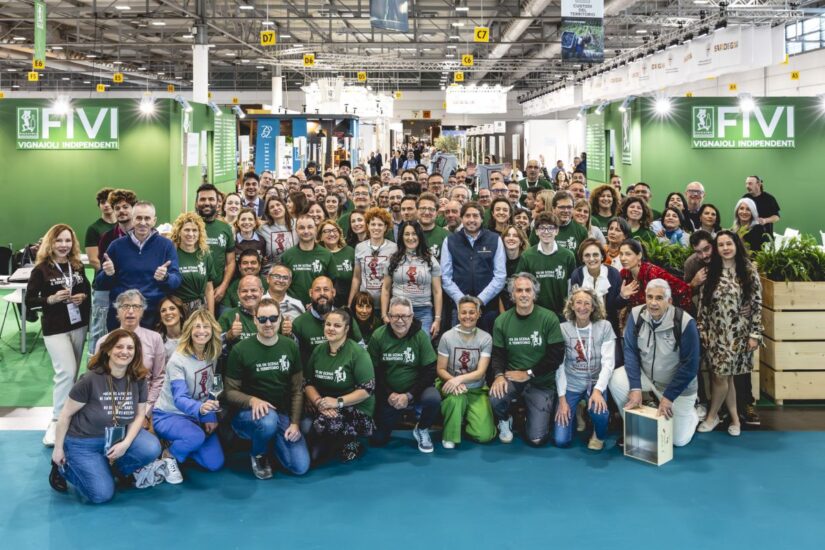
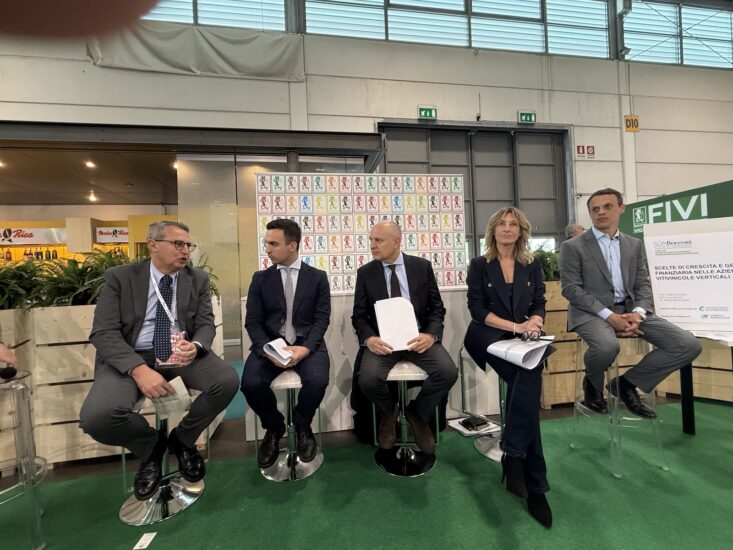
If in 2025 the research on the economic and financial sustainability of vertically integrated wine-growing companies belonging to Fivi - the Italian Federation of Independent Winegrowers had provided a snapshot of a “model that is resilient yet fragile at the same time”, the results of the 2026 research - as in the previous year carried out in collaboration with the Invernizzi Agri Lab of Sda Bocconi School of Management, with the essential support of the Romeo and Enrica Invernizzi Foundation and Crédit Agricole Italia - presented today at Vinitaly, tell a story of pride and happiness in being Independent Winegrowers. This was underlined by Rita Babini, vine grower and president of the Association, highlighting values rooted in territorial embeddedness, production quality and family management. “For the second year, thanks to research and the data it generates, we are delving into the economic and financial dimension of our vertically integrated companies, transforming feelings and opinions into numbers,” Babini observed. This data - as emphasized by Vitaliano Fiorillo, director of the Invernizzi Agri Lab at Sda Bocconi School of Management - makes it possible to study a segment of the wine sector which is not very visible from an economic and financial standpoint.
The research involved 396 agricultural companies out of the 1,800 members of Fivi, a representative sample concentrated mainly in Northern Italy but consistent with the national average distribution. “The survey focused on four key topics - illustrated Luca Ghezzi, research coordinator at Sda Bocconi School of Management - the first concerns working capital management by Fivi companies. In this regard, a key issue emerged: most of these companies experience a negative mismatch between customer collection periods and supplier payment terms. Across the entire sample, only 58 companies manage to collect payments faster than they pay suppliers, while as many as 134 face a disadvantageous cash flow dynamic, paying suppliers more quickly than they collect from customers. The remaining companies fall somewhere in between. If we add to this the typically significant inventory holding period in this sector, we see a clear issue of financial pressure and liquidity strain linked to working capital. It also clearly emerges that Fivi companies tend to cope with these pressures mainly by using internal levers, such as cutting expenses and investments and focusing on saving resources. Companies make very limited use of bank debt. More than 50% do not consider short-term borrowing at all, while with regard to medium- and long-term financing, critical issues have emerged related to interest rates, required guarantees and the length of approval processes. These factors make this financial lever difficult to use”.
“The liquidity issues faced by companies - Babini added - are certainly linked to the very nature of our business model, which is based on substantial initial investments and an inevitably long working capital cycle. Quality wines leave the cellar many months or even years after the harvest, and when investing in a vineyard, the return on investment only begins after at least four or five years. In this context, it is essential that external financial flows are timely. Uncertainty and delays risk dampening the propensity to invest, forcing companies to scale back their development plans and triggering a vicious circle for the entire sector”.
The second part of the research focused on the willingness of companies to open up their equity to support growth, along with acquisitions and extraordinary transactions. “With regard to opening up to external capital for growth - continued Ghezzi - a very interesting aspect emerged: Fivi members would prefer partners that are not purely financial in nature, because their objective is not financial per se, that is, gaining access to capital, but rather regaining skills and contacts to improve market access. What emerges is an entrepreneurial model which prioritizes control and business continuity, selectively adopting financial instruments and extraordinary transactions in line with a gradual and sustainable development approach”.
Moving from intentions to reality, the final part of the research directly asked whether capital transactions are currently underway. 58% of companies answered no, 10% are considering them as a remote possibility, and 21% might evaluate them. Overall, 89% appear uninterested, and only 11% of Fivi companies currently have capital operations in progress. 5% are pursuing acquisitions, while 6% are divesting or being acquired – about 30 companies in total - figures which are physiologically normal for any sector. The research therefore portrays an image of the independent winegrower who seeks strong entrepreneurial continuity for their business and, as president Rita Babini stated, is happy with their status”.
Maurizio Crepaldi, head of corporate and Agri-Agro Affairs at Crédit Agricole Italia, commented that support for the agri-food system remains central to the Group strategy. “Last year - he recalled - we provided over 1.1 billion euros in new loans to operators in this sector, seeking to support projects focused on sustainability and innovation. Our collaboration with the Italian Federation of Independent Winegrowers fits into this framework and represents a concrete sign of attention toward a reality we recognize for its role in safeguarding the authentic values of the communities in which we operate together”.
“The research brings out even more clearly the central role of promotional tools - commented the Fivi president - despite the strong desire of winegrowers to open up to international markets, which the research highlights, other data shows that only a small share of companies manages to benefit from current support measures. While 75% of members export, only 13.6% used the Ocm call in 2025. Fivi welcomes the new provision allowing Regions to lower the minimum threshold for project access; this is a first concrete step toward making policies more inclusive, also taking into account the specific needs of small producers”.
On the sidelines of the meeting, Rita Babini told WineNews about the need to rethink Italy wine production management to address land devaluation and overproduction. “Land value - she explained - is often used as collateral for mortgages and tends to decline due to wine overproduction, which exceeds the market absorption capacity. This dynamic is particularly critical in many areas of Italy, with the exception of a few virtuous zones. It must be addressed by reducing yields, especially in the generic wine segment, which has seen growing stocks for the past 3-4 years despite difficult vintages such as 2023, and by avoiding the granting of production exceptions in some cases of up to 400 quintals per hectare, which damage wine value and do not promote quality”.
Copyright © 2000/2026
Contatti: info@winenews.it
Seguici anche su Twitter: @WineNewsIt
Seguici anche su Facebook: @winenewsit
Questo articolo è tratto dall'archivio di WineNews - Tutti i diritti riservati - Copyright © 2000/2026