


Monday 6th of April 2026 - Last Update: 17:10






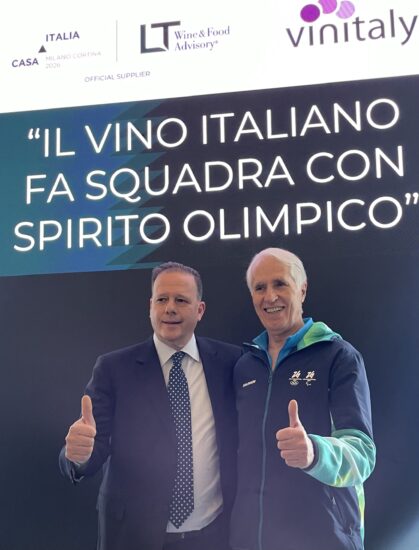
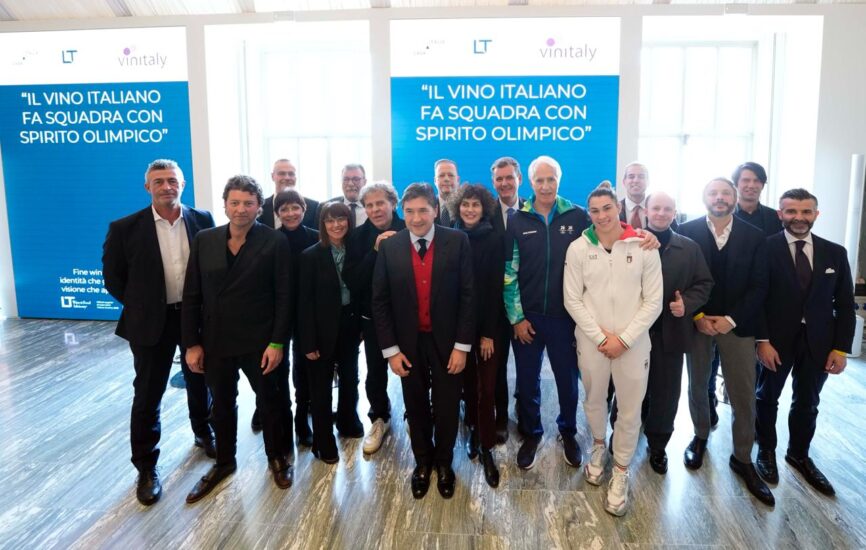

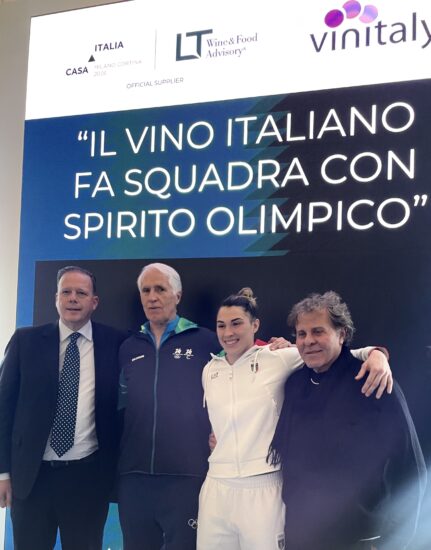
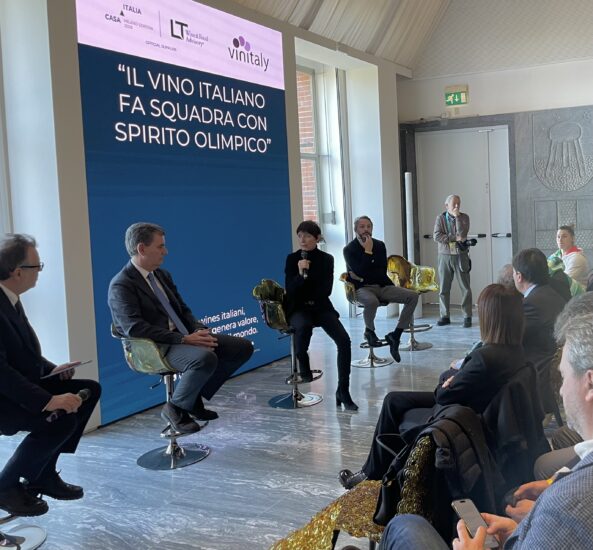
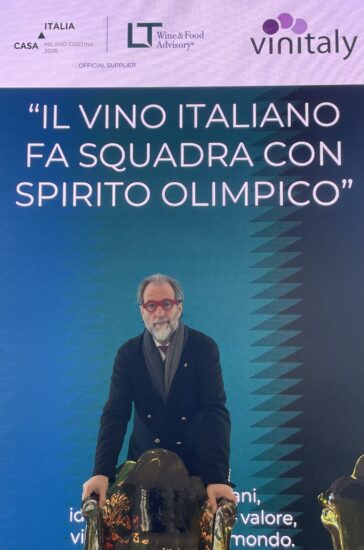
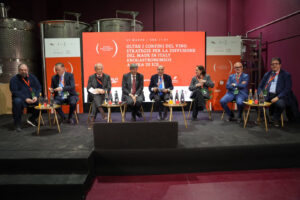
Just as major sporting events, such as world championships or the very current Olympics, serve to bring people together and overcome barriers, Italian wine, already loved worldwide, must, both out of necessity and passion, broaden its horizons and diversify its markets. It must go beyond the most important and irreplaceable ones, from the U.S. to Germany, the U.K. to Canada, from France to Japan, to name a few, and grow in those where it is not yet a “champion” opening others still unexplored or barely approached. And it must do so with an “Olympic spirit” as a team, creating synergy between the work of businesses and that of institutions, and of the major internationalization platforms which, for wine, include VeronaFiere, headed by Federico Bricolo, with Vinitaly, and the Italian Trade Agency headed by Matteo Zoppas. This includes seizing the opportunity offered by the additional 100 million euros allocated to the former Ice agency, strongly supported, as Agriculture Minister Francesco Lollobrigida said, by the Minister himself. This is the message which emerged from the talk “Il vino italiano fa squadra con spirito olimpico - Fine wines italiani, identità che genera valore, visione che apre il mondo” - “Italian wine teams up with an Olympic spirit - Italian fine wines, an identity that generates value, a vision that opens the world”, held today at “Casa Italia” at the Triennale in Milan, organized by Lt Wine & Food Advisory by Lorenzo Tersi.
“Italian wine will certainly be able to seize the new growth opportunities deriving from international agreements (India and Mercosur above all, ed) and beyond. New destinations are emerging on the horizon that promise to increase our market shares, from Mercosur countries to India already included in the Vinitaly map. A growth path that the Government is supporting by strengthening tools, resources, and missions, including the one scheduled in the coming months in the Stan Area of South-Central Asia”, said Agriculture Minister Francesco Lollobrigida (here his speech, which touched on many other points).
“A roadmap that will also involve Vinitaly: we are working - commented Veronafiere president Federico Bricolo - to expand our field of action to guarantee increasingly effective promotion for Italian companies and more targeted incoming attendance at the fair in Verona. The mission with the Ministry of Agriculture and the Italian Trade Agency will allow us to explore opportunities and trends in a high-potential area that includes Kazakhstan, Kyrgyzstan, Tajikistan, Turkmenistan, Uzbekistan, Afghanistan, and Pakistan. Moreover - continued Bricolo - we are strengthening our long-standing presence in China, Brazil, and the United States, with Vinitaly.USA in New York next October. In the development plan for promoting Italian wine, together with institutional partners, we are also looking to Canada and working to include it in the international Vinitaly calendar as early as the first half of 2026”.
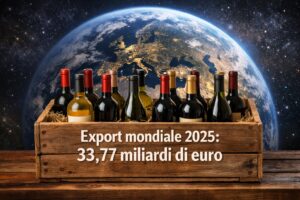
A collective effort, therefore, in which Ita- the Italian Trade Agency plays a leading role, thanks also to the additional resources for promoting made in Italy, a large share of which, as Minister Lollobrigida said, will be allocated to wine promotion. Wine, after all, is a pillar of the agri-food sector which, in 2025 (figure to be confirmed), should have exported just under 73 billion euros (+4.9% over 2024). A performance better than the national average, as underlined by Ita president Matteo Zoppas: “after two years of consolidation in a difficult context, and despite tariffs, the euro-dollar exchange rate, wars, and all current challenges, made in Italy exports closed 2025 at 643 billion euros, growing by +3.3% from the previous year. In 2025, Italian “bello e ben fatto” - “beautiful and well done” proved to be stronger than obstacles, both within Europe (+4.2%) and outside (+2.4%). Pharmaceuticals contributed most to overall growth: 2.5 out of the 3.3 percentage points came from this sector; followed by metals and metal products, and agri-food, contributing 1 and 0.5 points respectively. Agri-food exports (+4.9% in 2025/2024) reached 72.4 billion euros, mechanical engineering remained just under 100 billion, and textiles, apparel, and footwear fell by 1.9% to 60.8 billion. The most dynamic EU market was Spain (+10.2%), followed by Poland, Austria, and France; after two years of decline, sales to Germany also grew again (+2.3%), our main export destination. Among non-EU European markets, Switzerland rose (+16.3%), while Turkey (-23.1% overall, -4.6% excluding jewelry) and Russia (-15.4%) declined. As for the United States, 2025 ended with +7.2%, reflecting strong growth in the first half of the year and a marked slowdown in the second. The ongoing of sales to the U.S. must be monitored closely in the coming weeks and months, considering uncertainties related to tariffs and the euro/dollar exchange rate. Exports to India grew nearly 10% (+9.4%), while sales to China fell by 6.6%, despite a positive last quarter. It is essential to protect acquired contracts in the U.S. and diversify into the rest of global markets. In this sense, the “Export Action Plan”, promoted by the Ministry of Foreign Affairs and Minister Antonio Tajani, is a fundamental lever to support companies in foreign markets, alongside the rest of the national system. The Government is strongly pushing export growth by allocating significant resources: we must turn them into concrete actions, strengthening trade fairs, foreign showcases, global offices, and business matching activities, especially for small and medium-sized enterprises”.
Wine companies are at the forefront of this effort, including the many highlighted during “Fine wines italiani, identità che genera valore, visione che apre al mondo” - “Italian fine wines, an identity that generates value, a vision that opens to the world”, organized by Lt Wine & Food Advisory and moderated by Luciano Ferraro, deputy editor of “Corriere della Sera” with contributions from, among others, Giovanni Malagò, president of the Milano-Cortina Foundation, and case histories narrated by Francesco Cambria (Cottanera), Antonio Capaldo (Tenute Capaldo), Roberta Ceretto (Ceretto), Roberta Corrà (Gruppo Italiano Vini), Marcello Lunelli (Gruppo Lunelli), Federico Veronesi (Oniwines), and Renzo Rosso, founder of Diesel and the “Only The Brave Group” (which controls luxury brands such as Maison Margiela, Marni, Jil Sander, Viktor&Rolf), as well as founder of the wineries Diesel Farm and Brave Wine, with estates in Sicily and Piedmont.
Copyright © 2000/2026
Contatti: info@winenews.it
Seguici anche su Twitter: @WineNewsIt
Seguici anche su Facebook: @winenewsit
Questo articolo è tratto dall'archivio di WineNews - Tutti i diritti riservati - Copyright © 2000/2026