


Sunday 20th of September 2026 - Last Update: 21:50






A historic wine of Sicily and Italy, Marsala, which had already opened the Italian wine route to the United Kingdom market at the end of the 18th century thanks to the English merchant John Woodhouse, who in fact “invented” it, is now looking to the future. A future shaped by an increasingly more well-defined identity in its diversity, even though Marsala DOC originates from a small area of land (1,600 hectares claimed, according to Qualigeo data). In recent days, Consorzio di Tutela Marsala DOC, headed by Benedetto Renda, gave the green light during its Assembly, held at the historic Pellegrino cellars, to begin the process for the recognition of the Ugas - Additional Geographical Units (on the same occasion, the Board of Directors was unanimously renewed for the 2026-2029 term, fully confirming its outgoing members: Benedetto Renda, Roberto Magnisi, Orazio Lombardo, Francesco Intorcia, and Giuseppe Figlioli). The proposal will now proceed through the offices of the Sicilian Region, the Ministry of Agriculture, and the European Commission.
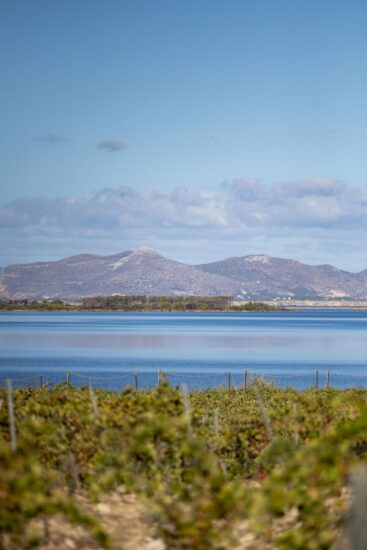
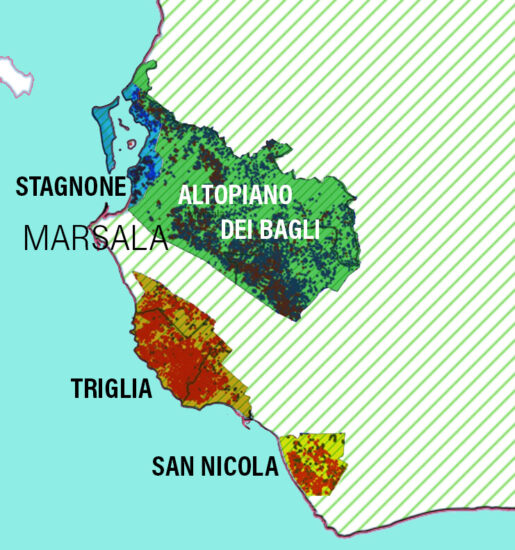
Stagnone, Altopiano dei Bagli, Triglia, and San Nicola are the names of the homogeneous areas identified through a scientific study. As explained by the Consortium, this division aims to enhance territorial differences as a distinguishing element of the denomination.
“The decision, shared by the entire supply chain - winegrowers, wineries, and bottlers - marks the conclusion of the Consortium three-year term and, at the same time, the beginning of a new strategic path for the denomination. The aim of the initiative is to introduce a territorial classification capable of strengthening the identity, recognizability, and competitiveness of one of the Mediterranean historic wines”, explains a note from the Consortium.
“The Assembly expressed a clear and shared will - underlines Consortium president Benedetto Renda (Cantine Pellegrino) - with the ratification of the Ugas, we are launching an institutional process that strengthens Marsala identity and opens up new prospects on international markets. We must expand consumption opportunities, reach new audiences, and bring Marsala into contemporary language, also through the world of mixology and cocktails, where it can express extraordinary versatility and strong international recognizability”.
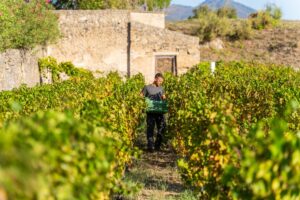
The technical-scientific study underlying the project, developed through a multifactorial analysis integrating vineyard georeferencing, climate data, soil characteristics, and orography, identified four homogeneous areas, as said: Stagnone, Altopiano dei Bagli, Triglia, and San Nicola.
“With this step, we are returning to the land - explains Roberto Magnisi, deputy director of the Consortium (Cantine Duca di Salaparuta and Florio) - the Ugas allow us to restore Marsala landscape, its agricultural and community dimension. This project also has strong implications for wine tourism: defining the areas means building destinations, creating relationships, and generating experiences. And then there is time, Marsala great asset: a long aging period, preserved in maturation cellars, a planted heritage that today once again becomes an element of identity and a lever for development”.
According to the Consortium, zoning represents a paradigm shift for Marsala: from a denomination perceived as homogeneous to a structured territorial system, where each area contributes specific characteristics to the wine identity. “We worked with a study developed by Panagri based on solid scientific foundations, correlating climate, soils, altitude, exposure, wind patterns, and vine development - underlines consultant Carlo Alberto Panont - the Ugas arise from a real interpretation of the territory and represent an operational tool for building value over time. It means moving from implicit knowledge to measurable knowledge, capable of supporting quality, identity, and recognizability”.
Copyright © 2000/2026
Contatti: info@winenews.it
Seguici anche su Twitter: @WineNewsIt
Seguici anche su Facebook: @winenewsit
Questo articolo è tratto dall'archivio di WineNews - Tutti i diritti riservati - Copyright © 2000/2026