


Monday 14th of September 2026 - Last Update: 17:49







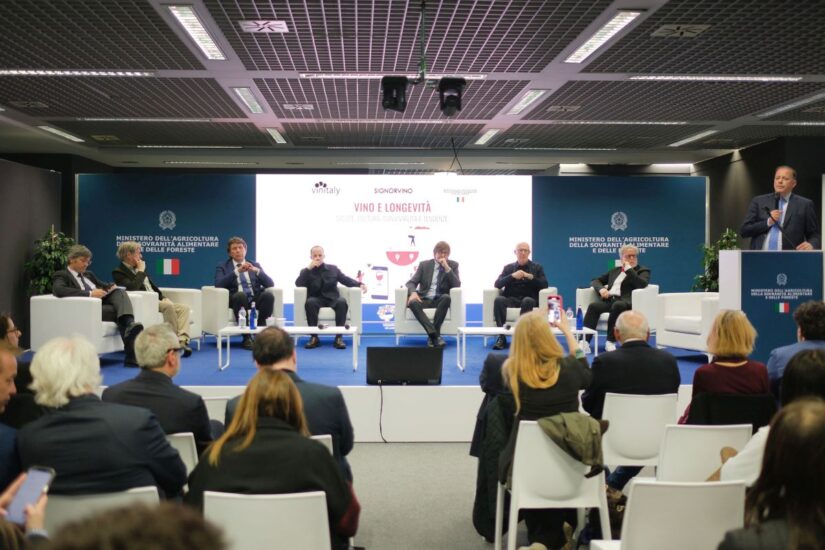
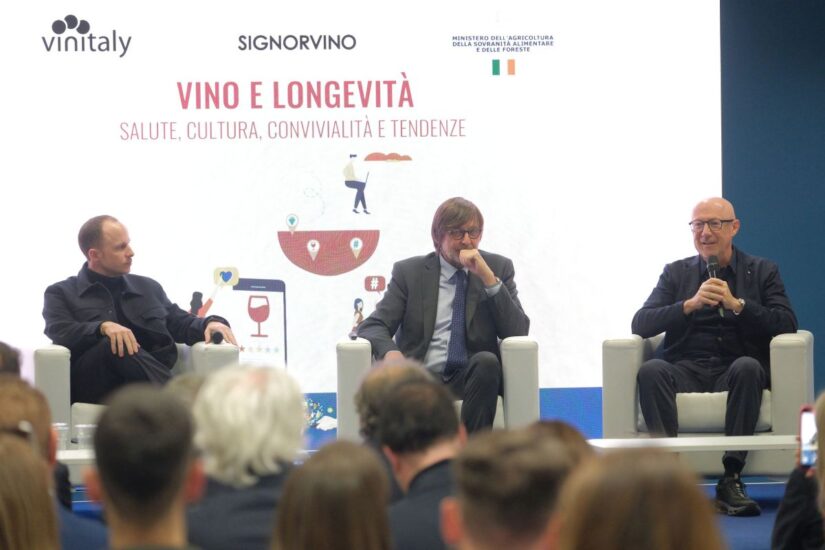


A scientific and cultural organization with an educational vocation, created to restore to wine a narrative grounded in scientific evidence, reclaiming it from the simplifications that have dominated public debate in recent years. It is from this premise that the “International Academy of Healthy Drinking” was established, promoted by Signorvino, the Great Italian Wine Cellar founded in 2012 by Sandro Veronesi, one of Italy leading entrepreneurs and president of Oniverse (the fashion group behind brands such as Calzedonia, Intimissimi, Tezenis, and Falconeri) and Oniwines (which brings together the wineries Tenimenti Leone in the Colli Albani in Lazio, La Giuva in Valpolicella, Podere Guardia Grande in Sardinia, Villa Bucci, a jewel of the Marche region and of Verdicchio dei Castelli di Jesi, the historic Pico Maccario in Monferrato, and Ert1050 in Trentodoc), and headed by Federico Veronesi, ceo Oniwines. Signorvino today operates 43 retail locations in Italy and two abroad - in Paris and Prague with a 2025 turnover of 90 million euros- the Academy was officially presented yesterday at Vinitaly 2026 at Veronafiere in Verona, during the conference “Vino e Longevità. Salute, cultura, convivialità e tendenze” - “Wine and Longevity. Health, culture, sociability and trends” (following the appeal launched in January at Oniverse, also just outside Verona). The board is made up of internationally renowned scientists (from Giovanni Scapagninia to Karin Michels, from Arrigo Francesco Giuseppe Cicero to Paolo Francalacci, from Eugenio Luigi Iorio, Andrea Sbarbati, Giovambattista Desideri, Immaculata De Vivo, Donald Craig Willcox and Davide Grassi) with the aim of studying longevity in order to address, with scientific rigor, the public debate on the relationship between wine and health. A debate which is often oversimplified and which ignores the biological and cultural complexity of the Mediterranean lifestyle.
The Academy thus represents an attempt by the wine world to respond to the growing challenge it has faced following a demonization which doesn’t even distinguish wine from alcohol in general, as explained by Giovanni Scapagnini, full professor of Clinical Nutrition at the University of Molise, one of Italy leading experts in nutritional geroscience and the Academy founder: “recent studies on the subject have created confusion in an incorrect way. The “International Academy of Healthy Drinking” was created precisely with the intention of bringing together a group of scientists who can act as a bridge in communicating to the world how wine, on the contrary, is important and beneficial”. Scapagnini opened the proceedings by drawing a distinction increasingly supported by recent scientific literature: wine can’t be equated with alcohol in general and occupies a scientifically distinct position. In support of this, he presented two recently published studies. The first, from the Moli-sani Project involving approximately 22,495 participants (published in the “International Journal of Public Health”, March 2026), demonstrates that moderate wine consumption within the Mediterranean Diet significantly slows biological aging, an effect not observed when the same amount of ethanol is consumed through beer or spirits. The second study, presented at the American College of Cardiology and based on 340,000 individuals from the UK Biobank monitored over 13 years, shows a -21% reduction in the risk of cardiovascular mortality among moderate wine consumers, compared to a +9% increase among those consuming the same amount of alcohol from other sources.
Accurate and precise communication on this topic is therefore essential and, moreover, it represented the “seed” from which this research and scientific outreach initiative promoted by Signorvino arose: “the sector is undergoing a deep transformation, in which communication around health plays a decisive role - said ceo Federico Veronesi - but clarity is needed, and those who drink wine must be given true and correct information. The Academy was created precisely to meet this need”.
This concept was recovered by Federico Bricolo, president of Veronafiere in his opening remarks: “on the topic of wine and health - he said - it is right that experts talk about to respond to the obvious falsehoods spread by those trying to shift the market toward other beverages”.
Longevity is the central theme. “We have always known that wine is good for us. But now someone on the other side of the world is telling us it is harmful. Italy is the country with the highest longevity rate in the world, and in the face of an increasingly polarized debate, we felt it was necessary to entrust science with the task of responding rigorously. That decision gave rise to the Academy”, underlined Sandro Veronesi, president of Oniverse.
Many contributions followed in Verona. Among them was Karin Michels, epidemiologist at the Fielding School of Public Health at the University of California, Los Angeles, who highlighted the health benefits of moderate wine consumption: “wine is a fermented product, and this protects us from pathogens, so much so that in the Middle Ages it was preferred to water, which was often contaminated. Beyond protection from infection, wine also enriches our gut microbiota, which is our most important immune defender and regulator. The greater the bacterial diversity in the gut, the better: diversity not only reduces body fat but also lowers bad cholesterol. The short-chain fatty acids produced by fermentation act as messengers that nourish the immune system and also benefit the brain”.
Andrea Sbarbati, full professor of Human Anatomy at the University of Verona, underlined that “many studies show not only that moderate wine consumption is not harmful, but that it actually improves our health. In humoral medicine, wine was prescribed according to a patient’s temperament: sweet or passito wines for melancholic types, dry and aged wines for phlegmatic individuals, acidic and low-alcohol wines for sanguine temperaments. The key is that the body should whisper, not shout. And good wine knows how to do that”.
Luigi Eugenio Iorio, professor of Health Sciences at the Federal University of Uberlândia in Brazil, focused his intervention on the redox system: “all living organisms, from microbes to humans, are subject to oxidation processes. The nitrates in wine are converted into nitric oxide - a physiological vasodilator - through the action of the oral and gastric microbiota. Resveratrol enhances this effect by activating endothelial nitric oxide synthase. Modulation of vascular flow is one of the most significant mechanisms through which wine polyphenols interact with the cardiovascular system”.
Others addressed the motivations behind the demonization campaign. From technical reasons,“it is scientifically proven that wine consumption helps us at the cardiovascular, cognitive, and elderly-fragility levels - said Giovambattista Desideri, director of the Geriatrics Unit at Policlinico Umberto I - yet today the mass message is one of deprivation. Even eliminating salt entirely increases cardiovascular risk. I believe there are middle grounds, and the current debate on wine and health is not a correct form of communication” to political and cultural motivations. “The frontal attack on the world of wine comes from countries with high cardiovascular risk, unbalanced diets, and poor-quality alcohol consumption - affirmed Arrigo Cicero, physician and director of the School of Specialization in Food Science - legislation is slow, so it becomes easier to reduce everything to a yes or no. But we must rationalize. In the Mediterranean, moderate wine consumption is protective, especially when combined with a balanced and healthy diet”.
Finally, some speakers offered an evolutionary perspective: Mediterranean populations have developed over millennia a favorable enzymatic profile as a result of coevolution with the grapevine. Recent research published on “Science” places viticulture among the earliest forms of human cultivation, contemporary with, or even preceding, breadmaking. “Our agriculture begins with wine, not only with bread. From an evolutionary perspective, the selective advantage associated with fermented beverages was not individual but collective - explained Paolo Francalacci, professor of Genetics at the University of Cagliari - wine contributed to social cohesion, food safety, and cultural transmission: an evolutionary strategy even before being a dietary choice”.
Meanwhile, the “International Academy of Healthy Drinking” is already looking ahead. Signorvino has announced three strategic directions of work: building a cultural evolution in the language surrounding wine by translating complex themes into concrete tools for the general public; developing an ecosystem of ongoing dialogue between producers, scientific authorities, and stakeholders; and helping guide sector-wide change through a narrative basing on evidence and balance, as an alternative to the oversimplification that has dominated public debate in recent years.
Copyright © 2000/2026
Contatti: info@winenews.it
Seguici anche su Twitter: @WineNewsIt
Seguici anche su Facebook: @winenewsit
Questo articolo è tratto dall'archivio di WineNews - Tutti i diritti riservati - Copyright © 2000/2026