






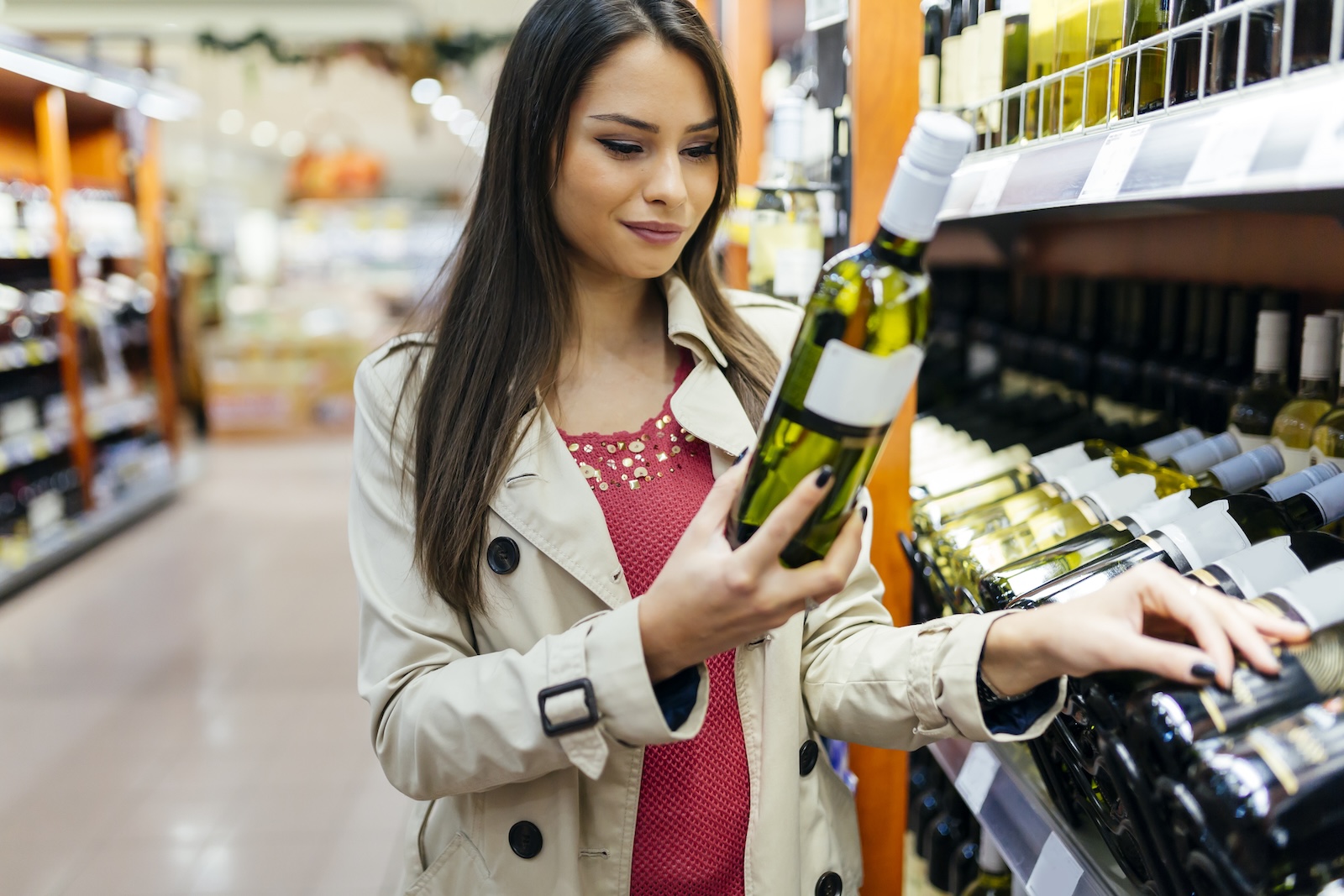
In Italy, the wine market in the Gdo (large-scale organized distribution) closed 2025 with mixed signals: volumes declined, while value remained broadly stable, thanks to a gradual shift by consumers toward higher-end products. In 2025, the wines and sparkling wines segment within Gdo reached a total value of 3.2 billion euros, with 737 million liters sold. Against a slight contraction in value (-0.5%), there was a more pronounced drop in volumes (-2.7%), accompanied by an average price increase (+2.3%). These findings emerge from the analysis presented by Virgilio Romano, Insight director at Circana, who led the research unveiled at the edition No. 22 of the roundtable dedicated to the Italian Gdo wine market, organized by Veronafiere. The event brought together producers and distributors in front of an audience of wineries, journalists, and industry experts. “The analysis highlights a market in transition, caught between pressure on volumes and a search for value - declared Virgilio Romano - in this context, it appears that competition will reward the most efficient players, those capable of enhancing product value and reaching new consumers, especially in the mid and mid-to-high segments”.
One of the most significant trends concerns the so-called “mix effect”: consumers themselves are pushing up the average price by choosing wines that are, on average, more expensive than in the past. Higher price bands (above 10 euros) are performing better, while segments below 5 euros, which account for the largest volumes, are experiencing the sharpest declines. Looking more closely, white wines priced above 5 euros show growth of 2%, which rises significantly for those priced above 10 euros (+8.4%).
Among the various categories, sparkling wines show signs of resilience and growth, continuing their slow but steady gain in market share, with a +1.5% increase in volumes and a +1.2% increase in value. In particular, rosé wine grows by 3.8% and white sparkling wines by 2.2%. Still wines record a contained decline (-3.1% in volumes, -0.5% in value), with red wines continuing to lose ground (-4.2%) despite maintaining the largest market share (36%). Sparkling wines face the greatest difficulties (-5.7% in volumes and -5.5% in value). Excluding sparkling wines, still white wines stand out as one of the few types able to contribute positively to the overall result, although they still remain slightly negative (-2.1%).
The contraction in volumes affects all distribution channels across the board, with the exception of e-commerce, which shows more positive dynamics. Sales are declining both under promotion and at full price, with a more significant impact on large companies and private-label products, while smaller players demonstrate greater resilience. The market shows growing interest in emerging designations and territorial identity, combining experimentation with a search for reassurance on the part of consumers. At the same time, a new niche is emerging in the form of dealcoholized wines, still marginal but growing, with initial turnover of around 3 million euros and steadily expanding distribution. The first weeks of 2026 confirm the trends seen at the end of 2025: volumes are still declining for wine, while sparkling wines show more positive signals. However, a more complete assessment of market performance will require waiting for data from the first four months of the year.
“Circana 2025 data confirms a transformation in wine purchasing habits: consumers are becoming more selective and, despite inflationary pressure combined with declining volumes, they still show a desire to indulge by “trading up”. The challenge for large-scale retail is no longer just to preserve volumes, but to capture this demand for greater value by qualifying the assortment, making it distinctive through a strong private label, further developing the premium segment and the various sparkling wine categories which continue to drive the sector, while not overlooking emerging trends that could, in the medium term, expand the consumer base”, according to Alberto Arcidiacono, head of private Label Beverage Purchasing at Crai.
“The close of 2025 unfortunately once again shows a sector under strain, with no signs of a rebound. This means that today, more than ever, a new approach is needed to relaunch mainstream attention toward this world, through the creation of increasingly strategic relationships and partnerships between industry and retail”, explains Lorenzo Cafissi, beverage director at NewPrinces Group.
“Global wine market dynamics undoubtedly have a structural component, linked to the evolution of consumption models among younger generations, but probably also a cyclical component - afforms Valeria Gasparre, country director Italy at Illva Saronno and Duca di Salaparuta, representing Federvini - in this context, producers are called upon to rethink the paradigm of wine communication, identifying a new and truly relevant language for consumers who seek a distinctive experience in brands and attribute value and brand equity primarily to that experience. Even drinking occasions traditionally seen as more “demanding” such as those involving still red wines, can and must be reinterpreted through a different narrative, based on greater proximity and aligned with increasingly fluid consumption occasions and constantly evolving competitive sets”.
“The end of 2025 confirms a still complex market environment for wine, with a further decline in volumes. In this scenario, Conad outperformed the market by containing the volume decline and posting stronger value growth - according to Alessandra Manzato, group category manager grocery and beverages at Conad - this confirms the strength of our model, which enhances the quality of the offering and the ability to interpret evolving demand. Weakness remains concentrated mainly in still wines, while sparkling wines continue to represent the most dynamic segment, with positive performances also in terms of volume. This result is supported by the increasingly central role of the at-home aperitif occasion, which is driving not only sparkling wines but also adjacent categories such as mixology spirits, tonics, and ready-to-drink products. The performance of sparkling wines, as well as the better results of white wines compared to red wines, and within the latter, of less structured products, reflects a shift in consumption behavior: a search for fresher, more versatile wines with lower alcohol content, consistent with the deconstruction of traditional meals and with lifestyles that are more attentive to balance and well-being”.
For Laura Mayr, general manager of Ruggeri, representing Unione Italiana Vini, “sales data in large-scale retail confirm now well-established trends, with overall consumption at a standstill, increasingly driven by sparkling wines and white wines, and oriented toward premiumization. In this context, it becomes essential to work on the offering, both in qualitative and quantitative terms. On the qualitative front, it will be increasingly necessary not only to find the right price positioning, but also to ensure product segmentation that is coherent with the market tiers one aims to address. The ground on which consumers, especially younger ones, and wine meet today is identity, as also highlighted by the recent survey conducted by the Uiv-Vinitaly Observatory on Italian consumers. As for quantity, Unione Italiana Vini has long been calling for production restraint to rebalance the market and, consequently, enhance product value. At present, we have the equivalent of one and a half harvests in storage: this is no longer sustainable”.
“The trends observed in 2025, marked by a reduction in both volumes and value, outline a now mature market in which contraction appears structural rather than attributable to a simple negative cyclical phase. In this context, two fundamental strategic directions emerge: differentiation, through strengthened brand content and the construction of storytelling consistent with new consumption habits, alongside renewed valorization of territories, which remain a key element; and 360-degree innovation, including the development of no-alcohol offerings and growing attention to formats and packaging, which are becoming increasingly relevant in consumer choices”, affirms Eleanna Pizzinelli, head of the beverage department at Coop Italia.
“Circana figures talk clearly: discount retail is today a pillar of the Italian wine supply chain. This is a responsibility we strongly feel, and it drives us to select wines with identity, quality, and a price that excludes no one, especially new consumers. Instead of disorienting shoppers with endless shelves, we have chosen to simplify, evolving the offer toward new languages and consumption styles to respond to a changing market. To guarantee this commitment, we have decided to subject our wines to voluntary and rigorous quality analysis protocols, ensuring consistent quality over time for our customers. For us, wine must remain an agricultural and cultural product, to be enjoyed thoughtfully and in moderation: an excellence that once again becomes an everyday pleasure, accessible to all”, concludes Marco Usai, wine specialist at Md Discount.
Copyright © 2000/2026
Contatti: info@winenews.it
Seguici anche su Twitter: @WineNewsIt
Seguici anche su Facebook: @winenewsit
Questo articolo è tratto dall'archivio di WineNews - Tutti i diritti riservati - Copyright © 2000/2026