


Monday 2nd of March 2026 - Last Update: 16:30






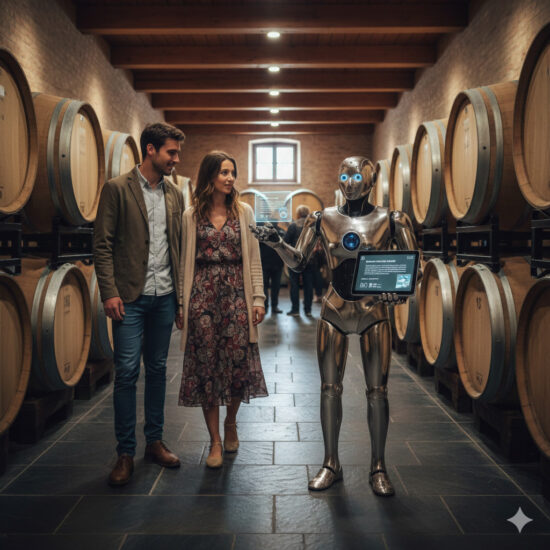
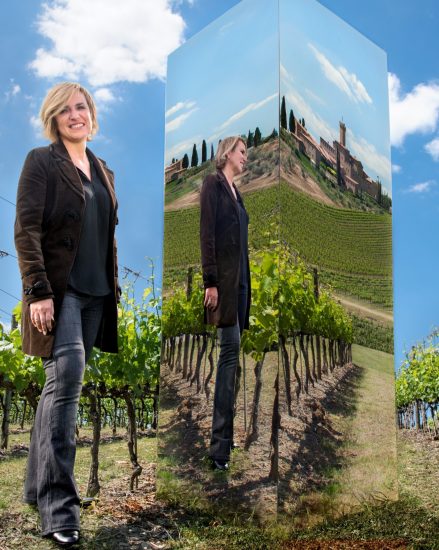
If the future lies in the “pro-doing” function (on-site), which requires full integration into booking systems and intelligent agents for increasingly more personalized and immersive experiences, today in food and wine tourism Artificial Intelligence is mainly used to translate menus and contents by 69% of tourists (77% among young people aged between 25 and 34) to find ideas and inspiration by 60% of travelers (75% among those aged between 25 and 34), and to look for and compare destinations and accommodations, an activity for which 58% of people turn to Ai (68% among those aged between 25 and 34). This is according to a focus from the “Italian Food and Wine Tourism Report” 2025, created by Roberta Garibaldi, president of Aite - Associazione Italiana Turismo Enogastronomico - Italian Association Food and Wine Tourism (to whom WineNews asked about 2025 trends and possible 2026 scenarios for the sector), dedicated to a tool which is changing the world and that, even in tourism, has now established itself as a reference point not only for industry professionals but also, and above all, for those who want to travel and consciously build their own experience.
In particular, according to the 2025 Report, tourist perception of risk is decreasing, AI implementation is increasing, and the next evolution of digital experiences is taking shape. Compared to research carried out in the 2024 edition, the share of those who consider AI “more risky than beneficial” has partially decreased and is concentrated mainly among those aged 35-54. This data confirms the growing familiarity, the reassuring effect deriving from the implementation, and the progressive internalization of the benefits linked to digital tools. Daily adoption of AI, after all, has reduced distrust, starting with younger generations who no longer perceive it as a threat: among those aged between 18 and 24, only 29% believe that risks outweigh benefits. The adult population remains more cautious (49% among those aged between 35 and 44), but the trend is clear.
Data on international markets highlight the growing use of ChatGPT and other AI-based tools as sources of inspiration for visiting food and wine destinations with significant differences between specific countries. The United States leads with the highest implementation of AI for inspiration (21%), France ranks second for penetration (18%), Germany is in line (16%), while in the UK, Austria, and Switzerland, the tool is still used cautiously (13%). In terms of Ai reliability for choosing a food and wine destination, figures range from 15% in the United States to 10% in Austria and Switzerland, with the two Alpine nations confirming a certain “prudence” toward these tools. It is interesting to note that, in all analyzed markets, the implementation of Ai as a source of inspiration exceeds the perception of reliability, suggesting that travelers implement these tools in a “cross-checking” mode with other more traditional sources, particularly advice from relatives and friends (which remain the most reliable source with percentages between 38% and 50%, depending on the market).
From AI-based services, travelers primarily expect ease of use (60%), then protection of their privacy (55%, rising to 71% among young people aged between 18 and 24), and accuracy of information (49%). The most desired future applications in food and wine tourism are automatic translations of menus and descriptions (46%) and personalized itineraries (36%, particularly requested by those seeking deeper experiences, such as the “Researchers” and “Intellectuals” segments). Advanced recommendations on food, wine, and beer (31-34%) are particularly appreciated by young adults and more experienced traveler profiles. Sustainable experience research (36%) and optimization of low-impact routes (36%) also stand out, signaling growing attention to environmental issues and the need for businesses to adopt coherent, transparent digital communications supported by real certifications, especially in agricultural and territorial contexts.
Travelers, therefore, appreciate personalization but want to maintain control, verify information, and ensure that suggested choices are accurate. Awareness of AI's current limitations - from information which is not always correct to lack of transparency - pushes users to exercise a form of “active supervision”. “Ai in food and wine tourism - explains Roberta Garibaldi, whose Report is produced with the support of Valdichiana Living and Visit Emilia - has entered a phase of conscious adoption: implementation is growing, fear is decreasing, and demand is shifting toward informational, inspirational, and cultural enrichment services, with three implications: growing demand for personalization, but only if transparent; the fact that Ai function today is mainly pro-getting (inspiration, choice) and not yet pro-doing (on-site experience), where there is room for assisted experiences on the ground; and trust, which is the true key driver to build. It is not enough to “have AI”, but to demonstrate relevance, coherence, and experiential value. Only 6% express full trust in algorithms, a figure that grows significantly among high-income users and experienced travelers, suggesting that positive usage experience gradually builds trust”.
The next evolution? It will be linked to full integration into booking systems and intelligent agents, the quality of information, and the ability of businesses to communicate sustainability, territoriality, and authenticity in a verifiable and transparent way. This is a global trend that Italian destinations and businesses must intercept. “In particular, the very high use of AI for travel inspiration - concludes Roberta Garibaldi - underlines the urgency for food and wine tourism operators to invest in high-quality digital content that AI can easily find, so as not to miss business opportunities with international markets”.
Copyright © 2000/2026
Contatti: info@winenews.it
Seguici anche su Twitter: @WineNewsIt
Seguici anche su Facebook: @winenewsit
Questo articolo è tratto dall'archivio di WineNews - Tutti i diritti riservati - Copyright © 2000/2026