


Thursday 24th of September 2026 - Last Update: 18:53





These are the selections from the 2026 Go Wine “Cantine d’Italia” guide, which include 17 Wine Museums in Italy’s selected territories - Bersano, Castello di Razzano and Luca Ferraris (Piedmont), Ricci Curbastro (Lombardy), Cà Rugate and Fratelli Zeni (Veneto), La Tosa (Emilia-Romagna), Dianella and Fattoria dei Barbi (Tuscany), Lungarotti (Umbria), D’Ambra and Mastroberardino (Campania), Leone de Castris and Produttori di Manduria (Puglia), Librandi and Iuzzolini (Calabria), Quartomoro (Sardinia). Plus, 9 Special Awards, given to wineries that have achieved high levels of excellence in specific areas - Masseria Celentano (San Severo, Puglia), Tenuta San Michele, and Palazzo Scammacca Murgo (Santa Venerina, Sicily), Cantina Tramin (Termeno, Alto Adige), Paolo and Noemia D’Amico (Castiglione in Teverina, Lazio), Le Piane (Boca, Piedmont), La Sabbiona (Faenza, Emilia Romagna), Masi (Sant’Ambrogio di Valpolicella, Veneto), Cantine Belisario (Matelica, Marche), and Quartomoro (Marrubiu, Sardinia). The 2026 guide features 911 wineries, 270 “Impronte d’eccellenza” (Footprints of Excellence), for wine tourism, more than 5.180 featured wines, and 1.650 addresses for dining and lodging. The guide also explores the cost of visits to wineries. The basic visit has increased + 7%, while only 3.8% are free. 27% of wineries have set the minimum cost at 23 euros.
The central part of the event is the winery. It is a symbolic place, becoming more anymore a destination for many wine enthusiasts, as well as the physical place where men and women work and plan their work, conveying family stories and traditions, or more recent investments. Those who would like to delve deeper into wine tourism, and the curious who want to learn more about wine will also have the pleasure of the narration of stories and events, which will help them understand why wine is part of the culture of great country such as Italy. It is a beautiful vision of Italy, made up of many places, roots, and traditions, but it is also an expression of the skill of many winemakers. Their bottles of wine “travel” around the world promoting the care as well as the pleasure of visiting the places where those wines were created. The reference of course is the “winery” as it has become the full-fledged place to promote the territory, and its reality communicates a territorial identity made up of everything that revolves around it, the landscape, the vineyards, the local tradition, the villages. Go Wine isn't a traditional wine guide featuring reviews and individual wines. Rather, it is a guide that elaborates the theme of storytelling alongside the wine selection, and offers a profound insight into the subject as well as a wealth of data and information.
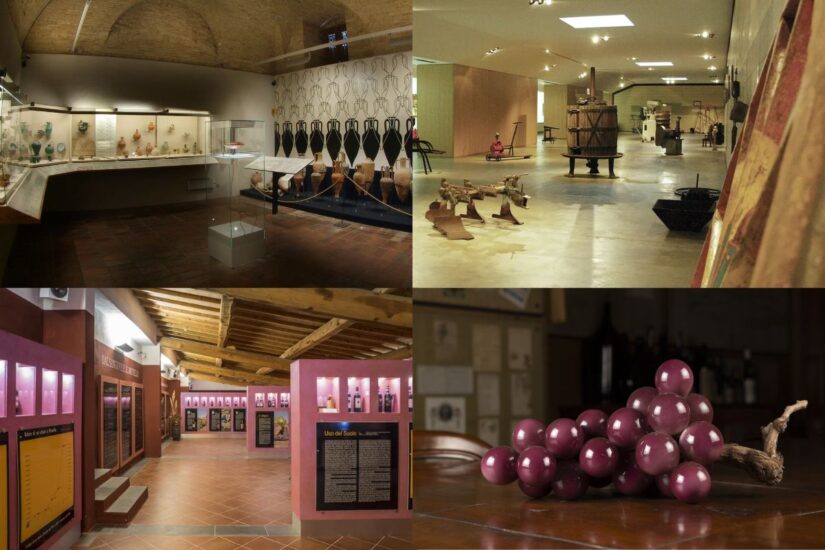
Wine Museums are a new feature, now in the guide for the second consecutive year. The wine museums highlight culturally significant initiatives promoted by 17 wineries, selected in the introduction of the guide. They promoted a special itinerary, from north to south, exploring the Wine Museums at the winery, creating another important section related to the theme of hospitality. The selected museums and wineries are Bersano, Castello di Razzano and Luca Ferraris (Piedmont), Ricci Curbastro (Lombardy), Cà Rugate and Zeni F.lli (Veneto), La Tosa (Emilia-Romagna), Dianella and Fattoria dei Barbi (Tuscany), Lungarotti (Umbria), D’Ambra and Mastroberardino (Campania), Leone de Castris and Produttori di Manduria (Puglia), Librandi and Iuzzolini (Calabria), and Quartomoro (Sardinia).
The guide has focused, for the second year, on the cost of visits to wineries. At one time, visits were more of an impromptu activity, though now they have become strategic for many wineries. The survey “Cantine d’Italia” promoted, included 637 wineries from all of the Italian regions, and from the largest to family-run wineries. The sample indicated the cost for the basic experience at 23.12 euros (the price was was 21.70 euros a year ago (20.17 euros two years ago) therefore, +7% increase in one year compared to the general price. All the wineries surveyed indicated a cost for a basic experience, except for a small percentage, 3.8%, where the visit is free, while a year ago it was 4.5%. As far as more accessible costs, only 9.9% of the wineries offer an entrance fee of 10 euros or less, which is lower than the 2024 (12.5%) and 2023 (15%) surveys. The average cost is slightly higher in the south than in the north. Data relating to central Italy is influenced by Tuscany. Still wanting to delve deeper, considering at least 30 euros as an indicator of a high (or at least not low) cost for a visit to the winery, 170 wineries apply this rate, a figure equal to 27%, (previously 131, or 24%).
“Each year the guide adds new insights and themes, united by the underlying objective”, Massimo Corrado, president and editorial director of Go Wine stated, “to tell a beautiful story of Italy through its wine, one of the most beautiful faces of our country. Maintaining high attention on these themes, for the benefit of the sector, at the end of a difficult year for Italian wine. The theme of storytelling, the people who bring the winery to life, and of wines that are often the creation of beautiful planning, are the foundation of the Guide. Wine is the key to listening to the story of a place and a land, breathing in its atmosphere”.
There are 25 wineries that in the 2026 edition reach the top prize “Go Wine Three Footprint” list: Argiolas (Sardinia), Cà Rugate and Masi (Veneto), and La Raia (Piedmont) enter this special ranking; they join Badia a Coltibuono (Tuscany); Bellavista (Lombardy); Ca' del Bosco (Lombardy); Ca' Rugate (Veneto); Capezzana (Tuscany); Castello di Gabiano (Piedmont); Castello di Fonterutoli-Marchesi Mazzei (Tuscany); Castello Vicchiomaggio (Tuscany); Roberto Ceraudo (Calabria); Ceretto (Piedmont); Donnafugata (Sicily); Feudi di San Gregorio (Campania); Ferrari (Trentino); Florio (Sicily); Fontanafredda (Piedmont); La Raia (Piedmont); Lungarotti (Umbria); Malvirà (Piedmont); Mamete Prevostini with Convento San Lorenzo (Lombardy); Masciarelli (Abruzzo); Masi (Veneto); Mastroberardino (Campania); Planeta (Sicily); San Felice (Tuscany). There are a total of 270 “Go Wine Footprints” in the 2026 edition that represent a sign of “excellence” in the field of national wine tourism. These wineries are a sort of ideal sign that Go Wine attributes to wineries which have achieved a high score in the general evaluation of site, hospitality and production profile. In this special ranking by region, which is updated every year, Tuscany is the leader, boasting 56 “Footprints”, followed by Piedmont (49) and Veneto (30).
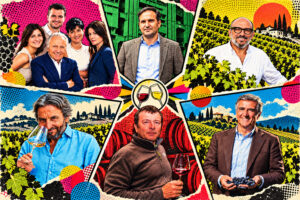
The 2026 edition of“ Windows on Wine” has been signed by Carlo Macchi (director of Winesurf) and Angelo Radica, president of the National Association of Wine Cities. The interviews at the beginning underline the theme of the story that characterizes the profile of the guide. There are eight men and women from as many Italian regions, including: Andrè Gerbore, Cave des Onze Communes (Valle d’Aosta), Gian Paolo Repetto, Vigneti Repetto (Piedmont), Wolfgang Tratter, Arunda (Alto Adige), Hilde Petrussa, Vigna Petrussa (Friuli Venezia Giulia), Gianluca Mirizzi, Montecappone (Marche), Libero Rillo, Fontanavecchia (Campania), Antonio Teora, Cantina di Venosa (Basilicata), Carmela Pupillo, Pupillo (Sicily).
Copyright © 2000/2026
Contatti: info@winenews.it
Seguici anche su Twitter: @WineNewsIt
Seguici anche su Facebook: @winenewsit
Questo articolo è tratto dall'archivio di WineNews - Tutti i diritti riservati - Copyright © 2000/2026