


Sunday 20th of September 2026 - Last Update: 21:57






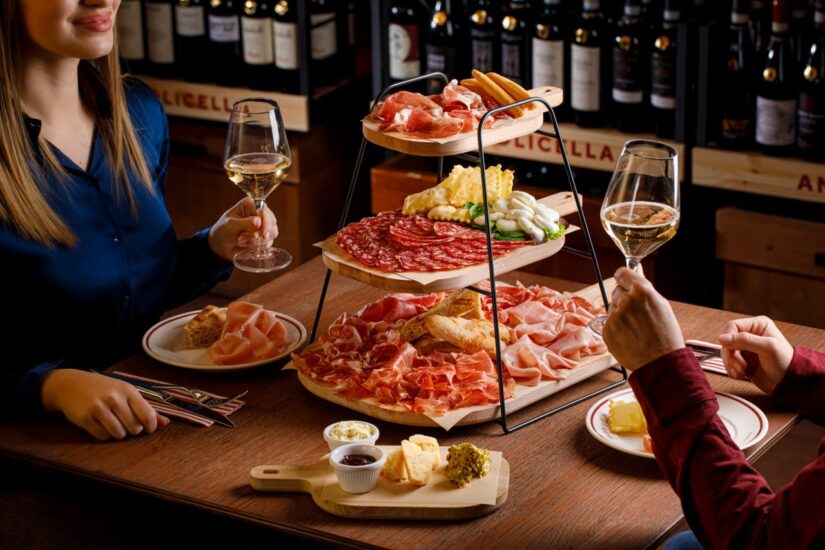
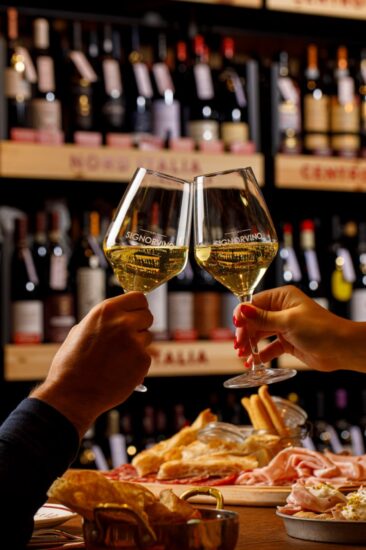
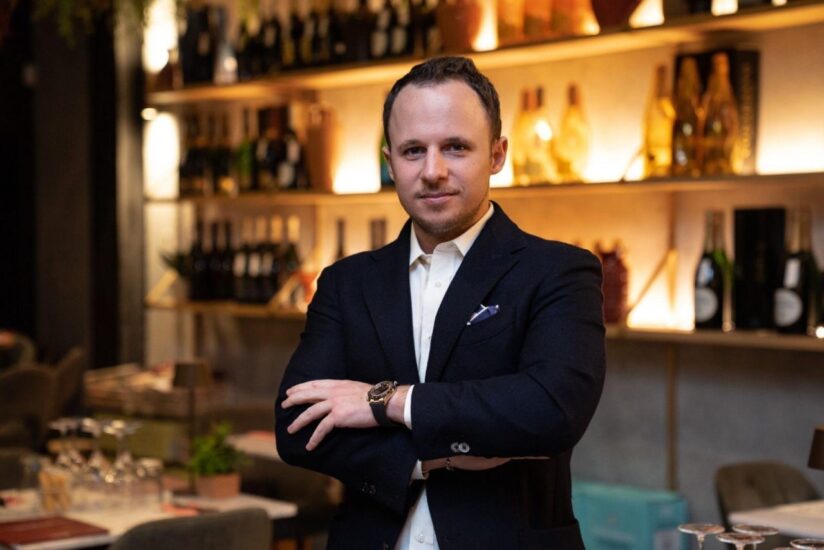
The recent recognition of Italian Cooking as an Intangible Cultural Heritage of Humanity by Unesco highlights how cooking and eating according to our traditions is a communal activity which promotes social inclusion, well-being, the transmission of knowledge, and conviviality. In this context, wine has never been just a beverage, but the historic companion of the Mediterranean Diet. Consumed in moderation and during meals, wine is an integral part of that Italian table ritual that Unesco has just consecrated as a universal driver of well-being. This is stated by Federico Veronesi, ceo of Signorvino, the largest Italian chain of wine shops with kitchens dedicated to promoting national wine excellence, which has recently launched an interdisciplinary scientific project analyzing the role of varied and moderate wine consumption in maintaining health and quality of life throughout the entire lifespan. The focus is on the relationship between regular, mindful wine consumption and certain indicators of “healthspan” (the period of life lived in good health, ed), such as psychological well-being, cognitive function, and cardiometabolic health. It emerges that wine, consumed moderately and responsibly, can help relax the mind and reduce stress levels (an element that plays a fundamental role in longevity and quality of life), thus becoming part of a broader context of psychophysical and social well-being. Signed by professor Giovanni Scapagnini, an internationally renowned researcher and full professor of Clinical Nutrition at Università degli Studi del Molise, and a leading figure in the study of molecular mechanisms of aging and nutritional geroscience, the research investigates the role of wine in human “healthspan”, assessing its effects on cardiometabolic, psychological, and cognitive parameters. The project aims to contextualize wine consumption within a bio-evolutionary and cultural approach: a contribution to the dialogue between science, tradition, and mindful consumption in a historical moment marked by uncertainty and excessive simplifications. In recent years, explains Signorvino, a communication approach often focused on the “demonization of wine” has contributed to generating uncertainty among consumers and industry operators, neglecting the complexity and specificity of what wine represents in the Mediterranean dietary model. With this initiative, promoted in collaboration with professor Scapagnini, Signorvino seeks to bring back to the center of scientific, cultural, and social dialogue a more balanced vision, in harmony with the communication concept “Il gusto di sentirsi bene” - “The Pleasure of Feeling Good”, officially launched at Vinitaly 2025 in Verona.
The research explains that in the Mediterranean, wine has always been, above all, a language of conviviality: drinking little and with meals marked the moment of “eating together”, fostering bonds, exchange, and belonging to the ritual of the meal. It is no coincidence that Unesco, in describing the Mediterranean Diet, includes eating in company as a key element of well-being. In many cohorts, light wine consumption appears alongside better indicators of perceived health, mood, and adherence to overall healthier lifestyles. The “Seven Countries Study” by Ancel Keys already showed how, in Mediterranean populations, moderate wine with meals was an integral part of a dietary pattern rich in legumes, whole grains, vegetables, olive oil, and fish, contributing to observed lower rates of coronary heart disease and mortality. In the early 2000s, the association between Mediterranean patterns, longevity, and moderate red wine consumption was confirmed by multiple cohorts: among subjects with high adherence to the Mediterranean Diet, those who drank little, with meals, lived on average longer than abstainers or heavy drinkers and showed, in various studies, a better cognitive and mood profile. On the mental health front, a prospective analysis carried out in the Predimed trial (Mediterranean Diet in subjects at high cardiovascular risk) showed that moderate and regular wine consumption, particularly 2-7 glasses per week, was associated with a lower incidence of depression compared to abstention, while high consumption reversed the trend, increasing risk. A major review published on “Circulation” in 2017 concluded that, overall, low-to-moderate alcohol intake is consistent with a lower risk of coronary heart disease and some cardiovascular outcomes, compared to both abstention and higher consumption.
These effects are due to both alcohol and non-alcoholic components.
Paradoxically, the most problematic substance in wine, ethanol, at low doses seems to exert a potential protective effect on the cardiovascular system, mainly by increasing Hdl cholesterol and reducing platelet aggregation, and therefore the atherothrombotic risk. Wine, especially red, adds an additional layer of complexity: it is rich in flavonoids and polyphenols (resveratrol, quercetin, procyanidins, anthocyanins) which, in experimental models, show antioxidant, anti-inflammatory properties, and in some cases, effects on metabolic and longevity pathways. A recent systematic review on “Cureus” (2023) tried to isolate the case of wine compared to other alcoholic beverages, asking whether, at equal ethanol levels, polyphenols make a difference in long-term outcomes. Only adults with regular and moderate consumption, followed for at least two years, were included. Result: no negative association for moderate consumption and an overall picture dominated by favorable or neutral signals. In particular: overall mortality consistently showed risk reductions compared to abstainers or consumers of other alcoholic beverages; dementia and cognitive decline appeared less frequent in moderate wine drinkers; on the cardiometabolic front, higher Hdl and more favorable metabolic syndrome profiles were observed; and in oncology, the set of studies was predominantly neutral, with some positive signals for specific cancers (such as non-Hodgkin lymphoma). However, a delicate and non-negotiable point remains, explains the research: in oncology, scientific consensus indicates that all alcoholic beverages, including wine, increase the risk of various cancers in a dose-dependent manner.
Therefore, there is no “zero-risk threshold”, but it is also essential, say the promoters, to contextualize this message, otherwise it can be dangerously misleading. In short, even in light of epidemiological evidence, the “good part” of wine coincides with its Mediterranean context: small quantities, with meals, in company, within a diet rich in vegetables, legumes, whole grains, and olive oil, supported by an active lifestyle. In this framework, the glass is not an end, but a “social seasoning”: it slows the pace, fosters conversation, seals bonds, and transforms food into conviviality. The benefit lies not only in the chemistry of polyphenols but in the ritual of drinking slowly, eating, and sharing. It is in this measure that wine returns to be what Mediterranean history has taught it to be: a bridge between well-being and culture.
Copyright © 2000/2026
Contatti: info@winenews.it
Seguici anche su Twitter: @WineNewsIt
Seguici anche su Facebook: @winenewsit
Questo articolo è tratto dall'archivio di WineNews - Tutti i diritti riservati - Copyright © 2000/2026