






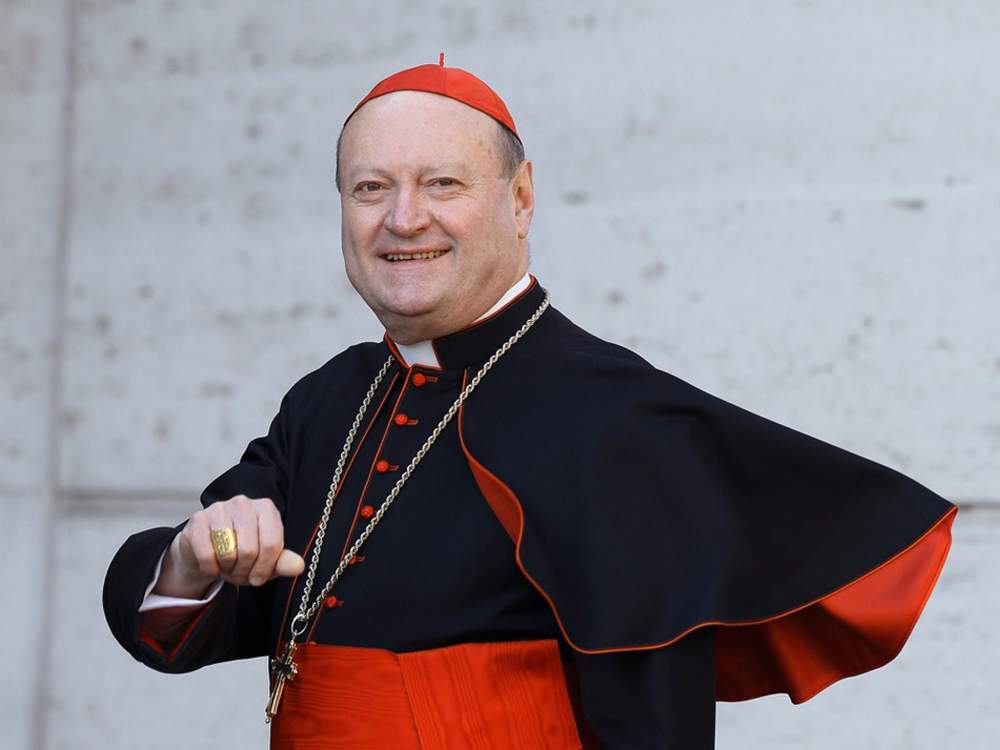
What is the meaning of the table? We gather around the table with family or friends, especially on occasions such as the Holidays. But what we recall each time is the banquet of all banquets: the Last Supper, in which Jesus entrusted bread and wine, symbols of the body and blood of Christ in the Eucharist, with the meaning of His life given out of love. Wine which, beyond being a symbol of made in Italy and the most faithful companion of Italian cuisine, is also the first distinctive element of being European, because Europe is the homeland of wine. WineNews discussed this with Cardinal Gianfranco Ravasi, biblical scholar and theologian, president emeritus of the Pontifical Council for Culture, met in recent days at Confagricoltura, in Rome, reflecting on what it means today to translate the sense of the biblical table, where food and wine come together in daily life.
“From the very beginning, food and wine have been great fundamental symbols, and not merely elements of survival - underlines Cardinal Gianfranco Ravasi - food, by its nature, in all cultures, particularly in religious ones, is the expression of something more, if we only think of wedding banquets or, as it happens in certain countries and even in some Italian regions, the so-called “consolo””, for which food and drinks are prepared for refreshment or comfort in times of grief. “In this light, we must always consider that the work of farmers participates, in some ways, in the very culture and spirituality of a people”, explains the biblical scholar. In particular, the two “great symbols” of the table codified in canon law are wine and bread. “A French poet, Paul Claudel, used to say: ask the old earth and it will always answer with bread and wine - recalls the theologian - they are the two fundamental foods that, in a certain sense, allow not only existence but also represent the presence of the divine in Christianity”, he told us, after quoting in his address at the Confagricoltura assembly at Teatro Argentina, “Psalm 104”, which mentions wine in a context of praise to God for His creation and providence, specifically in verse 15, where it says that “wine gladdens the heart of man, oil makes the face shine, and bread sustains the heart of mortals”, describing gifts that God provides for nourishment and human joy, and highlighting how nature itself, and wine in particular, are manifestations of divine generosity for life”.
This is also because, beyond being a “medium” to tell the story of our territories and their communities, i.e. the beauties of Italy, both earthly and spiritual, for the ties they have with landscape, history, culture, and our traditions, the products of our agriculture are an expression of the richness of nature and Creation, adds the president emeritus of the Pontifical Council for Culture, and, inn this sense, they take on a double meaning: “for everyone, believers and non-believers alike, it is precisely the beauty of nature that offers potential, not only for life but also for beauty. And on the other hand, for believers, nature, Creation, is like a great book whose creatures are divine words, mystery”.
Of Italy, but also of Europe, because the culture of wine, thanks to the spread of Christianity, is also the first distinctive element of being European. “Wine is certainly one of the great signs of Europe - claims Cardinal Gianfranco Ravasi - and, indeed, the production of the noblest and finest wine comes from Europe and has eventually been imitated. Other cultures have other beverages as symbols and signs. And this is certainly significant because it reminds us that Europe is great not only for the richness of its culture, its languages, and the variety of its geographical expressions, but also for a sign like wine, along with others, of course, which is almost a kind of human, cultural, and even natural identity card”.
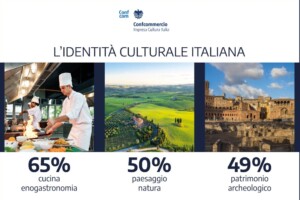
Finally, regarding the identity value of the table, Cardinal Ravasi was met on a “historic day” for Italy and, in particular, for its wine and food heritage: on December 10th, just as, from New Delhi the official recognition of Italian Cooking as Intangible Cultural Heritage of Humanity arrived by Unesco Intergovernmental Committee gathered in India. Shortly before, he told us “to have often had dealings with Unesco” when he was president of the Pontifical Council for Culture (from 2007 to 2022, a role which effectively made him the “Minister of Culture” of the Holy See, ed), “and I know that, like me, they supported the need not only to protect great artistic heritage but also deep human realities, such as cuisine, vineyards, or cultivated lands. For this reason, I would be very happy if Italian cuisine, Italian food, as a symbol, could be a protected component, defended, and presented as an example and as a model”. And so it was.
Copyright © 2000/2026
Contatti: info@winenews.it
Seguici anche su Twitter: @WineNewsIt
Seguici anche su Facebook: @winenewsit
Questo articolo è tratto dall'archivio di WineNews - Tutti i diritti riservati - Copyright © 2000/2026