


Sunday 20th of September 2026 - Last Update: 21:50







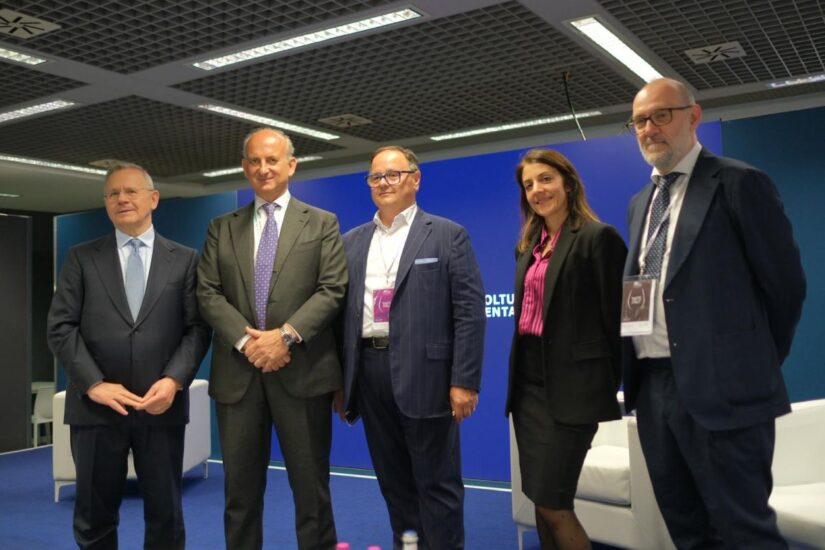
Analyzing and enhancing the relationship between the horeca sector and wine, in order to monitor the state of the art and the evolution of consumption styles, trends and products: this is the aim of the “Wine & Restoration” Observatory, established through an agreement between Uiv (Unione Italiana Vini) and Fipe-Confcommercio (Federazione Italiana Pubblici Esercizi), in collaboration with Vinitaly. While wine sales data in large-scale retail are in fact “transparent”, made available in detail through accurate surveys (such as the Circana research), consumption in the horeca sector still represents a grey area. This consideration led to the agreement, formalized through the signing of a memorandum of understanding - signed yesterday at Vinitaly, at the same time as the presentation of the first horeca-wine report. The relationship between wine and food is natural and well established, but “to continue growing, it must invest in dialogue - commented Federico Bricolo, president of VeronaFiere. “For this reason, together with Vinitaly we support the Fipe-Uiv Observatory, also by strengthening the gastronomic offering of the exhibition, in a fil rouge with the candidacy of Italian cooking for Unesco World Heritage status, which originated precisely from this fair. We are confident that this will bring value to the made in Italy wine business”.
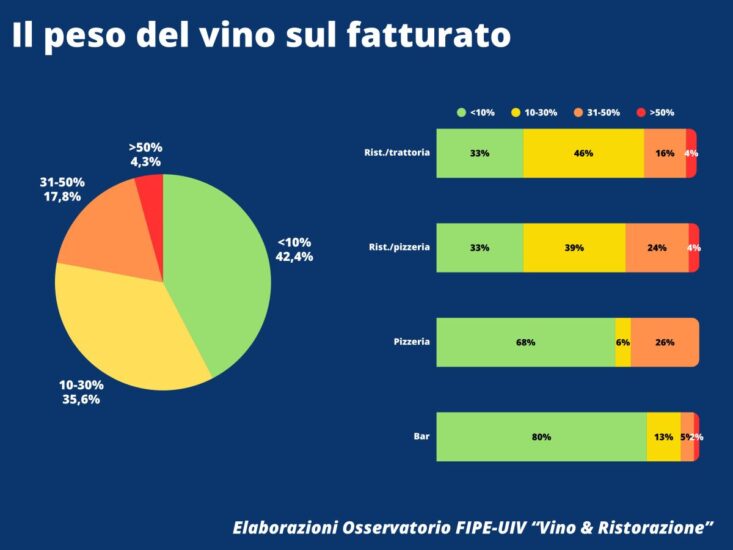
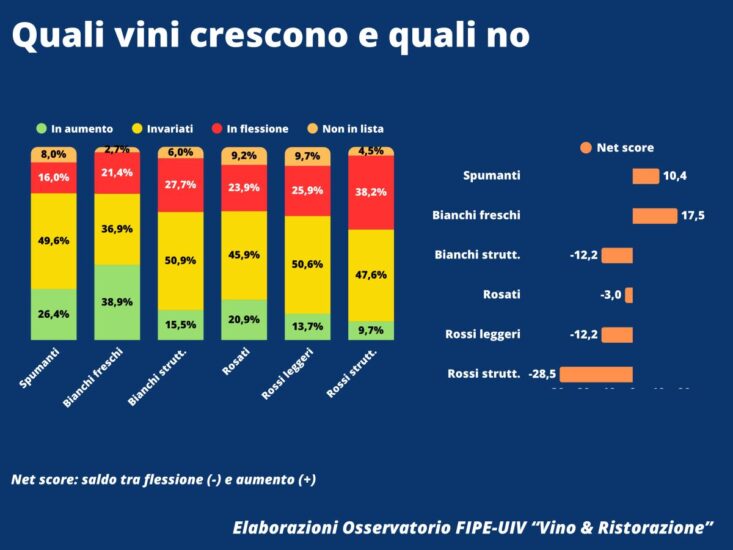
Wine consumption in the horeca channel is worth 12 billion euros, with a share of over 21% of the average bill, and contributes significantly to the sector 59.3 billion euros in value added, despite the fact that the past year has been marked by a contraction in both spending and volumes consumed. On the other hand, trends in dining inevitably mirror the market performance, with red wines, more alcoholic and full-bodied, struggling, while fresh whites and sparkling wines are holding steady.
“The Italian wine sector lacked a tool that would allow for a better exploration of dynamics with the restaurant industry - declared Uiv president Lamberto Frescobaldi - this pairing has been the foundation of the success of Italian cooking and wine around the world and can help our sectors grow, starting with mutual understanding, which also helps explain why mark-ups are sometimes perceived as excessive. This first report already highlights the need to work on better conveying the product innovation expressed by wine, but we can and certainly must join forces to truly listen to consumers”. The research, which begins to bridge a structural information gap compared to large-scale retail, was carried out on a representative sample of 500 businesses, including restaurants and trattorias, restaurant-pizzerias, pizzerias, cocktail bars and wine bars with table service.
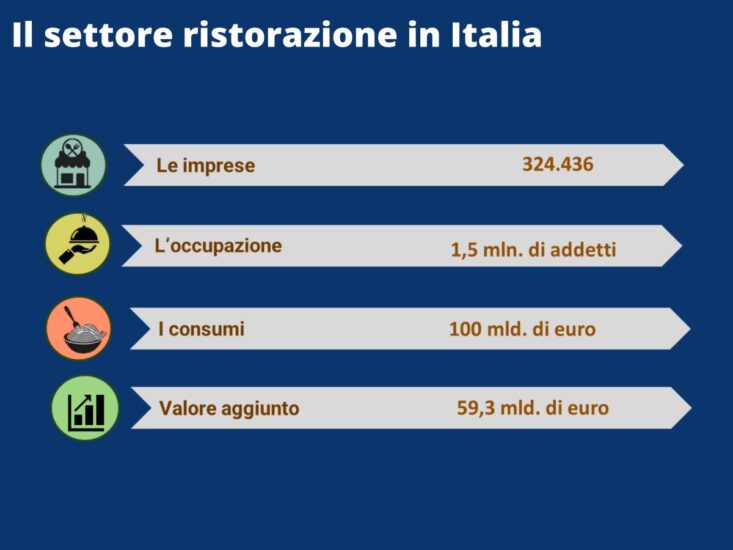
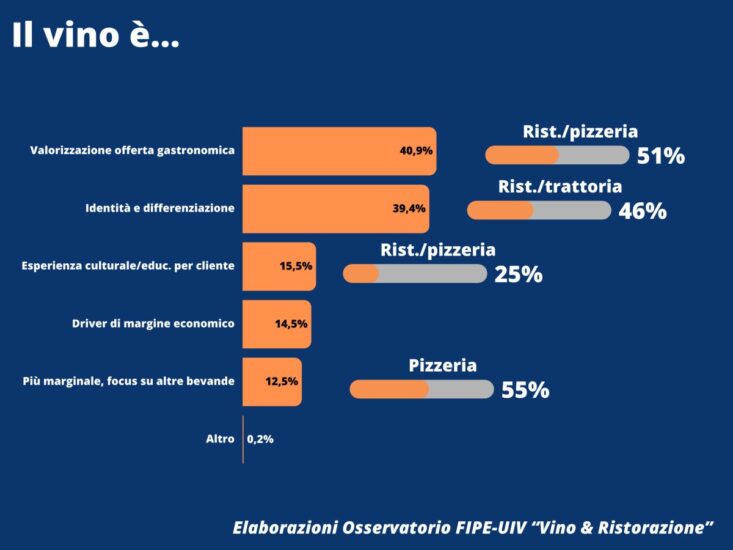
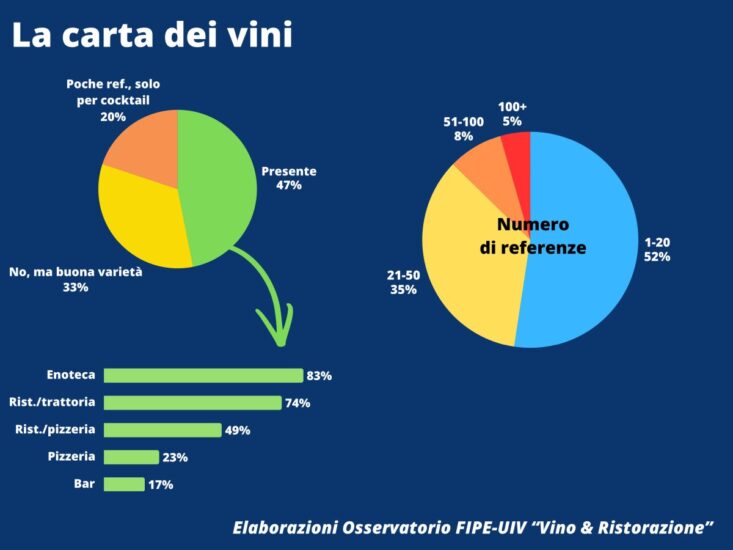
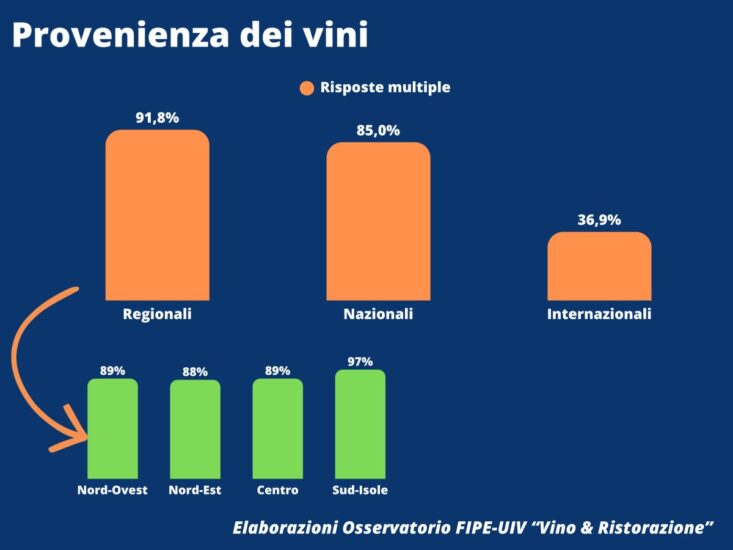
“The sector counts 324,436 businesses, 1.5 million employees, 100 billion euros in consumption and 59.3 billion euros in added value, with a significant economic impact considering that wine accounts on average for 21% of turnover. This share is higher in traditional restaurants, exceeding 30% for 22% of respondents”, illustrated Giulia Erba from the Fipe-Confcommercio Research Office. For restaurant entrepreneurs, wine is not merely a beverage to accompany a meal: it enhances the gastronomic offering and the overall experience, and contributes to the identity of the business and customer loyalty. The wine list, used by three out of four restaurants and by half of restaurant-pizzerias (with a total of 4.1 million items listed), is primarily shaped by criteria such as territorial valorization, food pairings and customer requests. 47% of businesses have a structured wine list. On average, lists include 28 labels, mainly regional, to highlight local territory and traditional cooking. In 72.3% of cases, selections are curated by the owner, and therefore the use of in-house sommeliers or agents is limited. However, wine lists are updated one to three times a year in 40% of cases, and only once a year in 54% of cases. This limited turnover, according to the collected data, fits into a broader context of insufficient wine training among restaurateurs: one third of venues report no form of ongoing education (a figure that rises to 61% in pizzerias and 50% in cocktail bars), and half of those who do receive training rely on word of mouth from agents or distributors”. Among the main critical issues reported by 52.9% of operators are declining demand, waste due to opened bottles and poor storage, difficulties in selling wine by the glass, reduced margins and high purchase costs. The latter two points may sound somewhat discordant from the perspective of wine producers, but it is hoped that this collaboration will lead to greater mutual understanding to better address the issue of mark-ups.
As Giulia Erba concluded, the horeca sector can respond to these challenges through a range of strategies, such as offering additional services, including wine by the glass and guided tastings, and organizing events and themed evenings to tell the story and highlight the territory behind the labels.
On the other hand, as noted by Lino Enrico Stoppani, president of Fipe-Confcommercio: “wine is a strategic element of the Italian dining offer, both economically and culturally, because it helps define the identity and quality of the customer experience. There is no true conviviality without a good wine accompanying the meal. However, the Observatory data highlights the need to invest more in training and communication, starting with wine lists, whose assortments should be improved. They remain a fundamental tool for enhancing the overall restaurant offering. In a context of slowing consumption, it is increasingly important to strengthen collaboration between restaurateurs and producers in order to capture new trends and build a coherent and competitive offer capable of supporting business margins as well”.
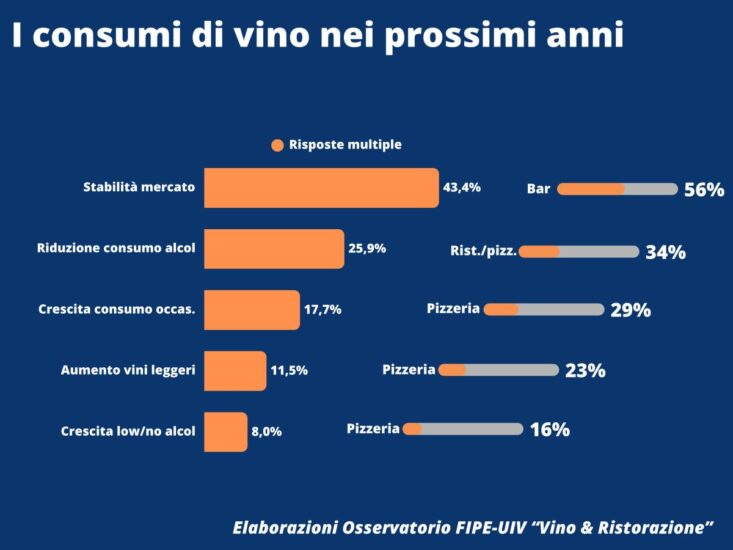
Italian restaurateurs are facing a difficult period, with declines in both spending and consumption, and the indicator measuring the difference between negative and positive responses reflects this hardship, especially with regard to quantities consumed at the table and wine bottles sold. “On the consumption front - underlined Carlo Flamini of Uiv Wine Observatory - for more than half of restaurateurs, wine orders are “unchanged” compared to the 2021/22 biennium. However, those who report declines are significantly more numerous in terms of spending (-17% net balance between increases and decreases), and even more so in terms of consumption volumes (-28%). The most significant drops in volumes are recorded by restaurants and trattorias (net balance of -35%). Unsurprisingly, among the 53% who identify critical issues in wine management, the primary factor is declining demand. When it comes to wine selection, “lightness” remains the key driver: less demanding wines (sparkling wines, and even more so light white wines) show double-digit positive net balances, while demand for red wines, especially structured ones, is weakening. And while cocktails are now a permanent feature on the menu in just over one fifth of venues, a prevailing share (44%) of restaurants and pizzerias still view mixology as inconsistent with their positioning. Looking ahead - concluded Flamini - most restaurateurs expect a situation of stability (43%), while a solid 26% are pessimistic and anticipate a general reduction in alcohol consumption (a figure rising to 34% among restaurants and pizzerias), with 8% believing that low- and no-alcohol products will gain ground in their establishments”.
Copyright © 2000/2026
Contatti: info@winenews.it
Seguici anche su Twitter: @WineNewsIt
Seguici anche su Facebook: @winenewsit
Questo articolo è tratto dall'archivio di WineNews - Tutti i diritti riservati - Copyright © 2000/2026