


Saturday 12th of September 2026 - Last Update: 11:47





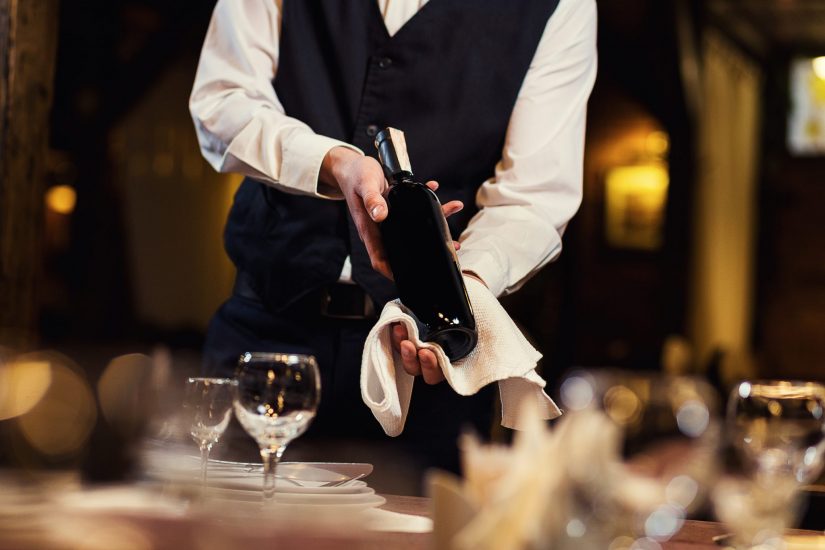
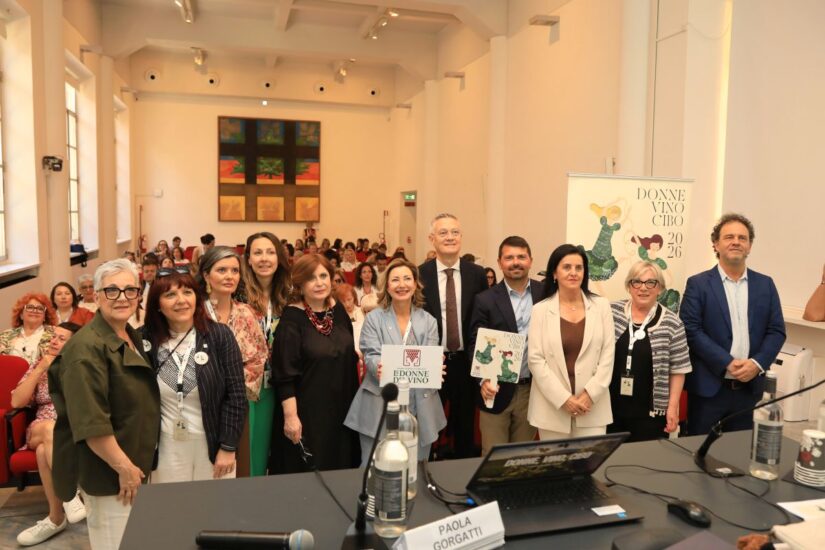
Building a new pact between producers and restaurateurs to enhance Italian wine through wine lists more closely linked to local territories, more balanced pricing policies, and a tax credit for those who choose to include wines and PDO (Protected Designation of Origin) products from their own region on their menus. This is the concrete proposal of the National Convention of Le Donne del Vino, an organization with nearly 40 years of history and 1,260 members across Italy, recently hosted in Emilia-Romagna, featuring meetings, visits, and in-depth discussions which brought together producers, professionals, and key figures in the sector to engage with institutions on the role of denominations as drivers of economic, cultural, and tourism development in local areas.
This is “a particularly relevant issue at a time when the sector must face declining consumption, changes in lifestyles, and increasing international competition - said president of Donne del Vino Daniela Mastroberardino - Le Donne del Vino believe that the hospitality sector can become the primary ambassador of Italian denominations, promoting regional production and helping to tell the identity of territories through wine”.
A proposal supported by the regional councillor for Agriculture of Emilia-Romagna, Alessio Mammi, who stated that “PDO and PGI tourism is one of the main tools for developing rural areas, and wine represents a true territorial infrastructure. To support the sector, new European and national policies are needed. For this reason, we have put forward 5 proposals to the European Commission, and we believe it is useful to open a discussion on innovative tools to encourage quality consumption, such as a tax credit for restaurateurs who include wines and PDO products from their own region on their menus, capable of supporting the supply chain and promoting conscious consumption”.
According to Enza Bergantino, deputy delegate for Emilia-Romagna of Le Donne del Vino, “denominations are not only instruments of production protection, but true cultural infrastructures which preserve history, landscape, skills, and communities. Unesco recognition for Italian cuisine represents an extraordinary opportunity to strengthen the attractiveness of territories and make even clearer the link between wine, culture, and tourism. In this process, gastronomic storytelling plays a decisive role: telling a territory means telling its wines, its products, its people, and its traditions”.
There was also a heartfelt tribute to Pia Donata Berlucchi, the “Lady of Franciacorta”, who recently passed away and was a past president of Le Donne del Vino. Berlucchi was supposed to talk about Franciacorta from the stage in Parma. President Mastroberardino read, at the opening, the letter with which Pia Donata Berlucchi joined the association in 1998: “I will consider it an honor - beyond being a prestigious responsibility - to represent Franciacorta within this Association”. Francesca Fattore, brand ambassador of Freccianera Fratelli Berlucchi took up her legacy, who explained how a territory unknown 50 years ago has become an international synonym of excellence: a case study for anyone wishing to understand how a denomination becomes a destination. Her speech intertwined art, literature, and business, in a tribute in the style that was characteristic of Pia Donata Berlucchi. Fattore also offered a reflection on female leadership and communication: “male leadership coordinates, female leadership accompanies. A woman uses on average 16,000 words a day, a man just over 8,000. But those who communicate well do so because they listen well. And in wine, which is storytelling, this is a decisive skill”.
On the regulatory front, Stefano Vaccari, member of the XIII Agriculture Commission and the Ecomafie Commission of the Italian Chamber of Deputies, also intevened. “Italian Sounding takes about 70 billion euros from Italian exports every year, and over 120 billion euros when considering the entire phenomenon of food counterfeiting. It is not only an economic loss, but an appropriation of our identity”. Vaccari announced that the Ecomafia Commission will submit, by 2026, its report on food counterfeiting and the fight against Italian Sounding, with the aim of making it a national priority. Among the figures mentioned: 2,500 counterfeit digital contents discovered by the Chianti Wine Consortium in a recent investigation, and concerns about transnational criminal organizations that, since 2017-2018, have been producing fake high-quality wines. Among the suggested tools, there are stricter traceability regulations and the digital product passport: “if interpreted as a tool of transparency and trust toward the consumer, it can become one of the most important innovations for protecting and promoting made in Italy”.
The Convention visited some of the emblematic places of agri-food excellence in Emilia-Romagna. In Modena, the visit to Cantina Settecani and the Lambrusco masterclass “Spumeggiante Emilia: le bollicine che ti rubano il cuore” - “Spumeggiante Emilia: the sparkling wines which steal your heart”, headed by Matteo Pessina, were accompanied by a tasting of Parmigiano Reggiano PDO organized by the Consortium. There was also a visit to the municipal vinegar cellar, with an in-depth session dedicated to Traditional Balsamic Vinegar of Modena PDO, headed by Grand Master of the Consorteria Maurizio Fini, as well as tours of the city Unesco sites. Parmigiano Reggiano and its production were also featured during the visit to the Santo Stefano dairy in Basilicagoiano, while in Reggio Emilia, at Cantine Albinea Canali, there was a visit to the educational vineyard and winery, along with the masterclass “Radici rare - vitigni autoctoni dell’Emilia-Romagna tra identità e biodiversità” - “Rare Roots - native grape varieties of Emilia-Romagna between identity and biodiversity” headed by Antonella Pizzi and Annamaria Compiani.
Copyright © 2000/2026
Contatti: info@winenews.it
Seguici anche su Twitter: @WineNewsIt
Seguici anche su Facebook: @winenewsit
Questo articolo è tratto dall'archivio di WineNews - Tutti i diritti riservati - Copyright © 2000/2026