





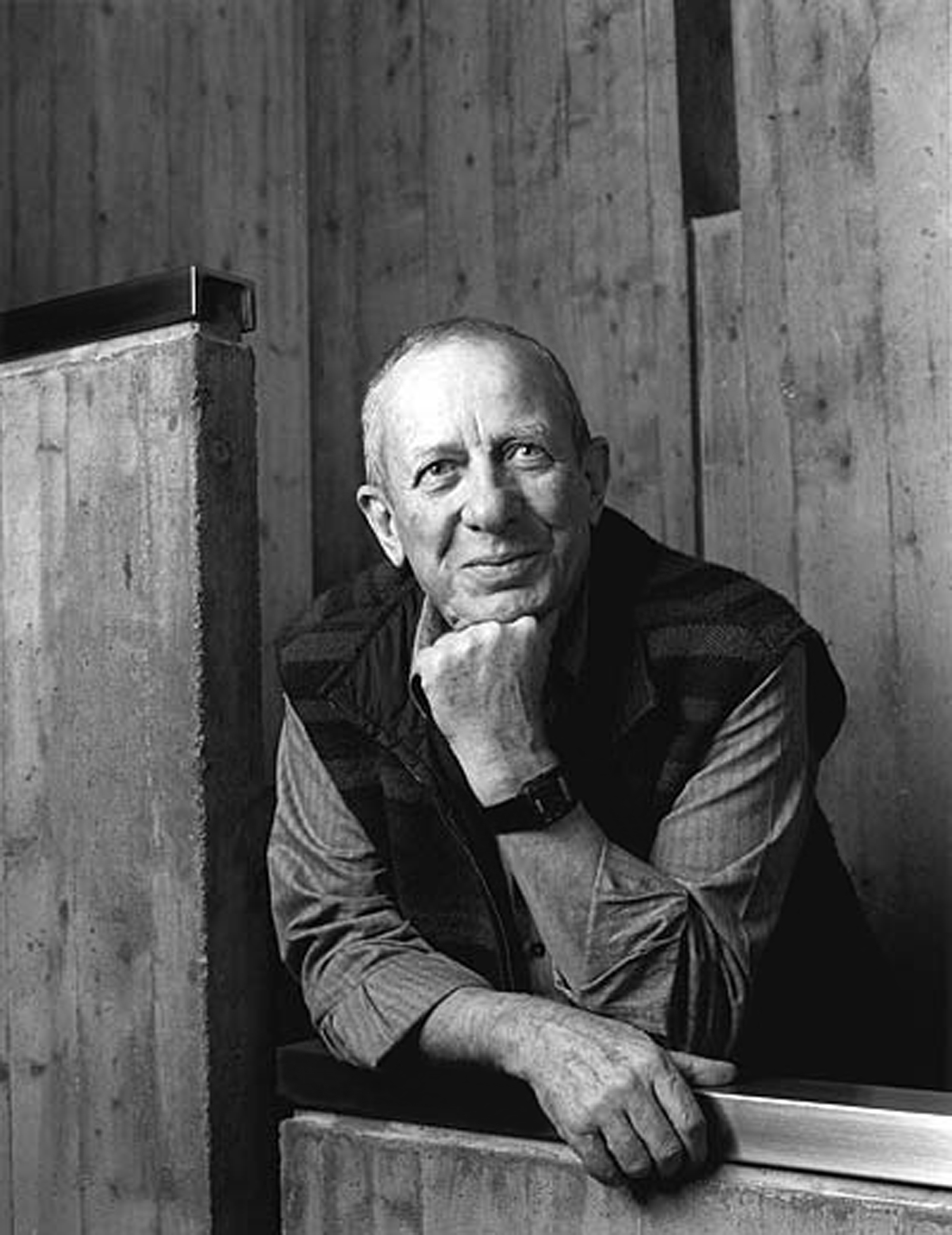
“Only vulgar people consider gastronomy a vulgar discipline and believe it aimed solely at satisfying appetite” (from the gastronomic literature periodical “Il gastronomo”, No. 1, Winter 1956-1957). Among the thousands - truly, a thousand and more - quotes we could have chosen from one of the greatest figures of 20th-century Italian history, we selected his invitation to fully and perfectly enjoy the gifts of nature, ennobling food and wine. There is no doubt that reconsidering - we Italians first and foremost - and promoting our wine and food culture as an intellectual and sensory experience has been the true turning point for Italy, considering the cultural, social, and economic value it holds for our country, for its territories and communities, distributed along the agri-food supply chains, perceived in the hospitality of restaurants and in the offerings of food and wine tourism, and brought to tables around the world, today further affirmed by the recognition of Italian Cooking as Unesco Intangible Cultural Heritage. A philosopher above all, gastronome and intellectual, publisher, writer, critic, and journalist, Luigi Veronelli would have turned 100 today, born on February 2nd, 1926 in Milan, in the district of Isola, into a family where, as it is well known, and as his father said, wine was drunk “with respect, because inside it lies the labor of farmers”. He passed away on November 29th, 2004 in beloved Bergamo. There, the Seminario Permanente Luigi Veronelli, the non-profit association he created in 1986, the master of Italian wine and food journalism, founder of gastronomic and wine criticism in Italy preserves, continues, and protects his great legacy. The association, which this year itself celebrates 40 years since its foundation - marks Veronelli “golden century” by recalling his values: intellectual honesty, transparency and independence in wine criticism, the pursuit of meaningful relationships, respect for work, and the joy of sharing in which wine is paramount.
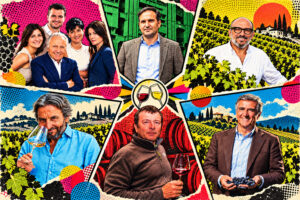
These values were discussed this morning on “Tg2 Italia - Europa”, live on Rai 2, hosted by Marzia Roncacci, with historian and broadcaster Umberto Broccoli, Stefano Carboni, professor of Sociology of Consumption at Tor Vergata University in Rome, Maurizio Zanella, founder of the historic Franciacorta winery Ca’ del Bosco, Franco Maria Ricci, head of the Italian Sommelier Foundation (Fis) and Bibenda, and WineNews director Alessandro Regoli, who recalled “meeting Gino Veronelli when I was young, at the beginning of my professional career: he was the true master of Italian wine and food journalism. I met him many times; I was not his student, and I regret that, but I have always followed the Seminario Permanente Luigi Veronelli, which carries forward his extraordinary legacy. A legacy which begins with Pellegrino Artusi - author, in 1891, of “Scienza in cucina e l’arte di mangiar bene” - “Science in the kitchen and the art of eating well”, the most famous Italian cookbook, which united Italy and the Italian language, today translated into every language in the world, even Chinese, with more than a million copies sold - continues with Paolo Monelli, author of the iconic “Il ghiottone errante” in 1935 and not only, and reaches Mario Soldati, whose monumental work includes “Viaggio nella Valle del Po” - “Journey Through the Po Valley”, the first wine and food reportage by Rai in 1956. The Italy they described, as Veronelli later would, was a far less educated country, simple, humble, rural, but genuine, like the wines and foods of the Italian countryside, whose territorial beauty and community spirit these “sacred monsters” were the first to narrate. And they did so with the few media tools available to them, yet managing to reach and captivate the general public. Communication, journalism, and wine and food criticism arose with them: they are the “fathers”, even of ideas considered visionary at the time but perfectly relevant a century later”.
Claiming his anarchic spirit and tireless commitment to the rebirth of Italian wine, beginning from his debut as a wine writer with “I vini d’Italia” in 1961, Veronelli emphasized the concept of the “Cru”, celebrating the most prized vineyards: “small the farm, tiny the vineyard, perfect the wine”, he wrote in the famous epigraph of the Bolaffi catalogues. He even conceived the DeCo, Denominazioni Comunali (Municipal Denominations), convinced that Italian territories, even the smallest, were the future of Italy; and he was right. Understanding the communicative power of television, in the 1970s he brought wine to the general public through “A tavola alle 7”, one of the most successful shows in Italian TV history, alongside the great actress Ave Ninchi, she the “housewife,” he the “professor”, forming one of the most beloved duos ever. Always on the same Rai, where he was honored again today “for his ability to talk about wine in a truly modern way - concluded WineNews director Alessandro Regoli - he told the story of food and of wine from the perspective of their intrinsic quality and their connection to the places they come from. Talking about a product, he narrated its territory, its maker, its purpose, and the ties that product held with local history and culture, stories, friendships, emotions. This is the true value of wine and of Italian Cuisine, Unesco heritage: the good table, which the whole world loves”.
These are only small stories within the greater story of a lifetime during which, as the Seminario Permanente Luigi Veronelli recalls - and with it today begins a special membership campaign gathering “Veronellians” under its protection, from winemakers to restaurateurs, tavern keepers to wine shop owners, sommeliers to wine culture enthusiasts, while throughout 2026 it will promote public events and publications dedicated to its founder, starting with the “Il Veronelli” Expo at the Convento dei Neveri in Bariano, the symbolic and physical place preserving the heart of the cultural heritage of the master, from the document archive to the library, from the 12,000-bottle cellar to his studio (as we explained in a video) - Veronelli accompanied and supported Italian quality food and wine production from the post-war era through the 2000s. A knowledgeable interlocutor and inspiration to countless winemakers, artisans, and restaurateurs, mentor to the leading Italian food critics (Carlin Petrini, founder of Slow Food; Alessandro Masnaghetti, the “cartographer” of Italian wine, editorial director and curator of Guida Oro I Vini di Veronelli; and the celebrated critic Luca Maroni, just to mention some of them and all have collaborated with him), Veronelli educated generations of Italians about the culture of the land and the table. “Veronelli left an indelible mark on the world of wine and gastronomy in Italy. Through his battles, fought alongside winemakers, he brought excellence to vineyard and cellar. He devoted his entire life to elevating quality production, territories, labor, environment, and wine culture”, underlines Angela Maculan, president of the Seminario Veronelli.
On this important day for Italian food and wine, on which Rai Cultura will also broadcast the beautiful “Viaggio sentimentale nell’Italia dei vini” - “Sentimental journey through Italy wines” by Veronelli at 6:30 pm on Rai Storia (followed by tributes to Soldati and to Gianni Brera, another “sacred monster,” alongside Gianni Mura) - the Seminario emphasizes that his memory can’t be reduced to a sterile monument: remembrance is important, but Veronelli himself often said that he envisioned the future as a forge in constant motion, starting from his ideas and intuitions. Not a “mindless repetition” (as he would have said in his cultured personal jargon), but an ongoing process of reworking and evolution rooted in the fundamental Veronellian values he brought to the wine world, and which the Seminario Permanente Luigi Veronelli continues to uphold today. It is the place he wished for, to keep the embers of his thought alive, to preserve his ideas as he wanted by letting them grow. As with wine, which, he said, quoting another of his truths, “must be drunk for this miracle: it urges the intelligence toward better things”.
Copyright © 2000/2026
Contatti: info@winenews.it
Seguici anche su Twitter: @WineNewsIt
Seguici anche su Facebook: @winenewsit
Questo articolo è tratto dall'archivio di WineNews - Tutti i diritti riservati - Copyright © 2000/2026