







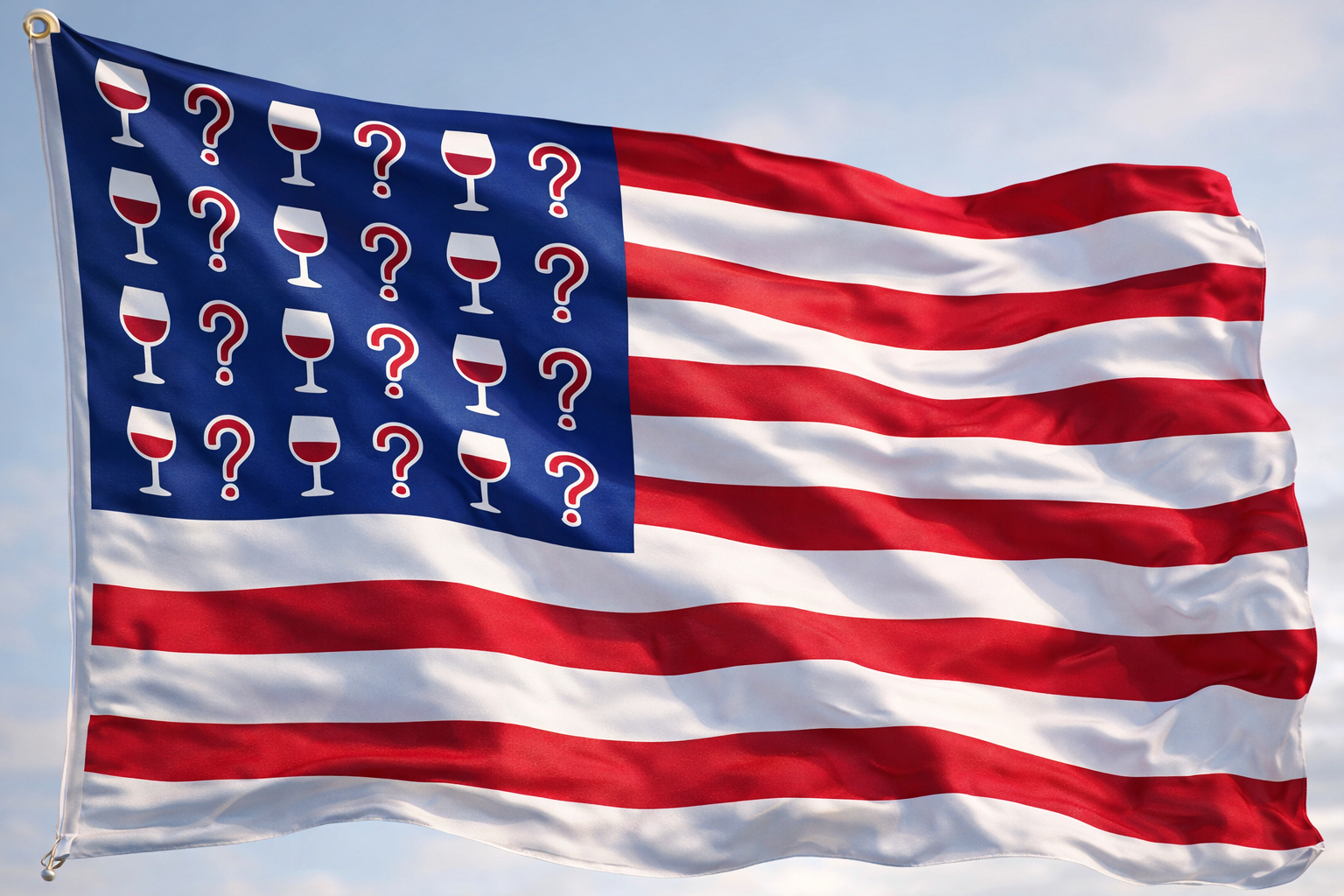
Starting from today, until further official notice, in the chaotic scenario of tariffs, European wine, along with many other goods from around the world headed to the U.S., will be subject to a 10% ad valorem tariff. This has been in effect since midnight on February 24th in Washington, D.C., and will remain so until July 24th, 2026 (as stated on the White House website), unless probable changes, already announced by Trump, are implemented in response to the recent Supreme Court ruling. In the past few days, the Court declared unconstitutional the 15% tariffs that had been in place until last night and that were based on the International Emergency Economic Powers Act (Ieepa).
A note released in recent hours by the U.S. Wine Trade Alliance, which brings together operators in the U.S. wine market adds a degree of “clarity”, as far as possible in this new phase of major uncertainty over a measure which brought 175 billion dollars into the U.S. government coffers, money that many now want refunded to those who paid it, further complicating an already extremely tangled situation. “U.S. Customs and Border Protection has issued guidelines confirming that tariffs imposed under the International Emergency Economic Powers Act (Ieepa), based on previous Executive Orders, will no longer be collected on goods entered for consumption or withdrawn from warehouse for consumption as of 00:00 (Et) on February 24th, 2026”. Essentially, this measure, explains the Ustwa, “revokes only Ieepa tariffs and doesn’t affect other tariffs currently in place”. At the same time, the new 10% ad valorem tariffs also come into effect today. “Importers - underlines the Ustwa - will need to plan their customs entries and warehouse withdrawals accordingly. On Saturday, President Trump publicly stated that global tariffs would be raised to 15%. However, as of today, no Executive Order or formal proclamation implementing a 15% tariff has been issued. Until the official publication of such a measure, the 10% rate remains in effect”. Obviously, in such a rapidly evolving scenario, the U.S. Wine Trade Alliance stresses that coordination among suppliers, freight forwarders, and all involved parties is essential.
This is a phase of renewed chaos and uncertainty which penalizes markets perhaps even more than the certainty of the 15% tariffs that, for months now, industries, including the wine sector, had somehow learned to manage. So much so that many now hope for a fast return to the status that existed before the U.S. Supreme Court ruling, rather than remaining in this new phase of uncertainty, as pointed out, among others, by the president of the Unione Italiana Vini (Uiv) Lamberto Frescobaldi: “we hope, as anticipated yesterday by Minister Tajani, that in the end it will be possible to restore the all-inclusive 15% tariff regime which had been in force until a few days ago. We won’t celebrate this, but at least we would return to a relatively stable condition, despite the difficulties it entails. We must acknowledge that this situation forces us to seek out other markets - he continued - starting with India and Mercosur, for which we need temporary approval. Last but not least, we must seize the opportunity available at home and work to overcome the internal bureaucratic resistance within the EU itself: the removal of non-tariff barriers even within the EU, as noted by the Ecb - could more than compensate for the American tariffs”.
Copyright © 2000/2026
Contatti: info@winenews.it
Seguici anche su Twitter: @WineNewsIt
Seguici anche su Facebook: @winenewsit
Questo articolo è tratto dall'archivio di WineNews - Tutti i diritti riservati - Copyright © 2000/2026