







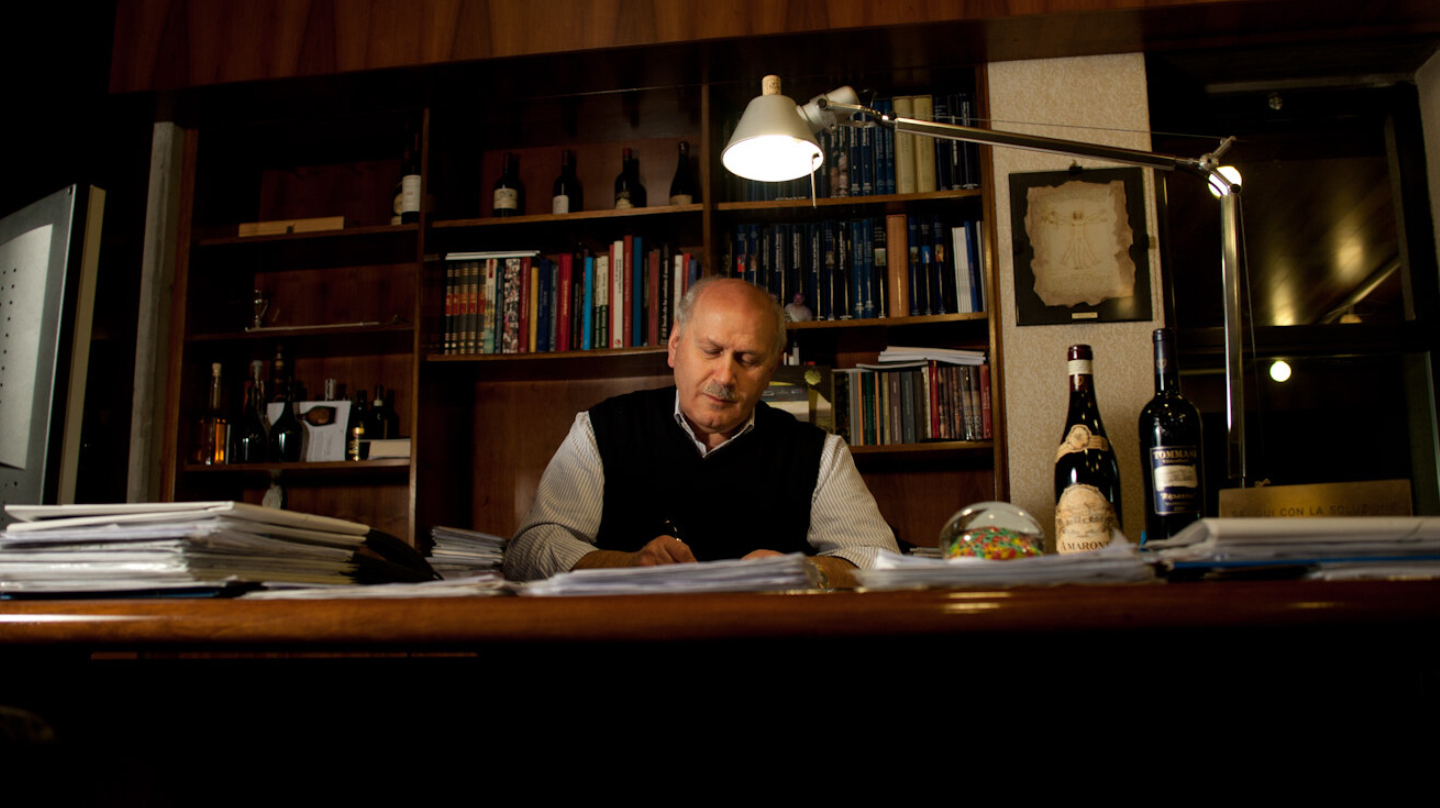
It is clear to everyone that the present moment is perhaps more complicated for the wine sector than at any time in the past 20 years. And it is a fact that the future among economic difficulties, changing consumption patterns, and sometimes extreme health-consciousness, is more uncertain than ever. It is equally evident that today, more than ever, the sector needs greater attention from the Italian system as a whole, from institutions to businesses. First and foremost, to counter the thesis of those who claim that “wine is harmful” regardless of whether consumption is moderate. But also to make decisions that some may dislike, but that others consider necessary and essential, such as uprooting vineyards, especially those used for non-profitable production, and reducing yields throughout the rest of Italy vineyards. These are proposals, among others, clearly expressed by one of the figures who has shaped the history of Valpolicella, i.e. Dario Tommasi, who, together with his family, “starting from the management of a small sharecropping farm in the heart of Valpolicella”, built “one of the leading wine groups in the country”, Tommasi Family Estates, which today cultivates “over 800 hectares of vineyards across Veneto, Lombardy, Friuli, Tuscany, Puglia, Umbria, Basilicata, and Sicily”. These words were written by Dario Tommasi in a letter to Minister of Agriculture Francesco Lollobrigida, and shared as well with WineNews.
“I have never seen our wine sector so endangered and so close to a perfect storm which, if not addressed promptly and decisively, could trigger a long-term structural crisis”, writes Dario Tommasi. Among the greatest risks, he notes, beyond the direct repercussions for the supply chain, there is the potential devaluation of land assets. And “to avoid the crisis, or at least to mitigate its impact, we must critically rethink the alcoholic beverage market, the scale of Italy vineyards, and the role of consortia”, explains Tommasi.
For him, “the first issue to address is the “health-conscious megatrend”, or what appears to be such, which favors beer consumption at the expense of wine, while allowing fashionable spirits. aperitifs in particular, to offset the decline in traditional spirit consumption”. Dario Tommasi explains that wine has been the target of “repeated aggressive campaigns” portraying it as “a harmful product similar to tobacco”. For this reason, among others, “it has begun to suffer increasingly and will only recover if and when people are once again convinced that wine consumption, in appropriate quantities, is compatible with their well-being”. Without clearly stating that “a glass with meals, moderate consumption, is compatible with well-being and health for the vast majority of adults”, Tommasi states, even individual companies advertising becomes pointless.
Another decisive factor, according to Tommasi, regards the structure of Italy vineyards and how they are managed. “Italian viticulture currently covers 700,000 hectares of vineyards; of these, 300,000 produce grapes destined for generic denominations and/or fetch prices below production costs. For these areas, uprooting must be encouraged (with at least a fifty-year ban on replanting) or conversion to other crops (olive groves, hazelnut groves…) or to forest, safeguarding landscape and environmental values, biodiversity, and the wine market”, writes Tommasi. For the remaining 400,000 hectares, “the “historic” and “indispensable” viticulture”, he proposes maximum yields of up to 100 quintals per hectare, along with the introduction of a contribution of a few cents per kilogram of grapes, to be allocated “partly to local consortia (which should also be strongly encouraged to merge), and mainly to a national consortium for wine consumption, capable of operating on a scientific basis and in synergy with domestic institutions, international bodies, and the European Union, given that high-quality Italian wine is predominantly destined for export”.
These analyses and proposals coming from Dario Tommasi, addressed to Minister of Agriculture Francesco Lollobrigida, urge him to “fully appreciate the seriousness of the situation; the unavoidable need for a structural reduction in supply; and the urgency of responding to the decline in consumption with prompt and adequate measures, entrusted to one or very few bodies, funded primarily with private resources from within the supply chain itself”.
Copyright © 2000/2026
Contatti: info@winenews.it
Seguici anche su Twitter: @WineNewsIt
Seguici anche su Facebook: @winenewsit
Questo articolo è tratto dall'archivio di WineNews - Tutti i diritti riservati - Copyright © 2000/2026