


Sunday 20th of September 2026 - Last Update: 21:50






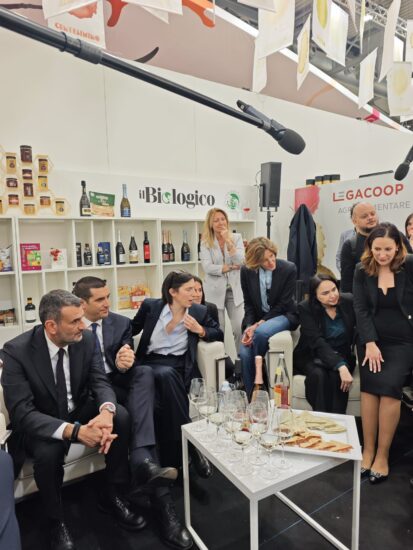
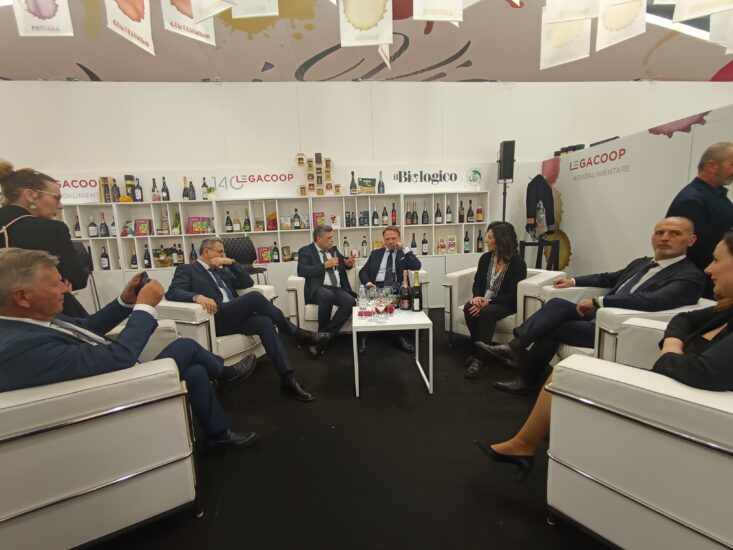


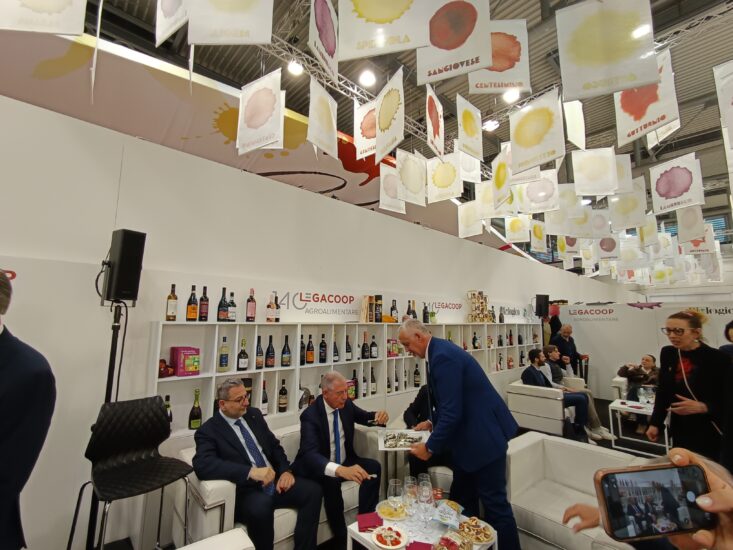
Promoting the excellence of Italian wine and opening up new markets is better than uprooting vineyards, as everyone agrees. But “where there is a will there is a way” doesn’t always apply, and today the figures paint a picture of high cellar stocks, with wine production that has been structurally excessive for several years now (despite some very low recent harvests due to climate conditions and vine diseases) compared to demand (as also emerged at the recent “Wine Roundtable” held during Vinitaly 2026). For this reason as well, some argue that strong and courageous choices are needed, starting at the very least with putting a stop to the expansion of vineyard areas. This view was reiterated in recent days by Legacoop Agroalimentare (which brings together more than 60 wine-related entities, with a production value of 2 billion euros, almost 13% of the Italian wine sector turnover, 620 million euros in export revenues, and over 2,700 employees, ed), which, during Vinitaly in Verona, met with the leadership of many political forces, from Minister of Agriculture Francesco Lollobrigida to EU Commissioner for Agriculture Christophe Hansen, from Deputy Prime Minister and Minister of Infrastructure and Transport Matteo Salvini to the Minister of Enterprises and Made in Italy Adolfo Urso, as well as the PD Secretary Elly Schlein.
“The Italian wine sector needs brave choices and a strategic vision capable of guiding the market through a phase of strong uncertainty. We are firmly renewing our call for a temporary suspension of authorisations for new vineyard plantings”, said Cristian Maretti, president of Legacoop Agroalimentare. “Each year, the current system allows the planting of around 7,000 hectares of vineyards. In light of the innovations introduced by the “Wine Package”, which makes it possible to reduce authorizations even to 0%, we believe it is urgent to consider a temporary halt in order to avoid further increasing supply in a market already exposed to potential imbalances between demand and production”, Maretti added. According to Legacoop Agroalimentare, such a measure would send a clear signal to the sector. In fact, the authorization system allows Member States each year to allocate new vineyard areas up to 1% of the national vineyard surface, a quota that Italy has so far always used in full, resulting in a significant increase in production potential. As a result, the national vineyard area has grown by almost 7,000 hectares per year, around 70,000 hectares over 10 years. “In a context marked by changing consumption patterns and increasingly unpredictable climate variables - underlined Maretti - it is essential to avoid introducing new production that risks entering the market during a phase of oversupply. Temporarily blocking the 1% of new authorizations, even for a limited period of 2-3 years, would make it possible to restore balance and send a message of responsibility to the entire system”.
According to Legacoop, this request should also be taken up at the European level and by other Member States to rebalance wine production. For Legacoop Agroalimentare, “the extension of replanting authorizations to 8 years is certainly positive, as it offers companies greater flexibility to plan investments at the most favorable moments in the market. In this difficult phase of the international economic situation and declining consumption, a further intervention on the promotion measure towards third countries would be very helpful, namely, removing the time limit on consolidation promotional activities”, added Maretti. Who concluded: “Italian wine remains a product of great quality and prestige, but precisely for this reason it must be managed with care, avoiding expansionary dynamics that are not consistent with demand trends and without penalizing certain production chains with simplistic solutions. A shared strategy is needed, at national and European level, to ensure economic sustainability and growth prospects for the entire supply chain”.
Copyright © 2000/2026
Contatti: info@winenews.it
Seguici anche su Twitter: @WineNewsIt
Seguici anche su Facebook: @winenewsit
Questo articolo è tratto dall'archivio di WineNews - Tutti i diritti riservati - Copyright © 2000/2026