


Sunday 22nd of March 2026 - Last Update: 16:03










A promising first step for the future, offering potential and fertile ground for what is still, of course, a niche market, but one where interest in wine is certainly not lacking, as demonstrated by the growing export figures. Chianti DOCG, the largest and most “pop” red-wine denomination in Tuscany - a “galaxy” of 2,200 producers, over 13,600 hectares, and 75 million bottles sold each year - has always kept a close eye on markets around the world. One of these is Nigeria, where the denomination was featured in recent days in Lagos at the Gambero Rosso “Top Italian Wines Roadshow”, an event which combined wine, education, and dialogue in a new and rapidly evolving market. In 2024, Nigeria imports of Italian wine reached 2.28 million euros in value. But the trend is expanding rapidly: in the first 10 months of 2025, according to Istat data analyzed by WineNews, the figure rose to 4.2 million euros, +120% over the same period in 2024. At Chianti “African debut”, 13 companies and 30 labels were present offering a broad and representative overview of the denomination.
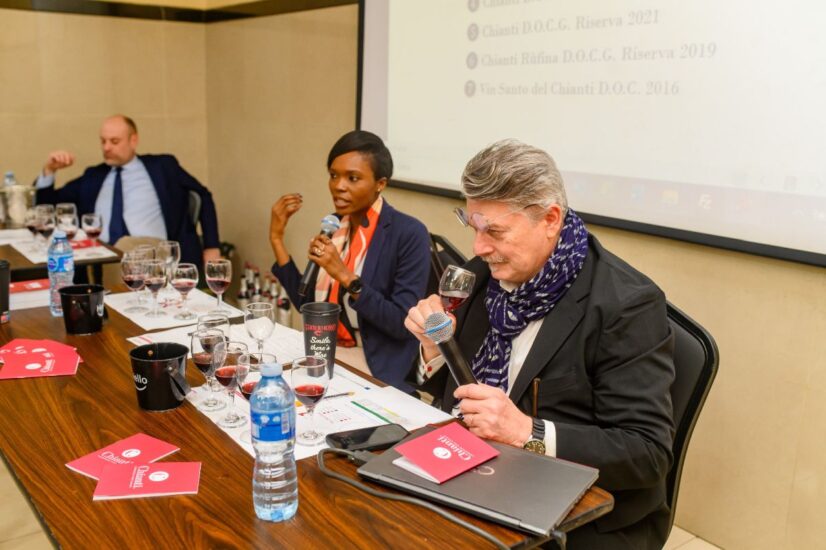
One of the key moments of the day was the masterclass for the press and trade professionals, featuring a tasting of seven Chianti DOCG labels headed by Marco Sabellico, editor of Gambero Rosso “Vini d’Italia” guide. The session, titled “A contemporary journey through the great wine lands of Chianti”, presented the region from a modern perspective, highlighting the denomination ability to combine tradition, style, and contemporary quality.
“This mission - explains Giovanni Busi, president of the Chianti Wine Consortium - allowed us to closely observe a market like Nigeria, which has an estimated pool of 8 to 10 million potential consumers with strong purchasing power and a wine consumption pattern tied mainly to formal events, occasions of representation, and high-profile settings”. Busi added that “it is a model far from the European one, where seasonality and serving temperature are not decisive factors. This is also why we believe it may be a good opportunity to introduce a product like Chianti, which pairs well with many local dishes. At this stage, it is not realistic to focus on volumes: the priority is to build value, make the denomination recognizable, and explain what Chianti represents”.
The Lagos leg marked an evolution from the activities carried out in 2024, when the Consortium organized two institutional masterclasses in Lagos and Luanda (Angola) without direct participation from the producers. “The next step was to bring producers to the field - affirms Busi - because only direct engagement allows one to understand channels, targets, and consumption dynamics”.
The Nigerian mission is part of a medium- to long-term strategy increasingly more focused on emerging markets. “Africa, along with other countries such as India (where there is strong interest in Italian wine, also thanks to the tariff reductions expected from the agreement with the EU, ed), represents a strategic direction which requires continuity and physical presence. It is a path which must be built over time: without consistency and direct relationships with the markets, promotion can’t be effective”, concludes the president of the Consortium.
Copyright © 2000/2026
Contatti: info@winenews.it
Seguici anche su Twitter: @WineNewsIt
Seguici anche su Facebook: @winenewsit
Questo articolo è tratto dall'archivio di WineNews - Tutti i diritti riservati - Copyright © 2000/2026