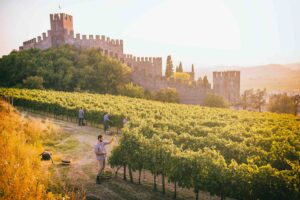








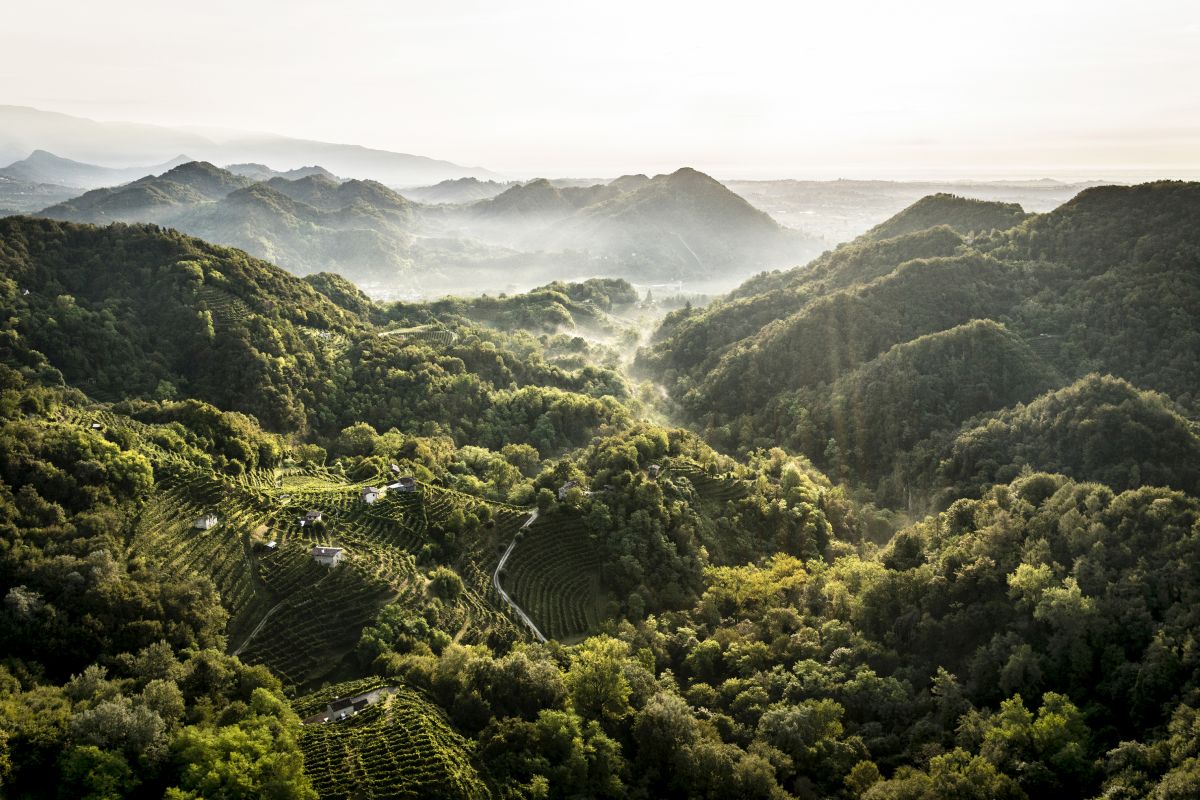
Increasing the percentage of organic matter in the soil to retain more water, creating micro-reservoirs to collect rainwater, managing the vine canopy in different ways, as well as selecting more resistant and high-performing rootstocks and implementing passive and active protection solutions, such as anti-hail nets. These are some of the practical recommendations from study “Il vigneto e il clima che cambia. Azioni di contrasto alle avversità climatiche per il Conegliano Valdobbiadene Prosecco” - “The vineyard and changing climate change. Actions to counter climate adversities for Conegliano Valdobbiadene Prosecco”, presented yesterday in Solighetto by the Consorzio del Conegliano Valdobbiadene Prosecco DOCG and Banca Prealpi SanBiagio. The research is based on climate projections up to 2100 provided by the Meteorology Group of the Universidad de Cantabria, and highlights that - now established that climate change is no longer a future scenario but a present reality requiring concrete and innovative strategies to safeguard outstanding wine-growing areas - the first and most important adaptation strategy starts from the soil. Indeed, “a vital soil, rich in organic matter and microbial biodiversity, is the main ally of the winegrower in increasing vine resilience”.
The volume, explains a note, provides winegrowers with tools to address the challenges posed by increasingly frequent, intense, widespread, and unpredictable climatic events - such as heatwaves, droughts, hailstorms, and concentrated rainfall - and presents a range of practical and scientifically grounded solutions to mitigate their effects, with the aim of preserving the authenticity and quality of Conegliano Valdobbiadene Prosecco Superiore DOCG and its territory, a Unesco World Heritage Site since 2019. Among the impacts already measurable, the research shows that in the last thirty years the vine phenological cycle has shortened by 13-16 days (6-8 days for each degree Celsius of temperature increase), leading to increasingly earlier harvests. Ripening now occurs in mid-summer, with a predictable change in the course of maturation affecting the acid, sugar, and aromatic content of the grapes. For example, higher temperatures are modifying the aromatic profile, increasingly shifting it toward notes of ripe fruit, exotic nuances, and light spices.
“However, we must start from a key fact: after various migrations across different areas of Veneto and Friuli, the Glera grape, likely around 1700-1750, finally found in Conegliano Valdobbiadene the perfect climate for its metabolic needs. Therefore, optimal and not borderline conditions are capable today of absorbing temperature variations without major qualitative disturbances, which are typical instead of areas already precarious in terms of suitability. However, this is not enough, because water shortage or excess is another matter, as are extreme events (such as hail)”, explains the report.
And, to address these challenges, the research outlines a range of practical and scientifically based solutions, emphasizing that the first and most important adaptation strategy starts with the soil. “A vital soil, rich in organic matter and microbial biodiversity, is indeed the winegrower main ally”. Among the proposed actions, particular attention is given to soil management and organic matter. “A healthy and living soil is the first defense against drought. A concrete example is the adoption of green manure practices, which is, sowing specific herbaceous species (such as legumes or grasses) between rows. These plants are then shredded and incorporated into the soil. Furthermore, returning to the rotational use of organic matter in place of mineral fertilization, both practices transform the soil into a kind of “sponge”, increasing its capacity to retain rainwater and release it slowly during dry periods. To assess the impact of this practice, consider that a 1% increase in organic matter can enable the soil to retain up to 300,000 liters of additional water per hectare. Organic matter, replacing chemical nitrogen, avoids its climate-altering effects and provides better balance for the vine”.
Another recommendation is the creation of micro-reservoirs to collect rainwater. “To cope with both summer drought and intense rainfall, the creation of small rainwater collection basins called “micro-reservoirs” is envisaged, strategically positioned within or at the edges of vineyards. Micro-reservoirs offer a double advantage: firstly, the collected water becomes an emergency reserve for irrigating vines during the driest summer months; secondly, these basins help manage runoff during heavy rainfall, reducing the risk of erosion and minor landslides, a significant issue in steep hillside “heroic” viticulture. In fact, we are witnessing an increasing concentration of rainfall in May-June and a corresponding reduction in July-August (a trend which will continue in the future, as confirmed by research from the University of Cantabria). Therefore, we are working to find cost-effective and nature-based bioengineering solutions to stabilize small landslides within vineyards”.
Further focus is placed on canopy management and the selection of new, more resistant rootstocks. “The research proposes two complementary approaches. As for rootstocks, the primary recommendation is to use next-generation ones from the M Series, particularly M4, developed by the University of Milan. These rootstocks are described as “tap-rooting”, meaning they naturally tend to develop deep root systems, seeking water where it is more available and thus making the plant intrinsically more resilient to surface drought. However, it is also necessary to encourage roots to grow deeper by avoiding artificial irrigation and carrying out light surface tillage. Regarding canopy management, it is recommended not to carry out overly drastic summer green pruning, but rather to allow the foliage to create a sort of natural “umbrella” which protects the grape clusters from sunburn, while also preventing aromas from shifting too strongly toward overly exotic and overripe fruit notes”.
The study also suggests passive and active defense solutions, such as anti-hail nets. In particular, the authors recommend “installing “vertical wall” anti-hail nets, a system suited to the slopes of the Conegliano Valdobbiadene hills. In addition to the obvious protection against hail, an important and very positive “secondary effect” is highlighted in the context of climate change. The nets, especially dark-colored ones, act as a sun screen, slightly reducing direct sunlight on the grape clusters and lowering berry temperatures. This helps prevent sunburn and better preserve acidity and aromas during the most intense heat waves”.
“This study represents a fundamental step in our path of active protection of the territory - said Franco Adami, president of the Consortium - we can no longer limit ourselves to managing emergencies. We have a responsibility to look to the future with a strategic vision, equipping our winegrowers with the knowledge and technical tools needed to address ongoing transformations. This study is tangible evidence of an approach that puts research at the service of our community to preserve a unique heritage”.
“The resilience of the Glera variety is the key concept - added Diego Tomasi, director of the Consortium - our denomination is based on a grape variety, Glera, and on an irreplaceable terroir. We can’t think of relocating vineyards or changing varieties. What we can and must do is support the vine’s adaptation to new conditions by working on soil, water, and vegetative-productive balance. The research shows that solutions exist and are within our reach. The goal is to continue guaranteeing consumers a level of quality that cannot and must not vary from year to year due to climate extremes”.
“With this research on climate change, we wanted to underline our closeness to the territory, aware of the importance of agriculture not only for the sustainability of the landscape but also of the communities that live in it - concluded Carlo Antiga, president of Banca Prealpi SanBiagio - investing in knowledge can allow new generations to look to the future with an awareness of ongoing changes and how to manage them”.
Copyright © 2000/2026
Contatti: info@winenews.it
Seguici anche su Twitter: @WineNewsIt
Seguici anche su Facebook: @winenewsit
Questo articolo è tratto dall'archivio di WineNews - Tutti i diritti riservati - Copyright © 2000/2026