


Friday 13th of February 2026 - Last Update: 12:25






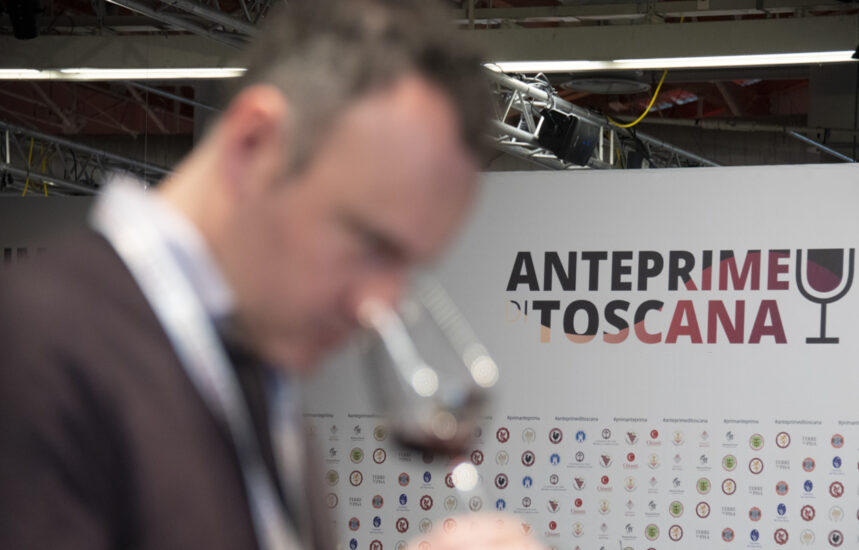
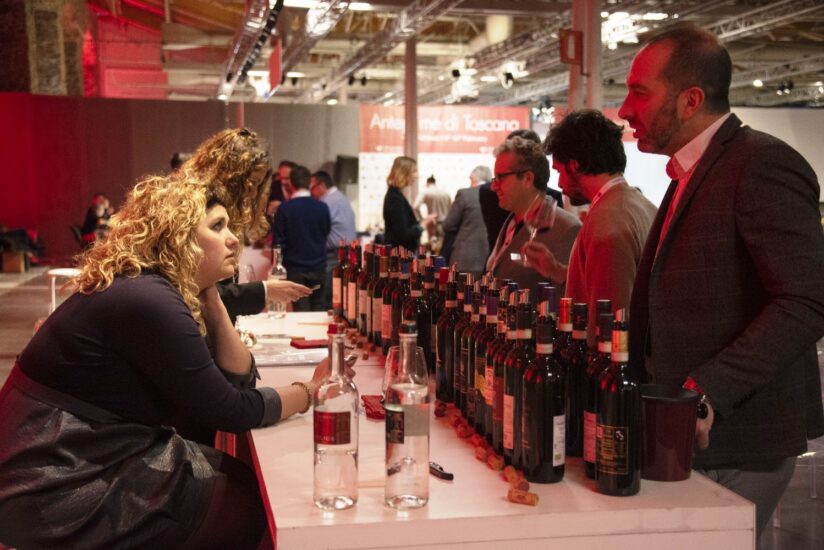

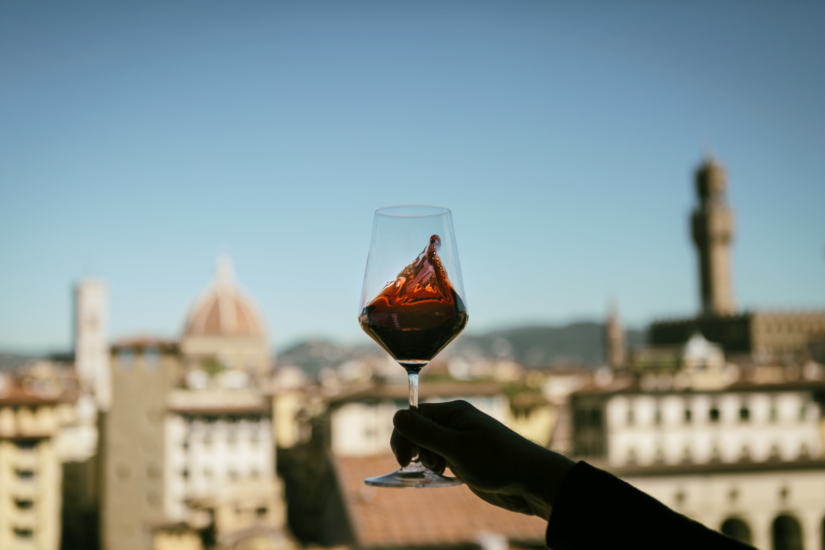
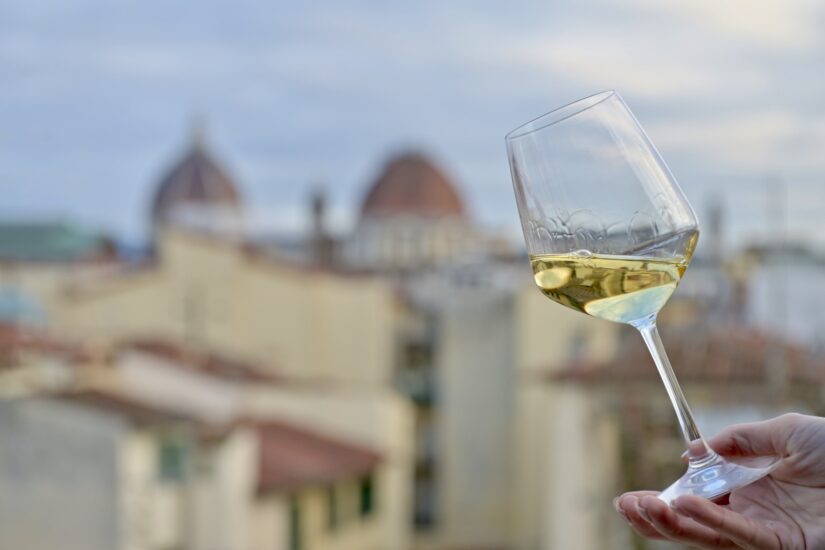
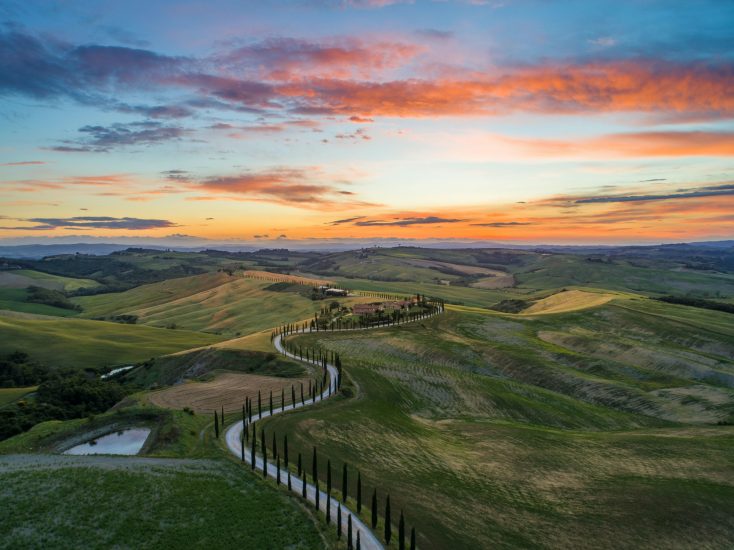
For every 100 bottles of Italian wine which reach the world, 15 come from Tuscany. Or rather, the region wine exports, amounting to 1.2 billion euros in 2024, represent 15% of the national total (Istat data). This is the land of Chianti Classico and Bolgheri, Brunello di Montalcino and Vino Nobile di Montepulciano, Chianti and Maremma, San Gimignano and Morellino di Scansano, Toscana IGT and many other small denominations, from Val d’Arno di Sopra to Montecucco, from Orcia to Pomino, among others, which therefore looks confidently to the future, despite a complex market phase, especially for major red wines. Overall, the region evaluates the situation as not overly negative, though aware that a shift in communication strategy is needed, given -2.7% in 2025 compared to 2024 in terms of control bands and bottlings (which, while not a perfectly detailed snapshot, remain a reliable indicator of the market), according to Avito data, the association which brings together all Tuscan wine consortia. Tuscany is a region in which the wine sector continues to be a cornerstone of the rural economy, representing 12% of the total value of agricultural production, compared to a national average of 9%. With more than 23,000 hectares under organic cultivation, the Region leads Italy green transition: 38% of Tuscany vineyards are organic, accounting for an impressive 17% of all organic vineyard area in the country. And while production volume stands at 2.2 million hectoliters - a physiological and planned decrease compared to the record 2024 harvest, the result of a strategic governance decision between the Region and the consortia which prioritizes value over volume, as well as a direct consequence of well-known climate impacts - the solidity of the “Tuscany model” is ensured by a high-quality supply chain, with 97% of vineyard area under PDO denominations, compared to a national average of 65%. These figures (presented today in Florence) come from the Ismea report for “PrimAnteprima”, taking place tomorrow at Cinema La Compagnia in Florence, the event which officially opens the “Tuscany Previews Week”. The program will include, in order Anteprima Vino Nobile di Montepulciano (Fortezza di Montepulciano, February 14th-15th, February 22nd-23rd for wine lovers), Chianti Classico Collection (Stazione Leopolda, Florence, February 16th-17th, open to the public on February 17th), Anteprima “L’Altra Toscana” (Palazzo degli Affari, Firenze, February 18th) - now in its edition No. 5 and dedicated to presenting to the media and professionals a lesser-known yet increasingly relevant side of Tuscan wine, featuring 8 consortia representing 12 PDO and PGI denominations (Bianco di Pitigliano and Sovana, Chianti Rufina, Maremma Toscana, Montecucco and Montecucco Sangiovese, Orcia, Suvereto, Rosso della Val di Cornia and Val di Cornia, Terre di Casole, Vino Toscana) and “L’Altra Toscana” Association, headed by Francesco Mazzei (with the Scaramuzzi Team’s contribution) - Chianti Lovers & Rosso Morellino (Fortezza da Basso, Florence, February 19th, for media), and finally Valdarno di Sopra Day (Il Borro-Ferragamo, San Giustino Valdarno, February 20th, for media). The long program will conclude with “Buy Wine Toscana” (March 11th-12th, Stazione Leopolda, Florence), the business-to-business showcase for international operators (190 companies, 175 buyers from 49 countries, led by the U.S. and Canada, but with many operators also from Mercosur, Asia, and Europe, where wineries will also be able to participate in the “Concours Mondial de Bruxelles,” one of the longest-running international wine competitions).
A sector, that of wine, which, as recalled by the president of the Tuscany Region, Eugenio Giani, talking to WineNews, is supported through “calls for proposals funded by European resources which we continue to support consistently, with concrete assistance for marketing and promotion through our structures, which have also led to the coordination of the Tuscany Previews, as well as support in terms of credit facilitation for businesses”.
“The difficulties on the markets are real - added Leonardo Marras, regional councillor for Agriculture of Tuscany - but we must not lose heart, because we need to penetrate new markets and win new consumers. This means we certainly need to support investments in promotion, in wineries, and in vineyards, so that we can adapt our productions to changing tastes. And we must strengthen even more the link between wine, the territory, and tourism promotion, because the experience one has in the region, in Tuscany, in the winery, can be better integrated into the broader offer, which naturally knows no boundaries, especially in a region like Tuscany, still the most sought-after and appreciated in Italy”.
Avito president Andrea Rossi also assessed the market situation, commenting to WineNews: “the slight decline in bottling and control band data is something that consortia and producers must reflect on. Even so, these figures should be interpreted in a constructive and positive way, in the sense that we are coming out of an extremely challenging year, with several important variables that affected the sector in 2025, even though they were announced in 2024. I am referring to some new political dynamics, but also to the tariffs in the North American market, particularly the United States. Many variables have influenced the scenario. But I believe that, at the beginning of the year, all of us would have gladly signed off on what is essentially a break-even result. Tuscan wine, with all its denominations, therefore closed a demanding year full of variables while still maintaining its market share. And I consider this positive. Furthermore, at the start of this year, consortia and producers once again hold positive expectations. This optimism is also reinforced by the three-day global Wine Paris fair (which concluded yesterday in Paris, ed), where we found solid interest and partners fully prepared to face the market new challenges, challenges stemming from major new conditions such as the ongoing decline in consumption, health-related concerns, and changing habits. The consortia are seeing a widespread willingness to relaunch more proactive communication from the production sector, perhaps a bit less structured than what we have done so far, in an attempt to reach new consumers, not necessarily very young ones, but new audiences, people in their thirties and forties who, given their cultural background, experiences, and relationship with wine, may need to hear wine discussed in a way that is a little less formal and demanding than what we have done until now.”
In the background, the major project, never fully completed, of a true, unified “Tuscan wine fair” in Florence, held alongside the Anteprime, remains. And while Tuscany region councillor for Agriculture Leonardo Marras, highlights how “in the trade fair market one must be very careful and not presumptuous, because events around the world have now become well-established, and we must be present at those events wherever they take place”, president of the Region Eugenio Giani, adds jokingly to WineNews: “it would be my dream, and I hope to make it happen within these four years. The problem is that Tuscans are Guelphs and Ghibellines”...
Copyright © 2000/2026
Contatti: info@winenews.it
Seguici anche su Twitter: @WineNewsIt
Seguici anche su Facebook: @winenewsit
Questo articolo è tratto dall'archivio di WineNews - Tutti i diritti riservati - Copyright © 2000/2026