








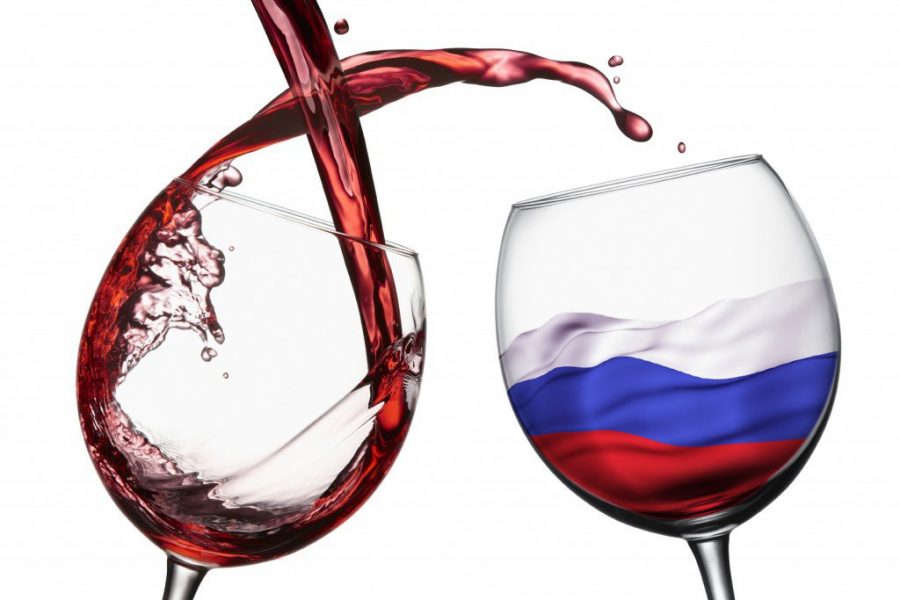
According to a European regulation, wine is included in the list of luxury goods subject to export restrictions to Russia. Currently, the value threshold beyond which the ban applies is set at 300 euros per individual sales unit (meaning the item as presented on the market, not necessarily a six-bottle case, unless it constitutes an indivisible unit). The most significant change for the sector, introduced by a recent decree published in the Official Gazette, concerns the Italian sanctioning regime. Starting from January 24th, 2026, violating these restrictions will no longer entail only administrative consequences or reputational risks: the conduct will become criminally relevant under the new Article 275-bis of the Criminal Code. This provision aims to ensure the effectiveness of EU sanctions (restrictive measures) by criminally punishing anyone who violates or circumvents economic, commercial, and financial bans.
This legislative amendment, analyzed by attorney Marco Giuri of Studio Giuri in Florence, comes at an extremely delicate time for Italian wine exports to Russia. The latest Istat data (updated in October 2025) show a sharp contraction: the decline recorded (compared to the same period in 2024) is -23.2%, for a total value of 165.6 million euros, despite timid signs of recovery observed in October. The complexity of the Russian market is closely linked to the conflict in Ukraine which began in 2022. Beyond the dramatic human toll, the war and international sanctions have deeply affected the Russian economy, reducing domestic consumption, causing the exit of numerous foreign companies, and triggering a steep rise in import costs, which has radically changed the availability and prices of products, including wine.
As Giuri, one of the leading experts in wine law, recalls, “the sanctioning measures adopted by the European Union against Russia - further tightened in recent months of 2025 - have generated serious concern in many sectors, such as wine and the so-called luxury market”. In this regard, it is essential to know that “Legislative Decree No. 211 of December 30th, 2025, has been published in the Official Gazette, implementing EU Directive 2024/1226 and introducing into Italian law a completely renewed sanctioning system for violations of EU restrictive measures”.
While “nothing has changed compared to the past regarding the 300 euros per bottle value limit already in force”, the news concerns “the consequences for those who violate restrictive measures issued by the EU (including those adopted against Russia), which will no longer be merely administrative or reputational but will entail criminal penalties”.
The penalties are “extremely severe” with imprisonment from 2 to 6 years and fines of up to 250,000 euros. Furthermore, “the legislator has extended punishability to attempts to circumvent these measures (such as artificially splitting commercial transactions to stay below the thresholds set by the restrictions), sanctioning the use of false customs declarations or documents aimed at concealing the identity of the beneficial owner or the actual destination of resources”. Additionally, for the first time, “a negligent offense is introduced for violations involving dual-use or military goods, making even gross negligence criminally relevant, for example, in product classification or assessment of the final destination”.
The new decree also impacts the criminal-administrative liability of entities. “Violating restrictive measures for international trade - underlines Studio Giuri - now becomes one of the predicate offenses under Legislative Decree 231 with the introduction of the new Article 25-octies.2. Companies now risk monetary penalties calculated as a percentage of global annual turnover (from 1% to 5%), surpassing the old quota system. In addition, heavy disqualification sanctions (up to 6 years) may apply, including bans on contracting with public administrations or revocation of authorizations and licenses essential for business operations”.
Studio Giuri provides a hypothetical example: “consider an Italian winery exporting fine wines to Russia, exceeding the value limits imposed by EU restrictive measures, or using intermediary companies in third countries to mask the actual final destination of the bottles. In such cases, not only do the sale and shipment constitute a criminal offense under Article 275-bis of the Criminal Code, but the exporting company may also be liable under Legislative Decree 231/2001, facing fines calculated on global turnover and the risk of being barred from business activities”.
Returning to the content of the restrictions, Article 3-nonies of Regulation (EU) No. 833/2014, as amended by subsequent regulations adopted following the invasion of Ukraine, prohibits the export to Russia of luxury goods insofar as their value exceeds 300 euros per item. Wine is expressly included among luxury goods. But how does this work in practice? In the case of wine packaged in six-bottle cases, the 300 euros threshold must be verified based on the commercial sales unit, not the logistical packaging. Therefore, if the bottle is the sales unit, the “item” corresponds to the individual bottle, whereas if the case is the sales unit, the “item” corresponds to the case. The 300 euros threshold applies to each bottle, and the total value of the case (example: 6 bottles worth 120 euros each) is irrelevant for the ban. Conversely, if the sale is made “per case” as a single sales unit and the price is indicated as a single price for the carton, the 300 euros threshold applies to the case value.
Copyright © 2000/2026
Contatti: info@winenews.it
Seguici anche su Twitter: @WineNewsIt
Seguici anche su Facebook: @winenewsit
Questo articolo è tratto dall'archivio di WineNews - Tutti i diritti riservati - Copyright © 2000/2026