






In a market landscape generally marked by a negative trend, especially for red wines, Tuscany, whose identity has long been closely tied to its extensive red-wine production, must deal with a complex reality. It responds, however, with the strength of its identity and “a clear strategic vision capable of guiding the sector transformations rather than being subjected to them, focusing on value and excellence”. This is the message emerging from PrimaAnteprima, held today in Florence, the event which opens the “Settimana delle Anteprime” - “Preview Week” - which will spotlight different wines and territories, from Vino Nobile di Montepulciano to Chianti Classico, from Chianti to Morellino di Scansano, from “L’Altra Toscana” to Valdarno di Sopra - under the direction of the Tuscany Region and the Florence Chamber of Commerce. According to Ismea data presented by Fabio del Bravo, exports of Tuscan PDO wines, 96% of which are represented by red wines, shows a slight increase in volume in the first 10 months of 2025, reaching 731,000 hectoliters (+0.7%), but a sharp decrease in value (-8%, at 682 million euros), a figure that “should be correctly interpreted as a normal adjustment following the record highs of previous years”. Meanwhile, in the domestic market, regional production maintains its 14% market share in large-scale retail, limiting the decline to -2.1% in value, compared to the national average of -5.7%.
In any case, the region “wine system” is working to implement a strategy that, for example, “is reflected in a 2025 production of 2.2 million hectoliters which, after the record yields of 2024, aligns with the trend of the past 10 years. This widely anticipated reduction is the result of mature agronomic management and a deliberate choice of self-regulation aimed at containing supply to preserve the quality and prestige of the denominations”, explains a note. But, this commitment towards excellence goes hand in hand with undisputed leadership in sustainability. Tuscany is already at the forefront of reaching EU Green Deal targets “thanks to an extraordinary extension of organic vineyards and cutting-edge precision practices”. The competitiveness of the system is further reinforced by structural regional policies, such as the planned allocation of around 600 hectares for new plantings in 2026 and the integration of the new EU “Wine Package”, which accelerates innovation, bringing greater flexibility in procedures and increasing subsidies with support percentages of up to 80%. Also in foreign markets as well, Tuscany is turning new challenges into opportunities, using wine tourism as an unbeatable strategic asset: a comprehensive territorial experience that, in addition to strengthening ties with local communities, enhances the brand through the growth of direct sales. The resulting picture is that of a strong and cohesive system - in which the Region works closely with the consortia - and, which has chosen to lead global transition by focusing on the quality-value combination, confirming itself as the global benchmark for premium wine.
Looking at the figures from the Ismea Report presented in Florence, in the presence of, among others, the president of the Tuscany Region Eugenio Giani (interviewed by WineNews at yesterday press conference), it emerges that “the regional wine sector is a mosaic of excellence composed of 12,324 companies. With a vineyard area of over 60,000 hectares, Tuscany has made a radical choice: extreme quality. Even 97% of its vineyards are registered as PDO, compared to the national average of 65%. This translates into a commercial offering in which 90% of the wine reaching consumers is certified, guaranteeing added value that protects producers from fluctuations in generic wine markets”.
Naturally, in terms of varieties, the pillar is Sangiovese, which covers 60% of the surface, but Tuscany strength lies in its diversity: from the historic Siena and Florence areas (together representing 62% of the regional vineyard) to emerging zones, Tuscany offers a variety of microclimates which make it resilient to climate change, from the Apennines to the islands. Regional wine “continues to account for 10% of the total value of Italian GIs, demonstrating that when the world seeks quality, it looks toward the Tuscan hills”. A quality which derives from a relatively “young” vineyard thanks to the extensive use of the OCM Restructuring measure (which has affected 61% of surfaces), 55% of Tuscan vineyards are under 20 years old. “This means having modern, efficient plantings ready to produce wines aligned with new international tastes. Significant investments have also been made to renew and innovate wineries, with around 10 million euros in support for all companies that submitted projects”.
In Italy, Tuscan PDOs, still explains the Ismea Report, “proudly defend their position in large-scale retail, representing 14% of the sector total value. While consumption of generic wine declines (-5.7%), Tuscan PDOs limit the drop to just -2.1%, demonstrating higher-than-average consumer loyalty. The most interesting data comes from young adults (35-45 years old): although this group buys slightly lower volumes, their spending has increased by 24%. This is tangible proof of a new paradigm: people drink less, but much better, and they choose Tuscany”.
The region is becoming increasingly “greener”: with over 23,000 hectares under organic farming (38% of the regional total), Tuscany is one of the “greenest” regions in Europe. It accounts for 17% of the national organic vineyard area alone, putting it ahead of the UN 2030 Agenda targets. “This commitment is not only ethical but also commercial: Tuscan organic wine is becoming the new standard demanded by Northern European and North American markets”.
Moreover, Tuscan wine, intertwining with the history, beauty, and uniqueness of the region many territories, also plays a key role in Tuscany tourism success. In 2024, the region strengthened its position, becoming the third most-visited Italian region with 15 million arrivals (+2.6% compared to 2023) and more than 46 million overnight stays. This dynamism, representing 10% of all tourism in Italy, is driven largely by international visitors, who account for 58% of the market. Notably, the region excels at distributing tourists throughout its territory: Tuscany holds the national record for rural hospitality, with over 6,000 agritourism farms (nearly a quarter of the Italian total). In this context, wine tourism has evolved from a secondary activity into a true strategic lever for sustainable development and for strengthening the relationship between agriculture, local communities, and tourism. A pioneer in the sector, the Tuscany Region was among the first in Italy to adopt specific regulations (Regional Law 30/2003), now aligned with the latest national guidelines, and about 170 specialized operators are registered on the regional list. “Today, the offering of Tuscan wineries goes far beyond simple tastings, proposing immersive experiences ranging from contemporary art in wineries to trekking among the vines, all the way to actively participating in the harvest. According to Ceseo (Lumsa University), which carried out research for the Wine Tourism Movement, Tuscan wineries offer family-style hospitality in 63% of cases and place landscape (95%) and culture (74%) at the center of their offering far more than any other Italian region. They are also very dynamic in proposals combining education and entertainment, such as cooking classes offered by 32% of wineries”.
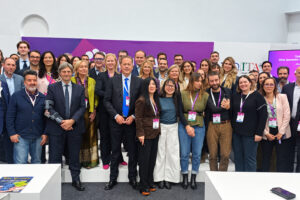
The data presented today, with the participation of, among others, Andrea Rossi, president of Avito (interviewed by us), Gennaro Giliberti, head of Agricultural Production for the Tuscany Region, Donatella Cinelli Colombini, founder of Movimento Turismo del Vino - the Wine Tourism Movement, and Leonardo Marras, regional councillor for Economy, Tourism and Agriculture, officially launch the “Tuscany Preview Week” - “Settimana delle Anteprime di Toscana”. The schedule includes events organized by the consortia: Anteprima Vino Nobile di Montepulciano (February 14th-15yh and 22nd-23rd, Montepulciano), Chianti Classico Collection (February 16th-17th, Stazione Leopolda, Florence), Anteprima “L’Altra Toscana” (February 18th, Palazzo degli Affari, Florence), Chianti Lovers & Rosso Morellino (February 19th, Fortezza da Basso, Florence), and Valdarno di Sopra Day (February 20th, Anfiteatro del Borro, San Giustino Valdarno - Arezzo), looking ahead also to “BuyWine Toscana” on March 11th-12th at Stazione Leopolda in Florence.
Copyright © 2000/2026
Contatti: info@winenews.it
Seguici anche su Twitter: @WineNewsIt
Seguici anche su Facebook: @winenewsit
Questo articolo è tratto dall'archivio di WineNews - Tutti i diritti riservati - Copyright © 2000/2026