








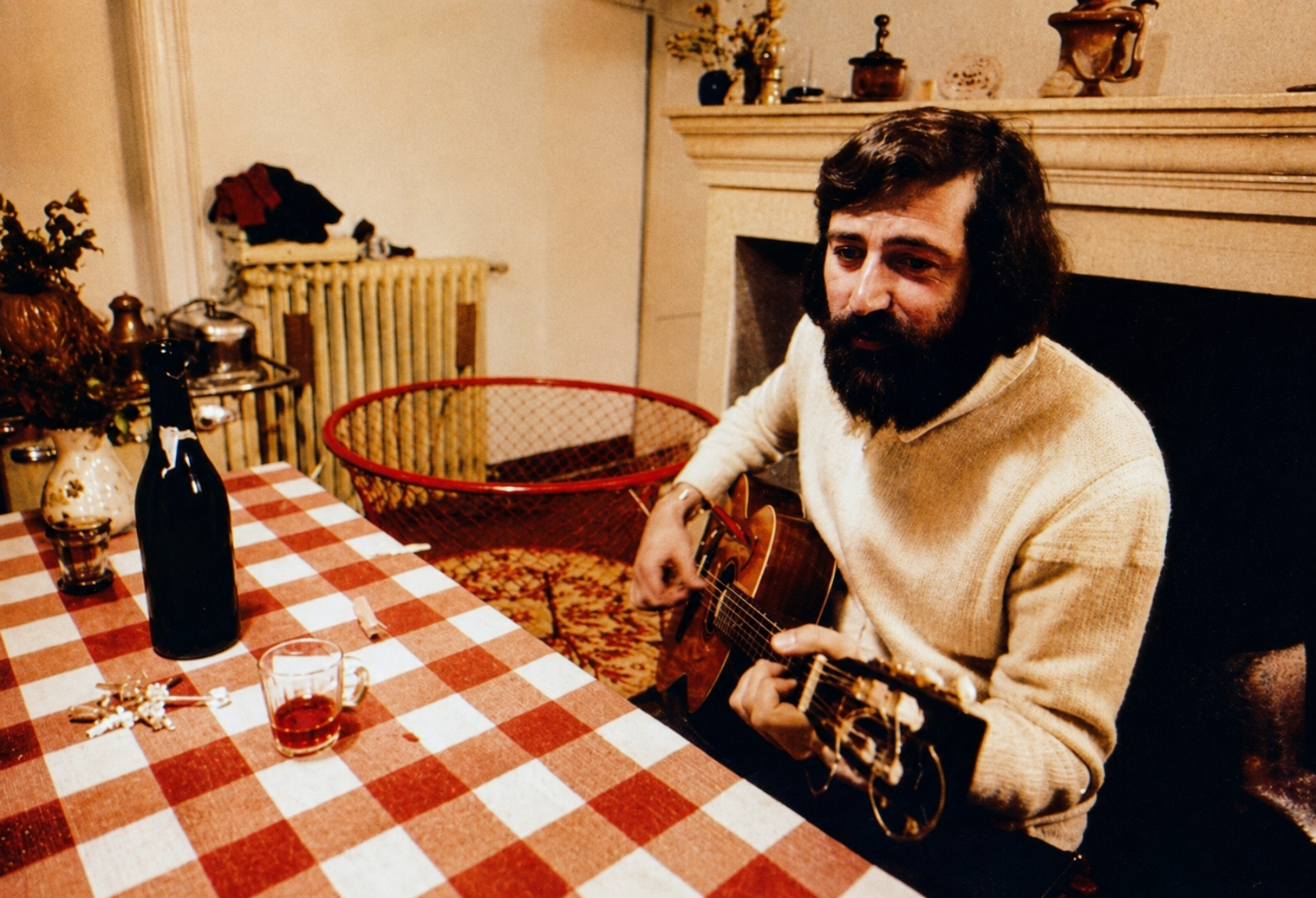
“I like making songs and drinking wine, I like raising hell, and besides, I was born a fool”, sang Francesco Guccini in one of his most famous songs, L’Avvelenata - “The Poisoned One”. It was a simple and understated declaration of love, much like his relationship with wine itself, beyond the legend and the almost “ancestral” image it evokes today in the age of “political correctness”, with the traditional wine flask on stage. “It is a cultural matter”, he said in an interview with WineNews almost ten years ago, carried out in 2016 at the Collisioni festival in Barolo, emphasizing that “wine is one of the legends that follows me around because I have spoken about it in my songs. I love it, I gladly drink it, I enjoy it, but I am neither a heavy drinker nor a drunkard, let that be clear”. Guccini was also something of a “gastronome”. In another interview carried out for one of his concerts in Montalcino in 2009, when we were already discussing how the world of wine was changing, from “Osterie di fuori porta” (the traditional taverns on the outskirts of town) to wine bars, he confessed that he had no favorite wine because “it depends on what you are eating, the occasion, and the region you are in”. Yet, wine appears throughout many of his musical poems. Which songs of the songwriter, who passed away today in Pavana, in the Tuscan-Emilian Apennines, where he, a “common Modenese”, as he sang in “Bologna”, spent much of his life.
Wine is the “wise red” to which you “ask your whys” in “Un altro giorno andato” - “Another day gone by”. It is the wine which must be “neutralized” with “the coffee from the station” in “Canzone delle Osterie di Fuori Porta” - “Song of the Outskirts Taverns”. And again, in “Il Frate” - “The Friar”, Bacchus nectar gives flavor to “those summer evenings” that “tasted of wine and learning”. It is “the wine which stirs memories”, and that sets learned conversations in motion because, “after a glass of wine and a few ironic and bitter remarks, he spoke in German and in Latin, he spoke of God and Schopenhauer”. “And yet it is pleasant in the evening to wander through streets and taverns, with wine and melancholy”, Guccini sings in “Canzone di Notte n. 2” - “Night Song No. 2”, in which wine is also “a little routine red inside the glass”, as he says in “Scirocco” - “Sirocco”. And “thank goodness there is wine, which wipes away cowardice” in Cristoforo Colombo - Christopher Columbus, while in “Dio è Morto” - “God is dead”, there are “nights soaked in wine”. There is also wine, with its abuse and its harmful effects, in “L’Ubriaco” - “The Drunkard”. But there is equally wine as celebration and conviviality in Farewell, where friends gather “around tables full of wine”. Guccini was also a singer of agriculture and the rhythms of rural life. In “La Canzone dei 12 Mesi” - “The Song of 12 months”, talking specifically about August, the month in which, in this 2026, he leaves this earth, he tells how “never as now is it beautiful to become intoxicated with wine and warmth”.
These are only some of the many possible references to wine in Guccini work. As he sings once more in “L’Osteria dei Poeti” - “The Tavern of Poets”: “a guitar and a glass of wine”.
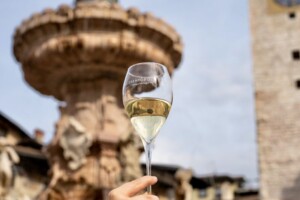
And it is with a guitar and a glass of wine that we would like to remember Francesco Guccini, who in “Addio” - “Farewell” described himself as “not an artist, only a humble bachelor scholar”, but who for us was one of the most poetic, perceptive, and sincere singers of wine, in all its countless meanings and in the everyday life of an Italy which no longer exists. We can only bid him farewell with one of his own verses, again from “Canzone di Notte n. 2”, for one last toast: “and once again it is night, and I play, I do not even know why. Perhaps because I am alive. And in this way I want to say, “I am”. Or perhaps because it is yet another way not to go to bed. Or perhaps because there is still something left to drink, and I fill my glass again...”
Copyright © 2000/2026
Contatti: info@winenews.it
Seguici anche su Twitter: @WineNewsIt
Seguici anche su Facebook: @winenewsit
Questo articolo è tratto dall'archivio di WineNews - Tutti i diritti riservati - Copyright © 2000/2026