


Wednesday 18th of March 2026 - Last Update: 19:44







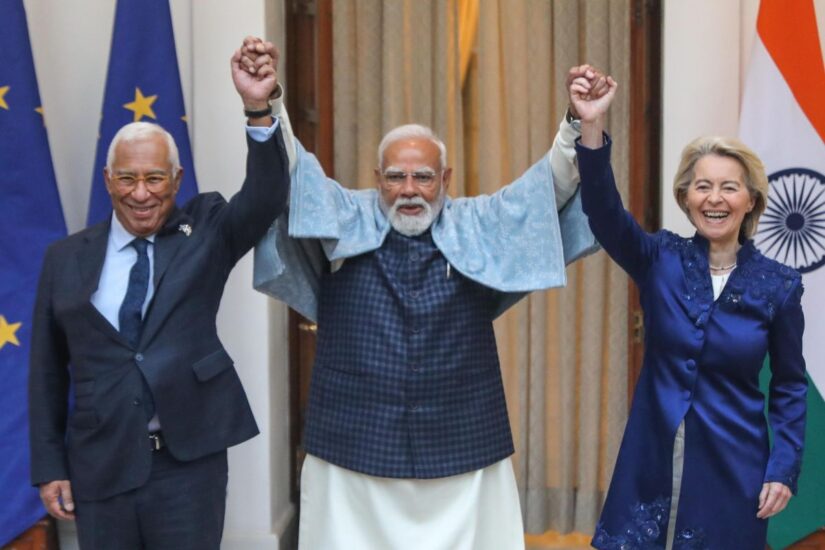


In front of a total value of 8 billion euros in Italian wine exports, export to India stopped at only 2.6 million euros (7.7 million euros of wine from the entire EU area), mainly due to a 150% tariff which has severely limited market access. Still, exports grew by +14% already at the beginning of 2026, reaching 1 million liters. With a population of 1.5 billion people and a wine market which generated 238 million dollars in 2025, and is expected to surpass 520 million dollars by 2028, the Asian country nonetheless presents itself as a new “El Dorado”. For this reason, the EU-India partnership signed today in New Delhi, after 20 years of negotiations, by Indian Prime Minister Narendra Modi, European Commission president Ursula von der Leyen, and European Council president Antonio Costa, renamed “the mother of all trade agreements” because it is the largest ever signed, involving two billion people across two regions which together account for nearly a quarter of global GDP, and the world fourth-largest trading power destined to become the third by 2030, represents a long-term strategic opportunity also for European and Italian wine, currently almost nonexistent in the world most populous country. The agreement introduces tariff cuts amounting to 4 billion euros and reduces often-prohibitive barriers for European agri-food exports. This was stated by the Unione Italiana Vini (Uiv) noting that the commercial advantages for wine will be significant, with current federal import duties set at 150% immediately halved, which will then progressively fall to 30% within seven years (20% for wines priced above 10 euros per bottle). A separate agreement is also planned for the protection of our branded products.
The new EU-India partnership, which comes just days after the signing of the EU-Mercosur agreement, highlights the European strategy of market diversification in response to ongoing trade conflicts, starting with the U.S. Tariffs, and concerns a country, India, known for its particularly high import taxes. These duties were introduced starting from 2020, partly as a consequence of the pandemic, in an effort to make India more self-sufficient, combat inflation and reduce the current account deficit. Now, besides wine, tariffs on spirits will fall from 150% to 40%, on beer from 110% to 50%, on olive oil from 45% to zero, on fruit juices from 55% to zero, and on processed foods such as pasta from 50% to zero. Meanwhile, the European Commission clarifies that “all imports from India will continue to be subject to strict EU health and food safety standards, with more sensitive agricultural products excluded from liberalization, such as beef, sugar, rice, poultry, powdered milk, honey, bananas, soft wheat, garlic and ethanol, and with new openings for imports of sheep and goat meat, sweetcorn, grapes, cucumbers, dried onions, molasses-based rum and starches”.
“This partnership offers a commercial opportunity in a market with a rapidly rising middle class - said Uiv president Lamberto Frescobaldi - but above all it represents a clear and positive EU response to the geoeconomic tensions affecting the Old Continent. Italian wine desperately needs open trade policies to further diversify a still-limited export reach, considering that 60% of exports are concentrated in just 5 countries. This agreement, like the one with Mercosur - for which we hope for provisional application - is therefore crucial and demonstrates the importance of business diplomacy”.
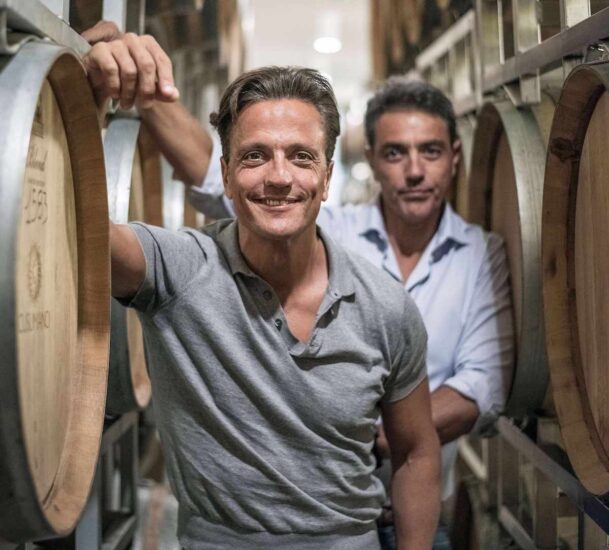
“For us wine producers, the EU-India agreement opens up a market of extraordinary opportunities, and I am not referring only to India, but the whole of Southeast Asia, Thailand, Indonesia and also Vietnam, regions without a wine culture where consumption is extremely low compared to populations that drink a lot of beer”, explains Diego Cusumano, who leads the Cusumano winery together with his brother Alberto, one of Sicily benchmark wine companies. Although still a niche market, recent export figures show accelerated growth for Italian wine in India despite the protectionist barriers that until now have hindered trade. Italian exports have reached a value of about 33 million dollars, up +14% at the beginning of 2026, with around 1 million litres exported. Italy is now the second-largest foreign supplier of wine after Australia and France, with a market share of 17% of India total wine import value. “With Indian tariffs previously set at 150%, a genuine quality Italian wine could end up costing 12-14 times more - explains the Sicilian winemaker - a truly prohibitive price that made it impossible for the market to even approach our products. In fact, until now, 70% of Italian wine exported to India has been in the entry-level price segment, while higher-end wines remained a prerogative of French producers. Now, being the first to conquer the Indian market is essential, moving quickly with institutional support, including financial support - mainly for promotion costs - and with an effective, shared communication plan. This agreement is also a fantastic opportunity for inbound tourism to Italy, and not only to its most touristic destinations. It is widely recognized that wine and food are powerful drivers to promote Italy, our culture, made in Italy, and above all our territories, the places where our food and wine originate. This represents a chance to promote not only the wine sector but the entire made in Italy identity to a fresh market of 2 billion potential tourists. My proposal - concludes Cusumano - is therefore a significant communication budget funded by the Ministries of Agriculture, Made in Italy, and Tourism, but managed by producers and established professionals. You will see that a glass of good Italian wine yields more value than a thousand Botticelli-style avatars”.
An emerging market to watch closely, then, just as the 30 Italian companies which traveled recently to the Asian country did, participating in the “Vinitaly India Roadshow”, the promotional itinerant format organized by Veronafiere in partnership with Ita - Italian Trade Agency, which dedicated the first leg of its 2026 edition precisely to the development of Italian wine business opportunities in India.
Copyright © 2000/2026
Contatti: info@winenews.it
Seguici anche su Twitter: @WineNewsIt
Seguici anche su Facebook: @winenewsit
Questo articolo è tratto dall'archivio di WineNews - Tutti i diritti riservati - Copyright © 2000/2026