




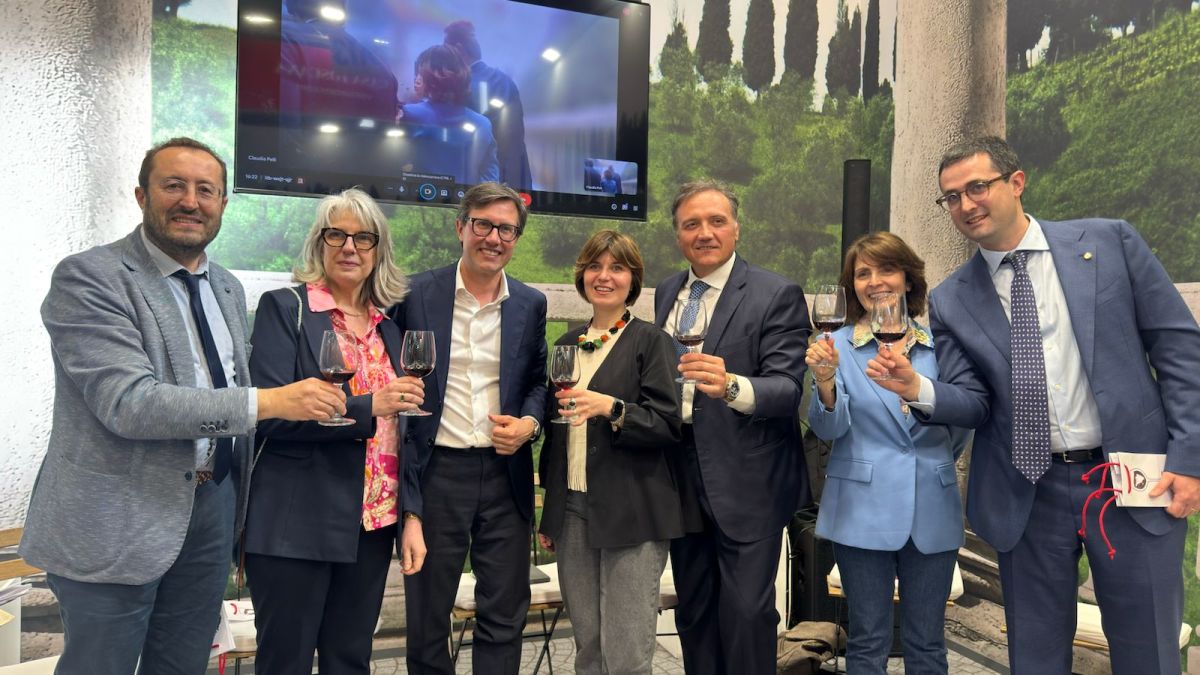
While the entire Italian wine sector is closely watching the changes introduced by the recently approved “Wine Package” of the European Union, among the most concerned regions, given its significant weight in the sector and in Italian wine exports worldwide, there is also Tuscany. Home to Chianti Classico and Bolgheri, Toscana IGT and Chianti, Maremma and Brunello di Montalcino, Vino Nobile di Montepulciano and Vernaccia di San Gimignano, Tuscany in 2025 recorded wine exports worth 1.17 billion euros, accounting for 14.8% of total Italian wine exports, ranking second after Veneto (according to Istat data analyzed by WineNews). In recent days, at Vinitaly 2026 in Verona, Mep Dario Nardella (Pd-S&D), a member of the Committee on Agriculture and Rural Development, presented the “Wine Package” to companies and consortia from the region during the meeting entitled “Dai vigneti all’Europa: l’approvazione del nuovo Pacchetto Vino e il futuro del settore” - “From vineyards to Europe: the approval of the New Wine Package and the Future of the Sector”. The event brought together Tuscany Regional Councillor for Agricultural Policies Leonardo Marras and representatives of the main Tuscan wine consortia, including Carlotta Gori, dg of the Chianti Classico Consortium, Andrea Rossi, president of Vino Nobile di Montepulciano Consortium, Cinzia Merli, president of the Bolgheri and Bolgheri Sassicaia DOC Wines Consortium, and Giacomo Bartolommei, president of the Brunello di Montalcino Consortium. Nardella emphasized how the “Wine Package” provides concrete answers on three fronts: “strong support for exports (with co-financing of up to 80%), clear rules on dealcoholized wines to tap into new markets, and innovative crisis-management tools, including funds for vineyard grubbing-up and for combating diseases such as flavescence dorée”.
However, this positive assessment is accompanied by a strong warning about two “imminent economic threats”, underlines a note. Specifically, the uncertainty surrounding the U.S. tariffs, since “with the American market accounting for a quarter of Italian exports, the threat of new tariffs puts historic denominations such as Chianti Classico and Brunello at risk, already heavily affected by sharp downturns in the past”. And cuts to the EU budget, given that “the proposal for the 2028-2034 Cap foresees a real reduction of 20%, calling into question the 1 billion euros per year currently guaranteed to the sector”. Finally, Nardella reassured producers on the issue of “health warnings” on labels, believing there is no political majority to impose alarmist warnings. With Italy firmly maintaining its position as the world leading wine producer (44.4 million hectoliters), the Mep reiterated that the real battle will be fought over Europe financial stability: the sector can’t afford fewer resources if it is to continue guaranteeing its 14 billion euros in turnover. “This edition of Vinitaly has been an extraordinary opportunity to once again shine a spotlight on the strength of Tuscan viticulture. This time we have one more ally, Europe, thanks to the new measures of the “Wine Package”, which will allow us to invest in new vineyard plantings, tackle the difficult management of inventories due to declining consumption, and promote our wines abroad. I thank councillor Marras and the representatives of the four consortia for their contribution of ideas, which will be extremely valuable for the work we still need to carry out in Brussels at the European Parliament”, said Dario Nardella.
“We greatly appreciate the exchange of views, proposals, and ideas that honorable Nardella has long encouraged among operators and stakeholders. The event he conceived and organized at Vinitaly on the important “Wine Package” was a significant public occasion to engage with Europe and the Region of Tuscany on wine policy issues that are particularly close to our hearts, such as supply management and the strengthened role of consortia”, underlined Carlotta Gori, Director General of the Chianti Classico Consortium.
“Facing global challenges, we must unitedly defend the Tuscan model. The new “Wine Package” gives us the tools to do so, strengthening consortia as guardians of the territory and making supply management more agile. When it comes to crisis, we must avoid falling into welfare-style assistance and instead send a strong signal by continuing to invest in vineyards and promotion. In this context, Vinitaly confirms itself not merely as a showcase for visibility, but as a moment of deep exchange with global partners to consolidate confidence in our future”, added Cinzia Merli, President of the Bolgheri Wines Consortium.
“The event promoted by Mep Nardella at Vinitaly was positive and useful, enabling representatives of Tuscan consortia to engage with European and regional institutions on the Wine Package, which already provides many important responses for the protection and promotion of our denominations. The debate particularly highlighted the central role of the link between wine denominations and tourism, with specific attention to the enhancement of wine tourism. For Tuscany this is a strategic element: here wine tourism has deep roots, and sales in the territories of origin today represent a significant share, fundamental to supporting and growing our companies even during a complex phase”, commented Andrea Rossi, president of Vino Nobile di Montepulciano Consortium.
“In times like these, we cannot do without investments in promotion: to overcome a difficult period, it is essential to continue promoting our excellence. The recent Vinitaly recorded encouraging signs, with significant participation by international buyers and numerous operators from strategic markets for our denomination, such as the United States and Europe - particularly the Netherlands and Germany - as well as high-potential growth areas like Japan and Brazil, without forgetting the domestic market”, concluded Giacomo Bartolommei, president of Brunello di Montalcino Consortium.
Overall, the meeting highlighted the need to strengthen the link between territories and European institutions, enhancing tools capable of supporting a strategic sector for the Tuscan economy, through investments, innovation, and international promotion.
Copyright © 2000/2026
Contatti: info@winenews.it
Seguici anche su Twitter: @WineNewsIt
Seguici anche su Facebook: @winenewsit
Questo articolo è tratto dall'archivio di WineNews - Tutti i diritti riservati - Copyright © 2000/2026