







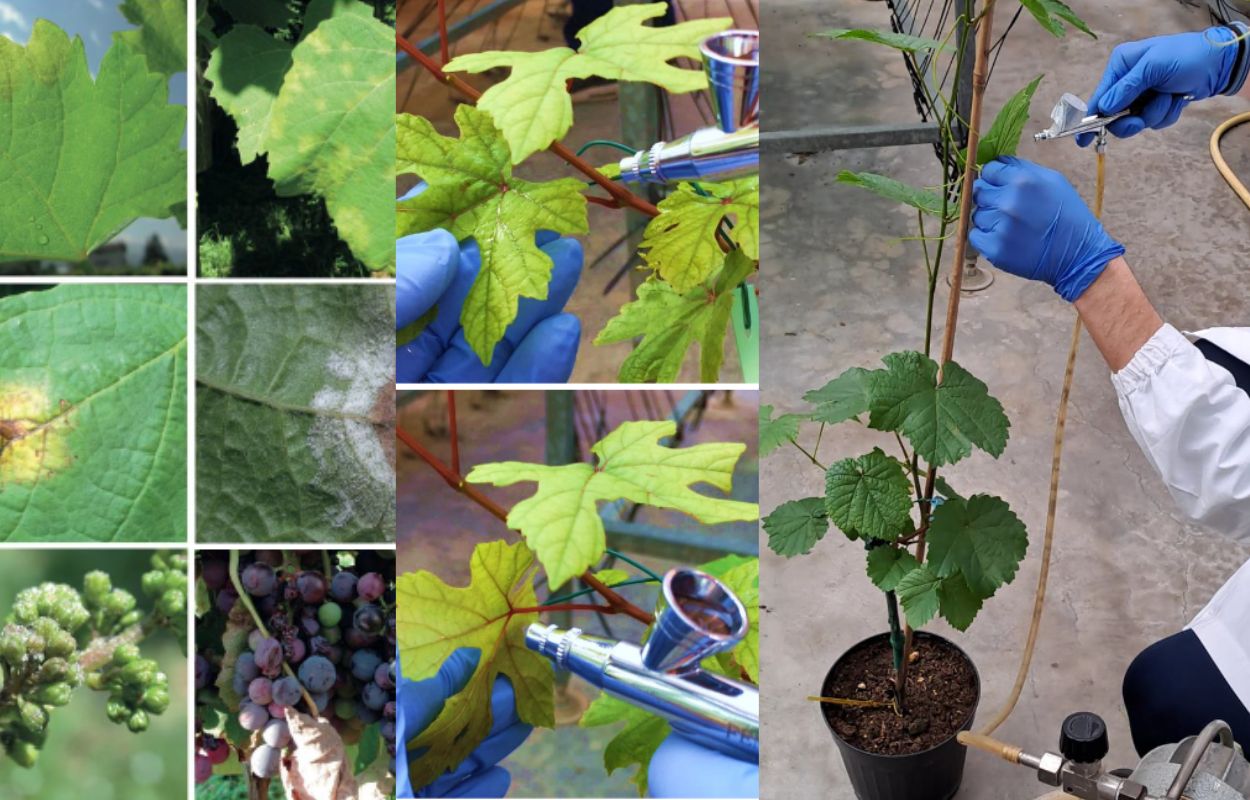
A small revolution in sustainable vineyard protection strategies against downy mildew and botrytis comes from Vinitaly 2026 in Verona, where researchers from the Faculty of Agricultural and Food Sciences of the University of Milan and Crea Viticulture and Winemaking presented a molecule capable of protecting vineyards from both plant diseases with high efficacy (an 80% reduction in disease incidence) and, above all, completely biodegradable. This represents a radical shift in perspective in the phytosanitary defense of grapevines against downy mildew, the most dangerous disease for viticultural productivity both in terms of its spread and its economic impact, and which, in the phytosanitary assessments of the Italian Association for Plant Protection (Aipp), is indicated as the main critical issue for grapevines (in 2023, downy mildew was the dominant disease in vineyards across the country, causing average crop losses of 30-40%, with peaks of up to 100% in some areas of central Italy, affecting 30,000 companies and resulting in tens of millions of euros in damage). From this scourge, therefore, a defense based on a highly innovative and truly sustainable biotechnological product arrives, not only because it is fully biodegradable, but also because it is obtained through the transformation and reuse of by-products from the wine production chain such as grape pomace and pruning residues. All this has become (almost) reality thanks to the “Grape4vine” project, carried out by the Faculty of Agricultural and Food Sciences of the University of Milan and Crea-Ve with funding from the Cariplo Foundation. After 36 months of work involving 25 researchers (with multidisciplinary expertise in plant pathology, biology, microbiology, biotechnology, agricultural engineering, and economics), the project results were presented at the conference “Grape4vine: riciclare gli scarti per proteggere il vigneto a “residuo zero” - “Grape4vine: recycling waste to protect vineyards with “zero residue””.
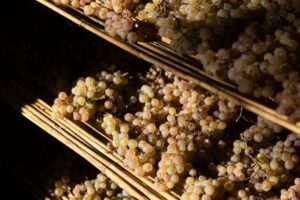
“The mechanism behind our discovery - explains Silvia Toffolatti, professor at the Faculty of Agricultural and Food Sciences of the University of Milan - is double-stranded RNA (dsRNA), a promising biotechnological strategy for plant protection based on molecules capable of naturally activating a gene-silencing mechanism (RNA interference), which can be exploited either to directly prevent the development of pathogens or to reduce plant susceptibility”. In particular, “in the Grape4vine project - continues Toffolatti - we managed to identify new plant susceptibility genes for grapevine downy mildew, the silencing of which via dsRNA resulted in a significant reduction in disease severity. For Botrytis cinerea, on the other hand, the approach targeted the silencing of essential fungal genes, preventing its development. In this way, we obtained new defense tools that are highly effective and have no environmental impact, as they are not only fully biodegradable but also target-specific, designed to affect only the intended target with no risk of side effects on other organisms, plant or animal”. If the possibility of definitively eliminating treatments based on synthetic chemical products is in itself a result of extremely high environmental sustainability value, the use of by-products from the wine supply chain as growth substrates for microorganisms also makes it possible to reduce costs for large-scale dsRNA production, enhancing agro-industrial waste within a circular economy framework.
“The great value of this research - commented Attilio Scienza, internationally renowned professor of viticulture at the University of Milan and originator of the Grape4vine project - lies in having demonstrated that today the strategy for defending against plant diseases no longer involves considering grapevines as plants to be protected, but as organisms to be empowered”.
And although the project has successfully reached its conclusion, the second phase has already begun (thanks to the Lombardy Region Collabora & Innova call, won by the same research group) with the goal of formulating the dsRNA molecule as a commercial product and enabling its industrial production. Now that science has run its course, the remaining steps depend on European bureaucracy to bring the discovery to market. The path toward registering the molecule may not be quick, despite strong anticipation and interest from both end-user companies, wine producers and nurseries, and industrial firms interested in manufacturing the new plant protection product. As it emerged from the concluding roundtable of the conference, there was unanimous agreement among Maurizio Bogoni (director of Tenute Ruffino), Elisa De Luca (Vivai Cooperativi Rauscedo), Valentina Papeschi (consultant at FuturAgri Brescia-Condifesa), and Luca Nerva (Crea), as well as representatives of industrial companies Gowan Italia, with Ilaria Ferri, and Diachem, with Milena Crotti, in calling on policymakers and institutions to “move quickly.” This is because “climate change” - concluded Silvia Toffolatti - does not wait for bureaucracy and, by extending the intervention window by a month, makes it more difficult to adequately protect vineyards with the currently available products”. Everything to the detriment of both the environment and winegrowers.
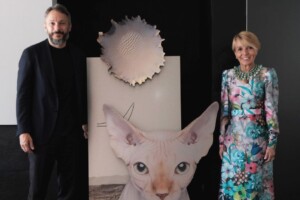
The conference also offered an opportunity to reaffirm the indispensable role of science and innovation in transferring research outcomes to businesses. In her opening address, the principal of the Faculty of Agricultural and Food Sciences of the University of Milan, professor Sara Borin, recalled that “Italian viticulture and winemaking are the result of a tradition built over time through innovation and research. Continuous innovation, from grape variety selection to the evolution of wine practices, has enabled wine to adapt to territories, markets, and cultural changes”. It is precisely the strategic value of technology transfer, from research to industry, which allows the Faculty to play a decisive role and serve as a national point of reference for education and innovation in Agricultural and Food Sciences, particularly in response to current challenges related to sustainability and climate change. In response to Borin remarks, Veronafiere ceo Barbara Ferro expressed strong appreciation for the scientific contribution of researchers from the University of Milan, underlining that “in a context marked by ongoing climatic, environmental, and market challenges, it is essential to strengthen integration and collaboration between scientific research and the productive sector, recognizing innovation as a strategic lever for the future of the industry”.
Copyright © 2000/2026
Contatti: info@winenews.it
Seguici anche su Twitter: @WineNewsIt
Seguici anche su Facebook: @winenewsit
Questo articolo è tratto dall'archivio di WineNews - Tutti i diritti riservati - Copyright © 2000/2026