








Let us imagine Italy of wine as a company in which the shareholders are the regions and the main competitor is France. Compared to us, the country across the Alps has a polarized wine industry made up of a small number of denominations (5) and few native grape varieties, but with a strong focus on terroir, whereas in Italy viticulture is widespread: there are many native grape varieties, but they are overlooked; many denominations, but they are little known; and terroir has limited importance. The result is that Italy turnover in the sector amounts to 15 billion euros, with an average price per liter of 3 euros, while French revenues reach 37 billion euros, with an average price per liter of 7 euros. Yet, both Italy and France produce 45 million hectoliters of wine a year. Where does the difference lie? “Certainly not in the quality of the wines, but in the different ability of the two countries to tell and enhance their wine culture”. This is the opening statement of a reflection by professor Attilio Scienza, dean of research at the University of Milan and a leading figure in promoting Italian wine culture, of which he is one of the foremost experts, with whom we often engage in discussion - also because his is a clear case of “nomen omen”, as we like to remind him - and which we are pleased to present on WineNews.
“Our country has far more resources in terms of grape varieties, territories, and culture, but it does not know how to communicate them - explains Scienza - we have 50% of the world geo-pedological variability, and if we combine 800 ancient grape varieties with 190 macro-environments, we obtain an unimaginable diversity of wines”.
According to the professor, however, there is “little respect for vocation. We have planted vines everywhere - he says - and the most famous Italian grape varieties don’t perform well anywhere else but Italy. But we need new content around the word “native”, and the meaning of a territory “vocation” must be explained (as professor Scienza also reiterates in a recent interview with WineNews). We must place grape varieties in the areas where they can fully express themselves. A native grape variety can become an important wine only if it is planted in the places to which it is suited”.
France is better than we are at communicating its wines and territories: “Have you ever seen a French label that indicates the grape variety? And yet they have famous ones. They communicate only the great territories that contain local appellations, but always under the umbrella of a well-known area. To bridge the gap between us and them, we must better communicate our diversity and distinctiveness, through both communication projects and the training of communicators”.
Looking toward the future and also analyzing the different strategies adopted by the two countries in the face of a crisis, Scienza notes that “France is Malthusian (from the economic and social doctrine of the English economist Thomas Robert Malthus, ed) and is based on reduction. Ours is an economy of development that, in such cases, always seeks new models of production and sales. Thus, by 2035, the French will reduce wine production by 5-6 million hectoliters, eliminating about 100,000 hectares of vineyards, but we can’t uproot vines as they do. In Italy, the game is played on demand”.
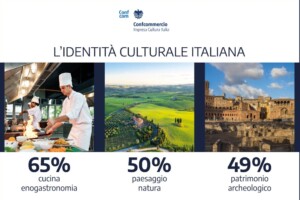
But there is more, according to the leading expert: “the growing demonization of wine must be counterbalanced; we need campaigns to educate people about responsible consumption - he explains - ours are gastronomic wines, to be paired with meals, and we can’t think of saving consumption solely through wine tourism. We need alliances with competing countries, but also between the public and private sectors and among regions. The primary goal remains improving communication, perhaps through specific projects for each territory and wine, linking archaeology, history, grape varieties, notable figures, and so on. Data tells us that 9 out of 10 Italians have drunk wine in the past year, with territory as the leading driver of choice. But communicators must also be trained, through Summer Schools or Academies as well because without qualified people, good communication is impossible. And we should always remember that major progress has come as a consequence of major changes”.
Copyright © 2000/2026
Contatti: info@winenews.it
Seguici anche su Twitter: @WineNewsIt
Seguici anche su Facebook: @winenewsit
Questo articolo è tratto dall'archivio di WineNews - Tutti i diritti riservati - Copyright © 2000/2026