



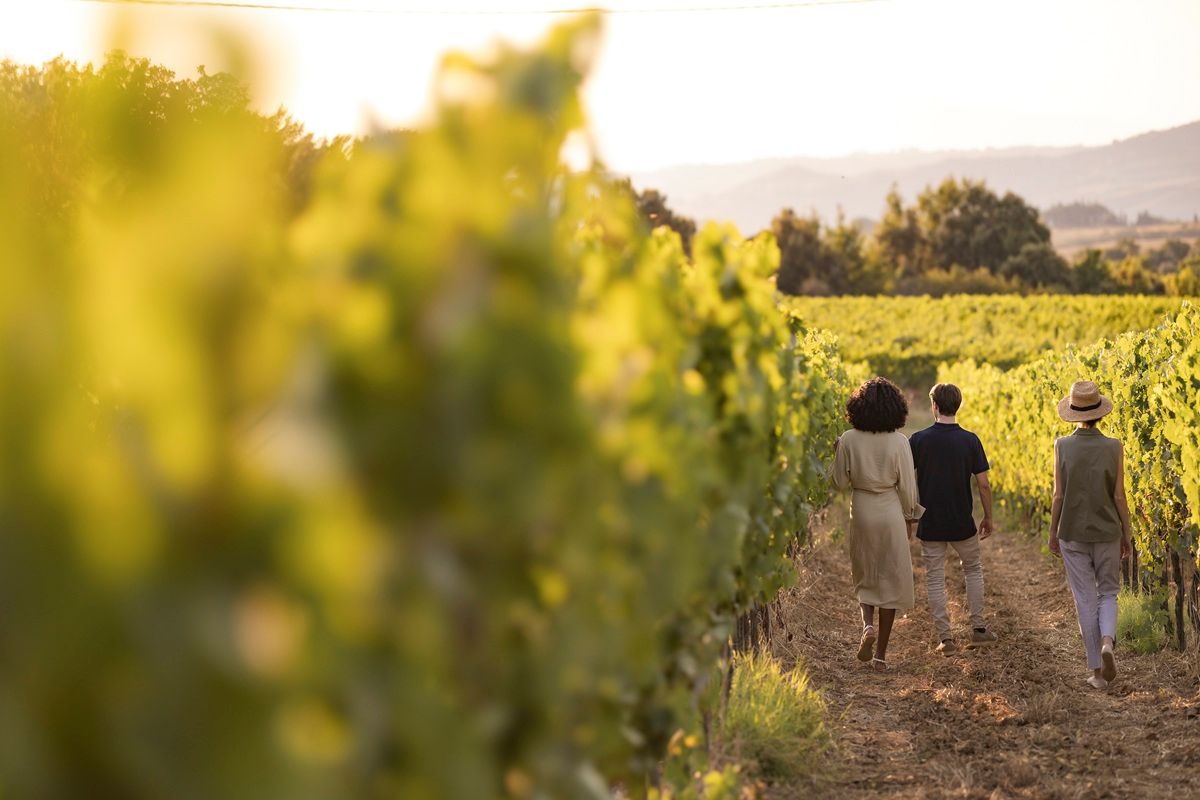
With wine tourism becoming increasingly more central to winery business, more experiential than ever and now largely driven by online bookings, a new type of wine tourist, younger, more international, and guided by Artificial Intelligence (as explained to WineNews by Edoardo Colombo, president of Turismi Ai), is rewriting the rules of winery hospitality and pushing wine companies to accelerate decisively toward digitization and integrated e-marketing strategies. This is the profile outlined by Dna Tasting, a winery hospitality management platform, based on data from over 150 businesses for which wine tourism represents a significant share of revenue and the cornerstone of experiential tourism.
The analysis first highlights the return of Italian visitors, who now account for 55.3% of visits compared to 30% recorded before 2020 (in line with the proximity travel trend also observed at the start of summer 2026), alongside an international segment driven mainly by the United States, which accounts for 33.8%, with growing signals also from Canada (+3.7%) and Brazil (+3.2%), in addition to traditional European markets such as Germany and Switzerland.
The visitor profile is also increasingly younger: 7 wine tourists out of 10 are under 50, and the 25-45 age group represents the core of demand, with behaviors oriented toward planning and constant use of digital tools. Bookings are mainly made online, on average one month in advance, while smartphones remain the primary tool to look for information, comparing offers, and purchasing experiences, marking a clear shift toward more conscious and organized consumption.
At the same time, the content of visits is evolving: traditional tastings are now complemented by increasingly more comprehensive and immersive offerings which combine wine, territory, culture, nature, and wellness. Average spending is around 41 euros per person, with small groups, often couples or friends, indicating a more intimate and personalized experience.
“We wanted to turn the data collected daily by wineries into a concrete tool for reading the market, creating what we have defined as the profile of the modern wine tourist - explains Duccio Bianchini, co-founder and marketing manager of Dna Tasting - today, those who visit a winery are not just looking for a tasting, but for a complete experience that is easy to book, personalized, and consistent with expectations created online. For this reason, we believe that technology, hospitality, and e-marketing must work together: only in this way, wine companies can become more efficient, better understand their guests, and build lasting relationships over time”.
“In a market where wine tourism is no longer a niche but a structured phenomenon, focusing on e-marketing is now an essential strategic choice - explains Alessio Casi, co-founder of Dna Tasting - being present online with an effective website, an immediate booking system, targeted digital campaigns, social media activities, and Crm tools means increasing visibility, direct bookings, customer loyalty, and post-visit sales. Wineries which invest in the digitization of hospitality and data management can build an ongoing relationship with visitors, personalize their offerings, and turn the winery visit into long-term value”.
Copyright © 2000/2026
Contatti: info@winenews.it
Seguici anche su Twitter: @WineNewsIt
Seguici anche su Facebook: @winenewsit
Questo articolo è tratto dall'archivio di WineNews - Tutti i diritti riservati - Copyright © 2000/2026