


Friday 20th of March 2026 - Last Update: 19:23







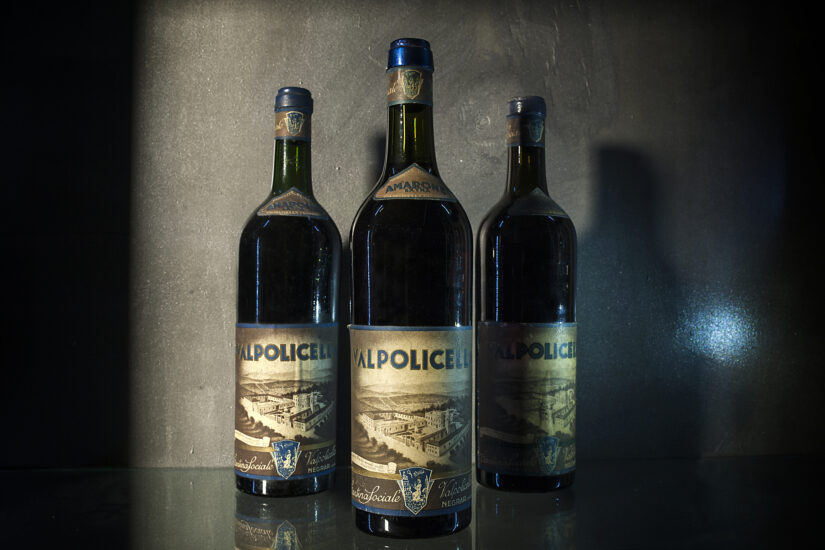
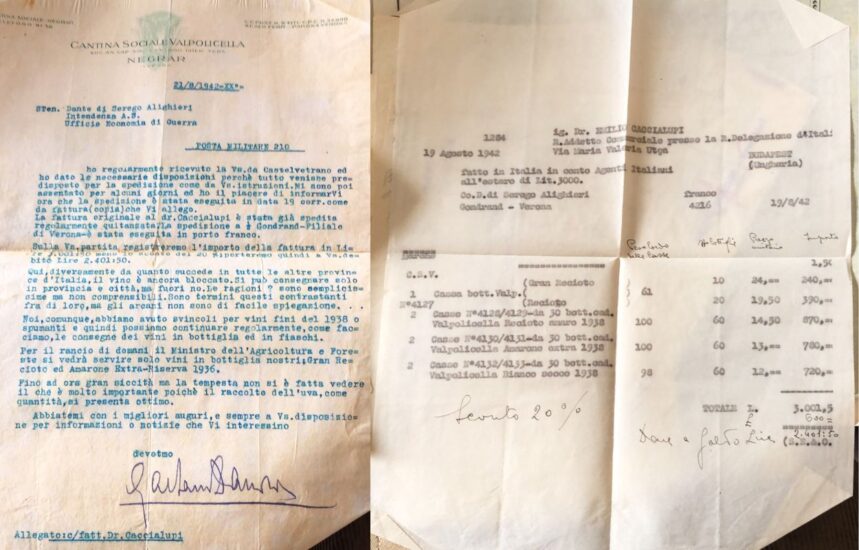
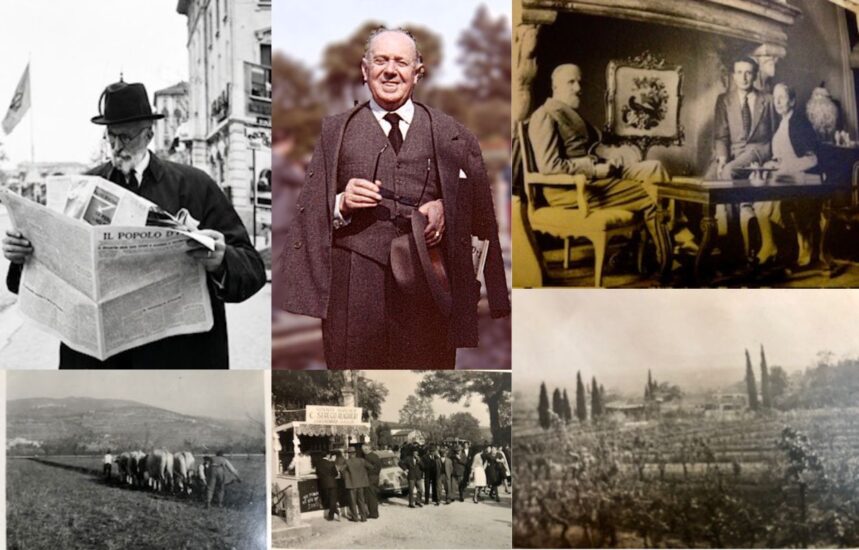
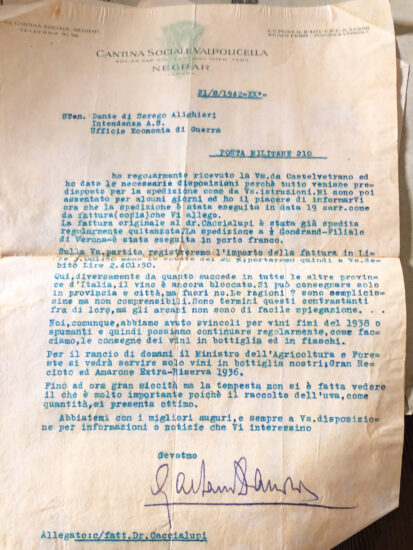
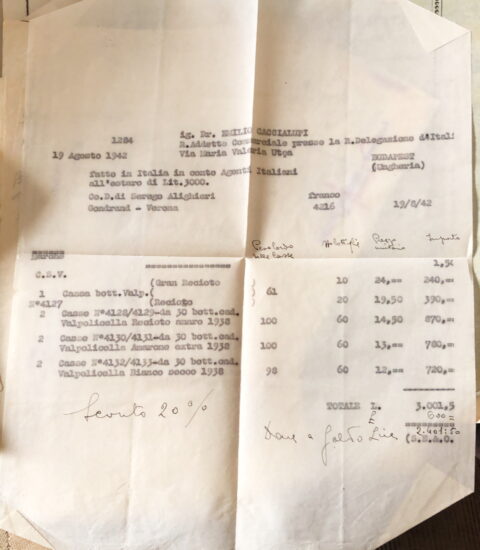
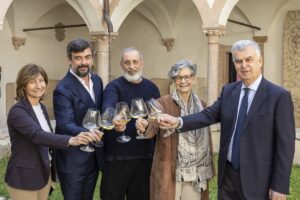
With the worldwide fame of Amarone, a story has also spread which traces its origin to a human error. It is narrated that in 1936 Adelino Lucchese forgot a barrel of Recioto, the traditional sweet wine of Valpolicella in the cellar, and once fermentation was complete, it became dry. Upon finding the “Recioto scapà” (escaped, gone out of control), the cellar master of the Cantina Sociale Valpolicella in Negrar (today Cantina Valpolicella Negrar) is said to have exclaimed, “this is not an Amaro, it is an Amarone” thus unknowingly coining the wine name. A wine which takes center stage with “Amarone Opera Prima” in Verona, the edition No. 22 of Consorzio Vini Valpolicella event dedicated to one of Ital greatest red wines and the most renowned of Valpolicella (Gallerie Mercatali, January 30th - 31st and February 1st). However, another story also emerges today, suggesting that the “true” reality was different, and an archival and documentary research, anticipated by WineNews, brings it to light: Amarone did not originate by chance but was created as an independent wine, the result of a precise wine project aimed at protecting Valpolicella traditional wine. Evidence of Amarone earlier, “intentional” production includes not only stocks from vintages prior to 1936 but especially numerous historical documents collected by Marina Valenti, former head of external relations at Cantina Valpolicella Negrar. These materials have been studied, reorganized, described, and enhanced with the scientific support of Francesco E. Benatti, head of the Historical Archive of the Italian Wine Union, who - together with Wanda Gallo - collaborates in protecting the archival heritage of the Paolo Desana DOC Documentation Center in Casale Monferrato. “This is an unpublished documentary heritage of Valpolicella - explains Marina Valenti to WineNews who is writing an upcoming essay, to be published by Scripta - made up of correspondence and other heterogeneous materials preserved in the private archives of Pieralvise Serego Alighieri (1875-1943, grandfather of the current Pieralvise who manages the Serego Alighieri estates and a descendant of Dante, the Great Poet of the “Divine Comedy”, who found comfort from exile in Verona and Valpolicella, where his son Pietro settled after purchasing land, ed) and Giambattista Rizzardi (1883-1975). Two figures of great civic commitment, ethical and entrepreneurial coherence, devoted to the progress of viticulture and high-quality wine production in Valpolicella, as well as to the value of cooperation in the early decades of the twentieth century”. “Amarone - illustrates Valenti addressing to it - can be considered the first “typical” wine of Valpolicella because of its characteristics, suited to satisfy the criteria which were being defined in the early 1920s. The title of ‘”ypical wine” required not only notoriety but also consistent production and sufficient quantity, something Recioto could not guarantee, as clarified in the minutes of the November 12th, 1930 meeting held in Verona at the invitation of Senator (and great enologist) Arturo Marescalchi and chaired by his colleague Luigi Messedaglia (a surgeon but also an agricultural scholar, ed). The goal was to take “prompt and diligent initiatives to protect and promote typical wines, particularly Valpolicella and Bardolino”. Messedaglia emphasized that it was not appropriate to “examine and study the true type of Recioto wine, which represents a very modest quantity and can be considered a delicacy” adding: “it is necessary to achieve large-scale production of the typical Veronese roasting wine, a wine from the Valpolicella hills which is good and appreciated, for which he saw no insurmountable difficulty”. And, Amarone can be considered as the most original expression of that typical Veronese “roasting wine,” already mentioned in “Il Gazzettino” on September 25th, 1906 by poet and journalist Berto Barbarani in his “Capitolo del vino buono” - “Chapter of Good Wine”, and by Giambattista Rizzardi in a letter sent to Count Mattioli (secretary at the Royal Household of King Vittorio Emanuele III) on December 20th, 1936. The minutes also conclude with Messedaglia encouragement to “establish one or more consortia for the protection of typical Veronese wines”, which materialized with the reorganization, again in San Pietro in Cariano, but on new legislative foundations, of the Consortium for the Protection of the Typical Wines of Valpolicella of 1925, which had been ineffective due to the lack of significant facilities. “To produce a high-quality typical wine in sufficient and constant quantity - continues Valenti - the Cantina Sociale della Valpolicella in Novare di Arbizzano was re-established, since the first one had not succeeded. It was here that the experiments leading to the production of Amarone took place, a new wine, bitter, meaning dry, different from Recioto, intended to represent the renown and typicity of the area”. To launch the ambitious project he deeply cared about, Pieralvise Serego Alighieri became the main shareholder and moved his barrels to Novare. On August 11th, 1933, he wrote with heartfelt enthusiasm to his friend Marescalchi: “[...] Today, in Novare, with a small group of friends: Giovanni Simonini, Rizzardi, Cav. Vecchi, Cav. Dall’Ora, we established the Cantina Sociale della Valpolicella. Another group will join, and we expect to begin operations next season in the same Novare cellars with about 7,000 quintals of grapes under the direction of Dr. Eugenio Mortem, recommended to me by you: this is a guarantee and a good omen. I have been pursuing this dream and working toward this goal for forty years; I feel moved and fulfilled [...]”. “Among these - explains Valenti - Giambattista Rizzardi had always supported him, becoming a member of the Consortium for the Protection of Typical Wines in 1925 and president of Cantina Sociale della Valpolicella from 1934 to 1959, later continuing his involvement as board administrator until 1975. His archive preserves all the financial statements from those years. In particular, the sheet titled “Esistenza vino” - “Wine Inventory”, attached to the economic statement of June 30th, 1936, lists the wines produced, including Amarone 1933, 1934, and 1935. The document clearly indicates the intention to diversify a commercial offering made up of high-end typical wines: red and white wines, sweet and dry wines undoubtedly intended for bottling with the consortium brand, symbolized by the maiden still featured in the coat of arms of the Municipality of San Pietro in Cariano”. Another interesting aspect emerging from Valenti documents is the unequivocal confirmation of Amarone export in bottles from the 1938 vintage. An invoice addressed to “Dr. Emilio Caccialupi” (Italian agent abroad and commercial officer at the Royal Italian Delegation in Budapest), attached to a 1942 letter from Gaetano Dall’Ora to Dante Serego Alighieri (son of Pieralvise and head of the War Economy Office at the strategic military transport airport of Castelvetrano, in Trapani), listed the wines sent to the Minister of Agriculture and Forestry: Gran Recioto, Recioto, Valpolicella Recioto Amaro, Valpolicella Amarone Extra, Valpolicella Bianco Secco. For each wine, the number of crates, bottles per crate, and price per bottle are indicated. “It is worth recalling - notes Valenti - that in the late 1920s Italy sought to promote exports with the establishment of a certification mark, followed by the definition of precise requirements for wines (Official Gazette, no. 296, December 23rd, 1933) and the introduction of the Ine (National Export Institute) mark for the wine industry. Giambattista Rizzardi, the enlightened president of the Cantina Sociale della Valpolicella, immediately took action to obtain it”. The extensive correspondence of Count Pieralvise Serego Alighieri with major Italian figures such as Edoardo Ottavi (editor of the Giornale Vinicolo Italiano), professor Tito Poggi (Secretary General of the Italian Farmers’ Society, 1911-1916), the same Marescalchi and Messedaglia, and Luigi Ricasoli (enlightened president of the Chianti Classico Consortium in 1924) demonstrates how deeply he cared about the affirmation and protection of the quality of Valpolicella typical wine. For this reason, he accepted the role of president of the Cooperative Social Cellar based in San Pietro in Cariano (1931) and was later recognized as patron and adviser of the cellar that from August 23rd, 1933 was based in Novare di Arbizzano, in the same famous and well-equipped Trezza Cellars of the late 19th century. “My research - concludes Valenti - is a well-deserved tribute to Pieralvise Serego Alighieri on the anniversary No. 150 of his birth and to Giambattista Rizzardi, one of Verona most dedicated post-war reconstruction engineers, a capable and honest administrator who, for over forty years, helped, along with all the members of the cooperative, to make one of Italy most renowned typical wines known and appreciated throughout the world”.
Copyright © 2000/2026
Contatti: info@winenews.it
Seguici anche su Twitter: @WineNewsIt
Seguici anche su Facebook: @winenewsit
Questo articolo è tratto dall'archivio di WineNews - Tutti i diritti riservati - Copyright © 2000/2026