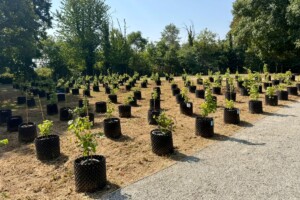








“Piwi wines” in Italy, although still a niche, are on the rise, both in terms of figures and appeal. The credit goes to their characteristics: it is sufficient to say that - an aspect not to be underestimated in this historical moment - they originate from so-called “resistant grape varieties”, which can be a valid response to increasingly more frequent climate change and the return of vine diseases such as downy mildew and powdery mildew. Moreover, in a period of ever-growing attention to sustainability, they align well with new consumer trends. Yet, despite Piwi varieties being authorized in several regions (South Tyrol, Veneto, Friuli-Venezia Giulia, Lombardy, Emilia-Romagna, the Marche, the Abruzzi, and Piedmont), their spread remains limited, largely concentrated in the North-East, where there are about 2,000 total hectares. Lifting the ban in DOC areas could significantly increase their use, but this remains a debated issue, as already highlighted by many leading Italian enologists (interviewed on this topic, among others, by WineNews in this video).
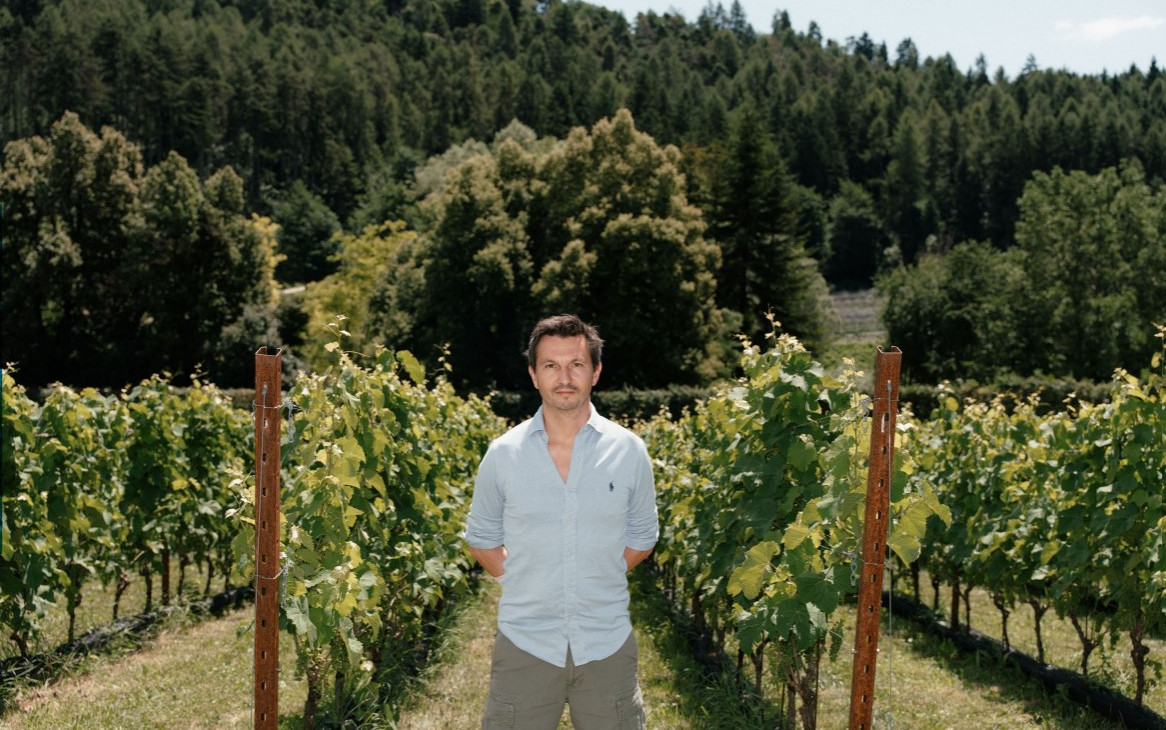
In any case, according to some, the introduction of Piwi varieties into appellations of origin - foreseen by the EU, but currently not allowed by Italy Consolidated Wine Law (Article 33, paragraph 6, Law 238/2016), which allows their use only in IGT wines - could open a new phase, although resistance remains. For Nicola Biasi, an enologist and one of the main Italian interpreters of the Piwi world, who for years has led the “Resistenti Nicola Biasi” network—composed of companies from different territories which have focused on Piwi (Albafiorita and Tenuta della Casa in Friuli-Venezia Giulia, Ca’ da Roman, Colle Regina and Poggio Pagnan in Veneto, Oddone Prati in Piedmont, Vin de la Neu in Trentino, and the Moselle Project in Germany), the position is clear: the introduction of small percentages of resistant varieties should not be seen as a threat to the identity of a DOC or DOCG. On the contrary, a strong territory should be able to absorb targeted innovations without losing recognizability. “If a denomination - observes Biasi - fears that the introduction of a small percentage of a resistant variety, for example 10-15%, could distort the wine style, then perhaps its identity is not as solid as thought”. From this perspective, the future of Piwi doesn’t depend only on regulations or nursery availability, but also on the confidence of producers and their ability to change perspective. In Italy, according to Biasi, the main obstacle remains cultural: “we are more attached and loyal to the grape variety than to the territory, and this makes it harder to accept change”, even though the grape variety should be considered “a means, not an end”, a tool to best express the territory, today also in terms of greater sustainability.
When discussing resistant grape varieties, there is a risk of stopping at the surface: fewer treatments, lower environmental impact, greater sustainability. But for Nicola Biasi, this narrative is no longer sufficient. The decisive issue is not to demonstrate that these varieties are useful for the environment, but rather that they can produce wines capable of competing, in quality and identity, with those made from traditional grape varieties.
After all, studies such as that carried out by the winery Albafiorita highlight a 38% reduction in Co2 emissions and up to 70% savings in water consumption. For this reason, according to the enologist, the real challenge lies elsewhere: in the cellar, in the ability to correctly interpret these varieties without fear, prejudice, or shortcuts.
“It is thanks to years of research that we are able to bottle award-winning wines that have nothing to envy compared to traditional ones”. With the “Resistenti Nicola Biasi” network, the enologist has been carrying out for years research and experimentation focused on the behavior of Piwi varieties. “For years we have studied, through micro-vinifications, the fermentation behavior of resistant varieties under different conditions of temperature, turbidity, and nutrition”. Quality is decisive, because while the consumer may be intrigued by sustainability, they will choose a wine again only if they find it good, balanced, and convincing. Biasi also invites people to overcome a still widespread misconception: Piwi varieties are not Gmos, but the result of natural crosses obtained through pollination between different vine species.
Yet, this distinction still struggles to take hold. For the enologist, the problem is cultural, as “everything that is new tends to generate distrust, especially in a sector strongly linked to tradition such as wine”.
For “Resistenti Nicola Biasi”, the benefits in the vineyard from choosing Piwi are evident: fewer phytosanitary treatments mean fewer passes with agricultural machinery, lower diesel consumption, reduced C02 emissions, less soil compaction, and safer management for workers. Sustainability does not replace human work; rather, it makes it more aware. “The quality of the final result still depends on agronomic and wine choices, on human expertise”, adds Biasi, emphasizing that Piwi wines are not a homogeneous category. Souvignier Gris, Johanniter, Bronner, Soreli, Solaris, Cabernet Eidos, and Cabernet Cortis are deeply different from one another, just as Merlot, Sangiovese, or Teroldego. “Even among Piwi there are marked differences in terms of aromatic profile, structure, and winemaking behavior. The point is not so much to classify them, but to learn to know them and, above all, to vinify them correctly to enhance the territory where they are grown”. Among the most promising varieties, Biasi identifies Souvignier Gris as particularly significant. It is a versatile grape capable of maintaining acidity even with high sugar ripeness and suitable for different interpretations, from sparkling wines to macerated styles, and “it well represents a contemporary and modern style, capable of responding to current stylistic demands”. Ultimately, what matters is that “first and foremost, we must make good, convincing wines capable of talking to the consumer”.
Copyright © 2000/2026
Contatti: info@winenews.it
Seguici anche su Twitter: @WineNewsIt
Seguici anche su Facebook: @winenewsit
Questo articolo è tratto dall'archivio di WineNews - Tutti i diritti riservati - Copyright © 2000/2026