







27 million euros invested in researching the future of viticulture and winemaking, largely funded by the Nrrp, which will fund - under the management of the Wine Research Team, founded in 2014 at the initiative of Riccardo Cotarella, one of the most highly regarded Italian enologists worldwide - 9 projects for businesses and two in collaboration with leading Italian institutions in research and culture: one with the Edmund Mach Foundation in San Michele all’Adige, and one with the University of Gastronomic Sciences in Pollenzo. This is the new Wrt program (bringing together nearly 30 wineries from different Italian regions, from Coppo in Piedmont to Di Majo Norante in Molise, from Famiglia Cotarella in Lazio to Leone De Castris in Puglia, from MonteZovo in Veneto to San Salvatore in Campania, and Villa Sandi in Veneto, among others), presented in recent days in Bra, the hometown of Carlo Petrini, who recently passed away, and commemorated together with his sister Chiara Petrini (who received a plaque in memory of “Carlin”).
In a project whose added value, as president Vincenzo Tassinari underlined, lies in the ability to work as a system: “Today, Italian wine represents a point of excellence in the national economy and an extraordinary vehicle for the values of Italian quality worldwide. However, we are living in a complex phase, marked by deep economic and climate changes. These are the major challenges we face. Those who invest in innovation and research invest in the future. Our projects concern the sustainability of production, but also its efficiency. These are highly topical issues. We must stay the course and continue investing, including in communication and in our relationship with younger generations. They are the future of wine, and we must engage them and make them key players”. A commitment supported, as mentioned, by an overall investment of 27 million euros. “It is a figure which speaks for itself - added Tassinari - but above all, the objectives are important. These are projects aimed at making wine increasingly innovative, sustainable, and aligned with the needs of new generations”.
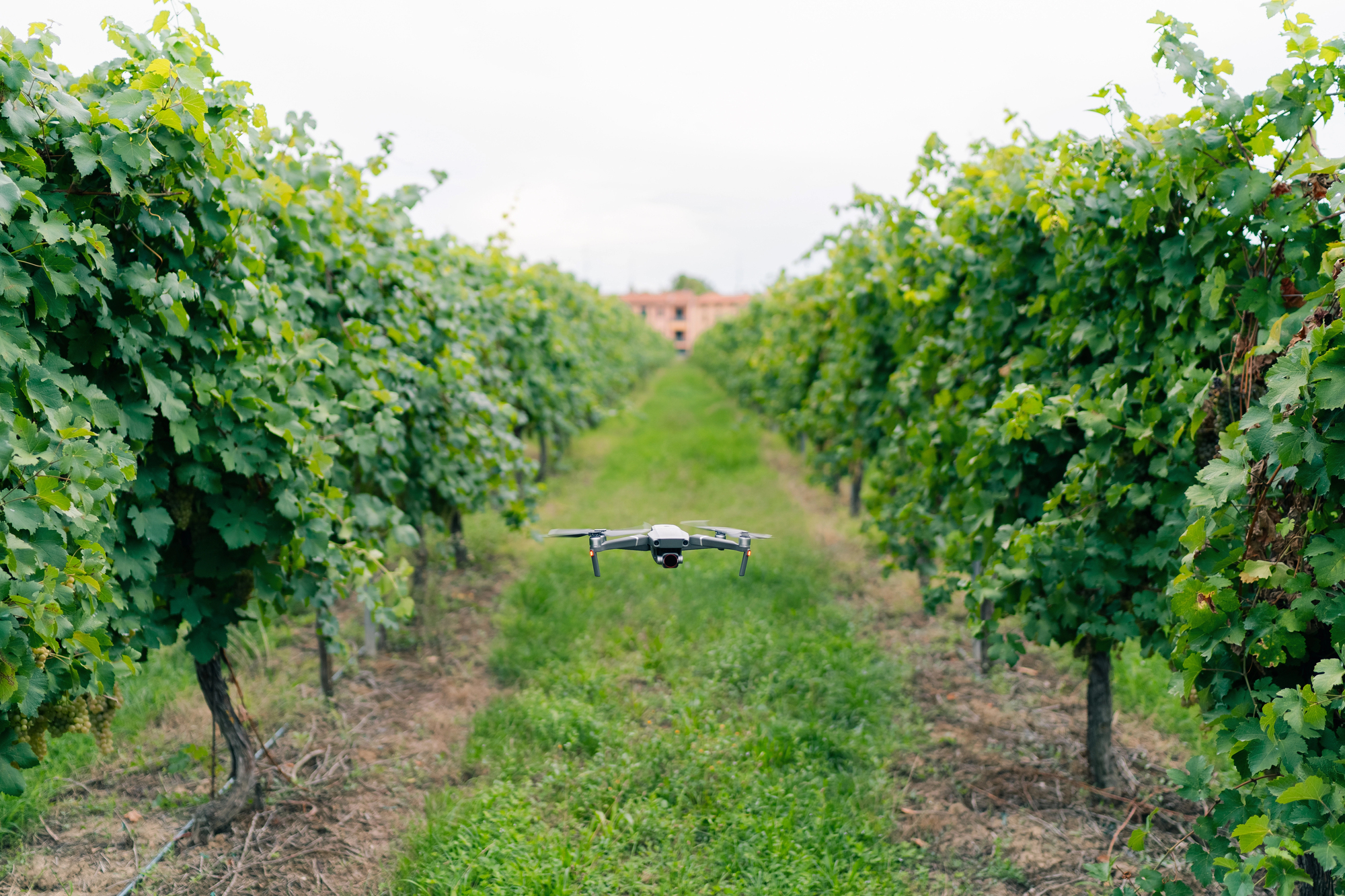
Particular attention was dedicated to the topic of Artificial Intelligence applied to the wine supply chain. This topic was addressed by Annabella Pascale, ceo of Tenuta di Artimino in Carmignano, Tuscany, a historic Medici villa where the pilot project “Wrt Futura” will be implemented. “In reality, we already live alongside a great deal of Artificial Intelligence. We use drones, satellites, monitoring systems, and large volumes of data. What is often lacking is the ability to collect and integrate all this information - observed Pascale - Artificial Intelligence shouldn’t be seen as a threat. It is often perceived with fear, as something that could replace humans. In reality, our goal is exactly the opposite: to provide people with better tools to make more informed decisions. Companies already possess enormous amounts of data relating to vineyards, wineries, customers, and business management. Artificial Intelligence will allow us to aggregate this information and turn it into value”. According to Pascale, the benefits will be especially tangible in terms of sustainability: “We will be able to improve the management of water resources, energy, and all those processes where inefficiencies still exist. Training and innovation will be the keys to building a virtuous relationship between technology and human skills”.
Also professor Attilio Scienza, a leading figure in viticulture research, also stressed the strategic role of Artificial Intelligence in the sector: “we must make it clear that we are talking about narrow Artificial Intelligence, that is, tools that interpret reality for predictive purposes. In agriculture and viticulture, prediction is essential. If action is taken after the damage has already occurred, the damage remains. The priority is to build a solid national information infrastructure. We have a great deal of data, but it is often disorganized - underlined the professor - the first task is to create large databases. Today, we are forced to rely on data collected in other countries, such as France and Australia, which refer to conditions different from our own. We need to build an Italian knowledge base and train Ai systems on our specific conditions”.
The role of the University of Pollenzo was highlighted by professor Michele Antonio Fino, coordinator of the Master’s program in Food Culture, Communication & Management: “Wrt is a major project because it connects vineyards, wineries, and scientific and technological research. This is not at all a given. Companies are often focused on daily emergencies and have few opportunities to think strategically. The Wine Research Team offers exactly this possibility”. With the Nrrp representing a historic opportunity: “This is objectively a once-in-a-lifetime chance to produce knowledge and strategic thinking. We are not talking about isolated actions or simple technological investments. Here we are working to transform the development guidelines of the entire supply chain and to build a future with a generational perspective”.
Such as the one that guided Carlo Petrini throughout his life and his journey with Slow Food. “We need wise, honest people capable of working for the good of the entire sector, just as he did”, said Riccardo Cotarella, president of the Wrt Scientific Committee, talking remotely.
Copyright © 2000/2026
Contatti: info@winenews.it
Seguici anche su Twitter: @WineNewsIt
Seguici anche su Facebook: @winenewsit
Questo articolo è tratto dall'archivio di WineNews - Tutti i diritti riservati - Copyright © 2000/2026