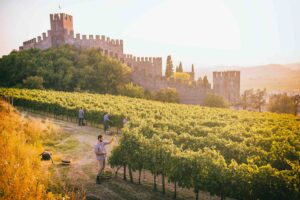








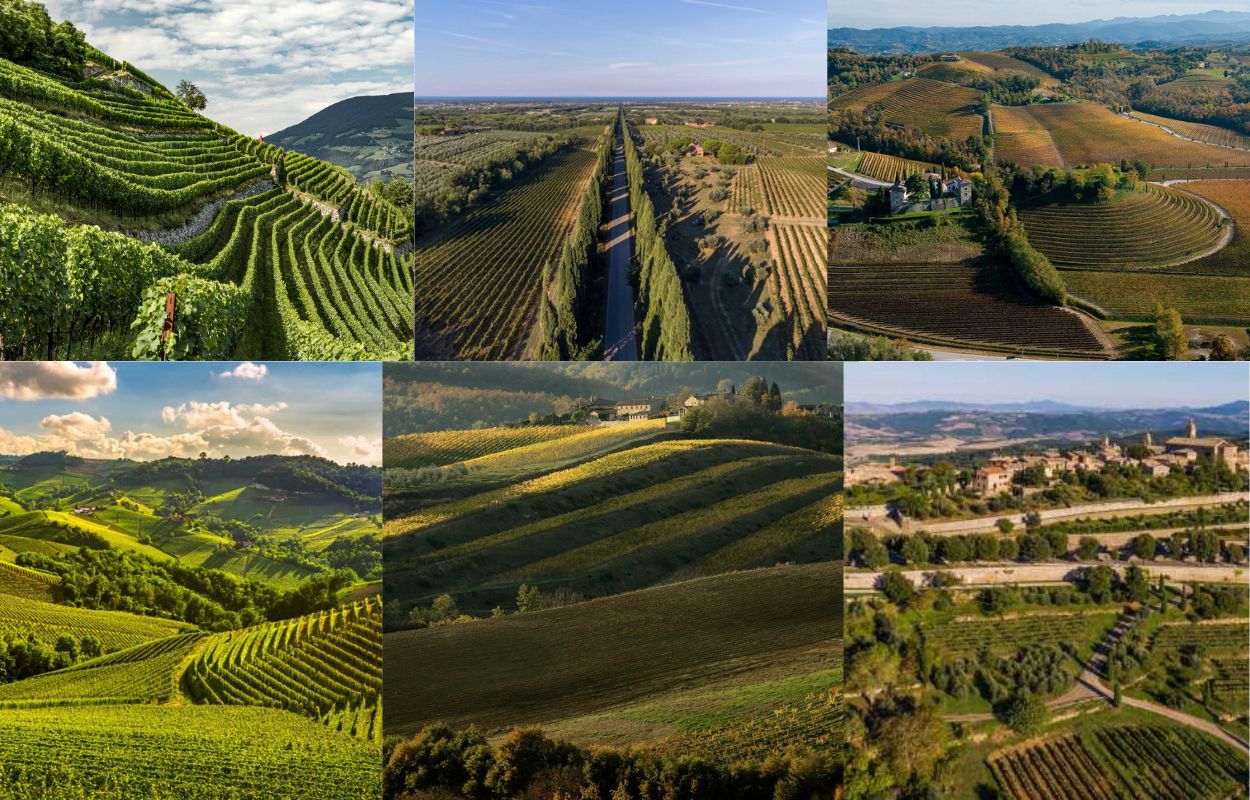
Climate change, premiumization, new tastes, sustainability, experiential consumption: these are five phenomena or values that, each in its own way, to varying degrees and at different speeds, are reshaping the world of wine. And, as a consequence, they are also influencing the directions and intensity of investment in the sector. Not only by those whose very reason for doing business lies in the wine world, but also by those who invest in vineyards as an alternative asset. Vineyards, in fact, despite the difficulties facing the sector, “continue to rank among the most attractive alternative assets for international investors, combining economic value, territorial identity and a strong experiential component”. This is according to “The Wealth Report” 2026 by Knight Frank, the London-based real estate consultancy that, among other things, analyzes the growing role of the wine sector in the strategies of major wealth holders. Several regions, including Italian ones, stand out in terms of investor interest, such as South Tyrol, Friuli, Chianti Classico, Montalcino, Bolgheri, Barolo and Barbaresco, alongside other global wine regions such as the Loire Valley, Champagne, Bordeaux and Burgundy in France, for example, as well as New Zealand, parts of Australia like Barossa and Eden Valley, the United States from Napa Valley in California to Willamette Valley in Oregon, Mendoza in Argentina, the Mosel in Germany, and also certain areas of Georgia, Chile, South Africa and even the fast-growing United Kingdom.
“Despite the challenges affecting the sector globally, the vineyard market demonstrates remarkable resilience. While consumption volumes are declining, the value of wine is increasing: consumers are increasingly more oriented toward quality products, handmade wines and those strongly tied to their territory, favoring authenticity and identity over mass production”, explains Knight Frank. The report also highlights that “in this context, factors such as climate change and quality-driven demand are reshaping the global geography of wine. Historic areas continue to play a central role, but new production regions are emerging, often characterized by more favorable climatic conditions and greater adaptive potential. At the same time, producers are investing in new agronomic techniques and more resilient grape varieties, responding to increasingly unpredictable seasons”.
“Despite the challenges that the wine sector is coping with, demand for particularly well-suited vineyards remains solid. Investors are increasingly focused on quality, climatic suitability and long-term resilience, especially in areas where supply is limited and value is supported by provenance and know-how”, comments Alexander Hall, head of International Vineyards at Knight Frank. In an interview with WineNews (video coming in the next few days), he added: “the wine market is suffering a bit; there are fewer people buying vineyards than there were some time ago, but at the same time this translates into an opportunity for producers who want to invest in wine and vineyards. So yes, there is less activity, but what activity there is tends to be more specialized and more cautious. People are now much more careful when investing. Italy is certainly highly sought after, as France and the major wine regions, because they offer great diversity. From an investor point of view, in Italy you can choose from many major wine regions, not just Tuscany and Piedmont; there are many other interesting areas. The same applies to France and Spain. Of course, individual investors follow their affinity with a particular region, the places they like to visit, and the wines produced there. In Italy there are so many wine varieties, and people are attracted by all of this. What we are seeing - adds Alexander Hall, head of International Vineyards by Knight Frank - is a change in trend, and as in all markets it is important to be quick in anticipating when this change begins or to recognize it immediately. But this is not only about wine itself; it also concerns wine regions where wine tourists want to go, and how these territories are adapting to consumer tastes. If these trends are interpreted correctly, from an investor perspective, they are key elements to take into account”.
Returning specifically to the report, Knight Frank underlines that for Hnwi (“High Net Worth Individuals”) and family offices, vineyards represent a unique asset: they combine land, agricultural production and brand, offering diversification compared to traditional investments and increasingly integrating lifestyle and hospitality dimensions. “This is no longer just an agricultural investment, but a complex entrepreneurial project in which production, brand positioning and wine tourism coexist. Experiential value becomes a key driver: wine estates are turning into destinations capable of generating value through hospitality, direct sales and long-term relationships with consumers. Consumer preferences are evolving rapidly: interest in lighter, fresher and more accessible wines is growing, often associated with more moderate consumption styles and greater attention to wellbeing. New generations, particularly Gen Z, show a less traditional approach to wine, favoring authenticity, sustainability and transparency. Sustainability is becoming an essential requirement, no longer a differentiating factor but a basic condition: producers are expected to demonstrate concrete environmental and social commitment to strengthen credibility and brand value”. In this scenario, reiterates the report, “Italy continues to play a leading role. Thanks to the richness of its appellations, its international reputation and the strong link between wine, culture and territory, the country confirms itself as one of the most attractive destinations for global investors. Italian vineyards are increasingly more perceived as iconic assets, capable of combining economic and symbolic value. Overall, the sector reflects one of the main trends highlighted in The Wealth Report: the blend of investment and lifestyle. In a context where luxury is evolving towards authentic and meaningful experiences, wine emerges as one of the assets most representative of this phenomenon”.
The Knight Frank report also highlights average values for certain vineyards. In Italy, Barolo ranks at the top, where 2.7 million dollars are needed per hectare of vineyard, followed, at the same valuation, by vineyards in Bolgheri and those of Brunello di Montalcino, priced at 1.2 million euros per hectare, and then Chianti Classico, at 245,000 dollars per hectare. In France, the highest prices (though the market is practically non-existent) are reached by “Grand Cru” vineyards in the Côte de Nuits in Burgundy, at an extraordinary 55 million dollars per hectare, a figure which is more statistical than practical. Prices for vineyards in the same area but outside the Grand Cru classification, at 1.05 million dollars are more affordable and realistic, followed by those in the Côte de Blancs in Champagne at 1.9 million dollars per hectare, and Margaux in Bordeaux at 1.65 million dollars. Those in Sancerre are more accessible, in the Loire Valley, at 300,000 dollars per hectare. Looking at other countries, in the United States prices range from 1.17 million dollars per hectare in Rutherford, in Napa Valley, to 270,000 dollars in the Dundee Hills, in Oregon. In New Zealand, in the Marlborough region, one hectare of vineyard requires an investment of 120,000 dollars, the same amount as in Essex in the United Kingdom, where slightly lower values are recorded in Kent and Sussex, at around 110,000 dollars. Vineyards in Stellenbosch, in South Africa, are even more affordable at 60,000 dollars per hectare, roughly in line with those in Australia Barossa Valley, at around 55,000 euros per hectare.
Copyright © 2000/2026
Contatti: info@winenews.it
Seguici anche su Twitter: @WineNewsIt
Seguici anche su Facebook: @winenewsit
Questo articolo è tratto dall'archivio di WineNews - Tutti i diritti riservati - Copyright © 2000/2026