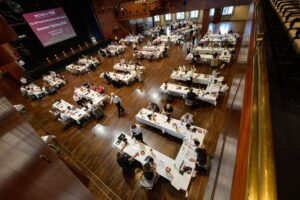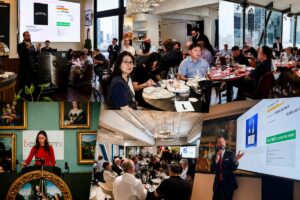








Wine tourism is increasingly more a strategic cornerstone of Italian wine: it combines authenticity and sustainability, creates immersive experiences, strengthens margins through direct sales, and supports both exports and customer loyalty. It is also a social multiplier: it generates value along the entire hospitality chain, supports rural communities, and makes the cultural landscapes of wine recognizable. Within this context, the roundtable of the Assoenologi Congress No. 79, held in recent days in Conegliano, “Enoturismo: tra territorio, cultura e nuove sfide nel settore del vino” - “Wine Tourism: between territory, culture and new challenges in the wine sector”, highlighted a dual common thread: on the one hand, the policy choices that have built identity and protection; on the other hand, hospitality as a universal language that transforms the visitor into an ambassador of the territory-brand.
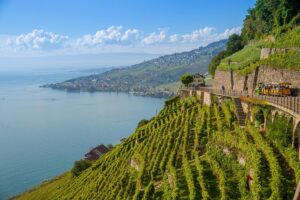
This paradigm, in the Conegliano Valdobbiadene Prosecco Superiore DOCG Hills, has produced tangible results leading to Unesco World Heritage recognition. Luca Zaia, now president of the Veneto Regional Council, recalled the turning point of 2009 when, during his term as Minister of Agriculture, he issued the ministerial decree establishing the Prosecco DOC across a broad interregional area of northeastern Italy (5 provinces in Veneto: Treviso, Venice, Vicenza, Padua, Belluno; and 4 in Friuli: Udine, Pordenone, Gorizia, Trieste), while at the same time protecting the name of the grape variety by renaming the grape historically known as “Prosecco” to “Glera”, thus uniquely linking the name “Prosecco” of the wine to its production territory. A decisive step to protect brand value and lay the foundations for a coherent tourism narrative. “This is a land that has worked incredibly hard to cultivate these steep hills, now a Unesco World Heritage site” - recalled Zaia, emphasizing the role of small farmers and the impact of migration history on the character of the area. The regulatory choice - he explained - anchored the designation to the territory: after the Decree, Prosecco DOC wine can only be produced in the defined area, linking product and landscape into a single identity”.
Marina Montedoro, president of the Association for the Heritage of the Prosecco Hills of Conegliano and Valdobbiadene, retraced the process which began in 2008 with the submission of the Unesco dossier and culminated in recognition in 2019. Since then, wine tourism figures have shown structural growth: from 250,000 visitors in 2019 to 570,000 in 2025, with strong investment in widespread hospitality (facilities +45%), an increase in bed capacity (+35%), and tourism revenue growth exceeding 21%. Seasonality has also been overcome: over 50% of visitors stay at least 3 days and visit more than 3 wineries, generating value for the territory. “Conegliano is the gateway to a small area of land that in 2019 was recognized as a Unesco World Heritage site”, said Montedoro, inviting people to “take the time” to experience the landscape. On organizational change, she added: “one of the main obstacles is fragmentation. Today, thanks to collaboration between municipalities, associations, the Wine Route and the Region, we have achieved a fundamental unity for development”. This unity translates into cultural programming - concerts at dawn and sunset, literary festivals - and into an experiential offering consistent with the Unesco identity.
Without the national wine tourism law of 2017, promoted by then-senator Dario Stefàno, Italy wouldn’t have been able to fully develop the sector. The law simplified winery hospitality, encouraging professionalization and diversification of sales channels: direct relationships, content, and customer loyalty. “People no longer go on vacation just to rest like our parents did: they go to have experiences”, observed Dario Stefàno, now president of the Wine and Olive Oil Tourism Study Center (Lumsa), explaining how demand pressure has driven efforts to “tell stories of traditions, culture, and gastronomy and help wineries upgrade their offerings. Personal relationships are the real driver: if the visit inspires a personal connection and the winery can provide information, content, and loyalty elements, sales extend throughout the year”. Language is central: hospitality is not just technical, but a narrative of the territory. “Tourists don’t remember what was said or done: they remember how they were welcomed. And that welcome, if authentic, is never forgotten”.
The contribution of Matteo Zoppas, president of Ice, at the roundtable on wine tourism focused on the ability of companies to adapt and work together to compete in markets. “We are the makers of our own future: we must understand our potential and use the tools”, said Zoppas, stressing the need to interpret new purchasing behaviors and to work “increasingly more as a team to support the presence of Italian wine abroad. A field in which wine tourism can act as a bridge: it builds brand equity domestically and fuels international demand through experience”.
Wine tourism thus confirms itself as a pillar of Italian competitiveness: higher margins thanks to direct channels, more exports thanks to authentic storytelling, and stronger social cohesion thanks to its impact on local economies. The case of the Prosecco DOCG Hills shows that protection, governance, and cultural programming generate growth, longer stays, reduced seasonality, and customer loyalty. At the same time, several challenges remain: coordination among stakeholders, quality of hospitality as a professional skill, continuous training, protection of denominations, and the ability to understand new consumption patterns. This is where policy, businesses, and territories converge.
Copyright © 2000/2026
Contatti: info@winenews.it
Seguici anche su Twitter: @WineNewsIt
Seguici anche su Facebook: @winenewsit
Questo articolo è tratto dall'archivio di WineNews - Tutti i diritti riservati - Copyright © 2000/2026