







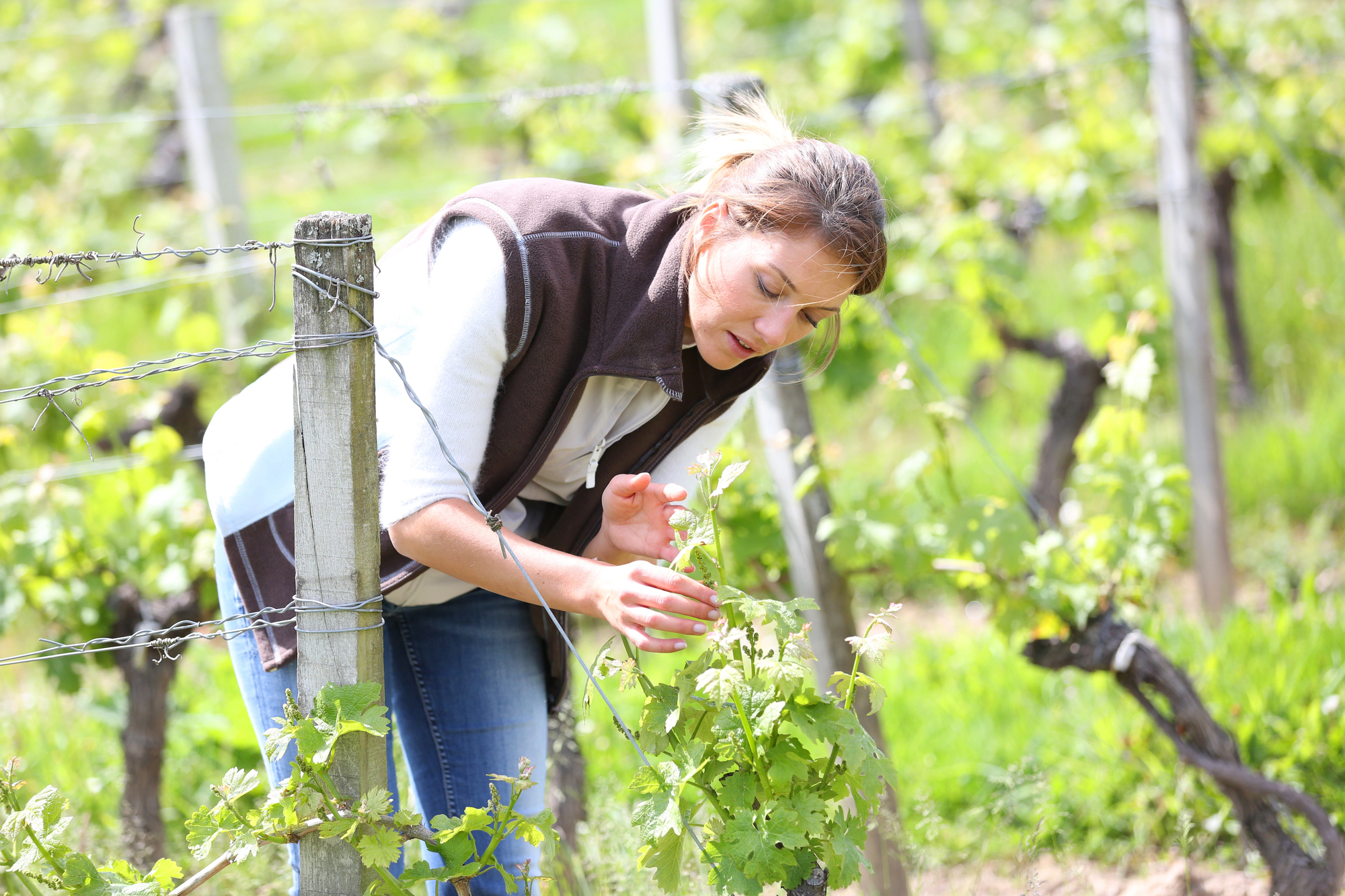
Women participation in Italian agriculture is growing, one of the most high-performing sectors at a continental level, with viticulture playing a leading role. There are just over 400,000 agricultural businesses in Italy headed by women, about one third of the total, a percentage in line with the EU average. In particular, Romania (Europe leader with over 1 million agricultural businesses) and Italy together account for nearly 1.5 million women-headed enterprises, more than half of the 2.7 million female-run farms in the European Union. Economic outcomes, however, reward female agricultural entrepreneurship only “halfway”. While there has been an overall increase in income over the past ten years for women-led farms, their income is still 42% lower than that of farms managed by men.
In this context, female agricultural entrepreneurship finds a bright spot in women-headed viticulture: not only it is growing, contrary to the results of wine-growing enterprises managed by men, but viticulture is also the only sector in which there is no “gender gap”. The research carried out by the Confagricoltura Study Center together with Crea, presented at the conference “Agriculture Is Women. Female Leadership to Cultivate the Future,” promoted today by Confagricoltura Donna in Rome, provided a snapshot of female agricultural entrepreneurship in Italy and outlining the gender disparities that still penalize it is. On this occasion, Alessandra Oddi Baglioni, president of Confagricoltura Donna, also presented the “Rome Document”, a manifesto calling for greater attention by institutions to women entrepreneurship, represented in the audience by the Undersecretary of the Ministry of Agriculture, Patrizio Giacomo La Pietra. The discussion highlighted the need for concrete policies to bridge the remaining gaps and support the development of women-headed agricultural businesses, while at the same time improving quality of life in rural areas. In Italy, agriculture is a “historic stronghold” with a rate of feminization above the average (22.2% - Guglielmo Tagliacarne Study Center of the Chambers of Commerce).
“We are not here simply to celebrate an identity or reiterate a rightful principle - observed Oddi Baglioni - we are here to take a step forward, to give political form to a now-mature awareness. What tools are needed to make equality effective? What policies are required to support work, enterprise, innovation, welfare, and infrastructure? It is within this question that the Rome Manifesto is located. The heart of the Rome Document is precisely this: saying that it is not enough to recognize the value of women if we do not act on the real conditions that still limit that value”. There are seven key points of the “Rome Manifesto” illustrated by president Oddi Baglioni: fully recognizing the role of women in agriculture; reducing the gap between urban and rural areas; strengthening women leadership and meaningful participation in governance; supporting female agricultural entrepreneurship with adequate and accessible tools; promoting innovation, training, and knowledge as accessible assets; enhancing the social, environmental, and economic role of women-led agriculture; and building a new agricultural policy that is truly inclusive. President of Confagricoltura Donna also called on Undersecretary La Pietra to establish an office dedicated to female entrepreneurship. That much work remains to be done in terms of the gender gap in agricultural entrepreneurship is demonstrated by other data emerging from the Confagricoltura - Crea research. In particular, in 2023, the year in which the income of female agricultural entrepreneurs declined after years of continuous growth, the “gender gap” rose again to over 40%. At the Cap level as well, women account for 31% of beneficiaries but receive only 15% of total payments. In Italy, the share of payments directed to women-managed farms is below the EU average. Undersecretary Patrizio Giacomo La Pietra observed that “at the institutional level, as you know, a strong decision has been made to allocate many resources to female entrepreneurship. But that is not enough. We must ensure that in the agricultural world, one that develops mainly in inland areas, there are essential services that allow women to carry out their activities. These essential services are many: healthcare, schools, childcare facilities, in other words, structures that enable women to have the opportunity to work freely. Starting from these premises, I can only commend initiatives like the one we are taking part in today”.
Also president of Confagricoltura, Massimiliano Giansanti emphasized the crucial role of female entrepreneurship in agriculture: “today, the role of women within family businesses is fundamental - observed Giansanti - they are the fulcrum, the center, the driving force of our families. Stories and traditions, of course, depend on the ability of a business to remain united, and it is above all mothers who keep families together. And today, in the narrative of food becoming increasingly central, we also need to build an agricultural model in which the role of women within our businesses is increasingly valued”. Confagricoltura-Crea research also highlighted the distinctive characteristics of “pink” enterprises, which tend to be smaller than those headed by men, with land holdings of up to five hectares both in Italy and in Europe, but with a Utilized Agricultural Area (Uaa) growing significantly more than that of their male counterparts (in Italy, +12.5% for women; +2.9% for men). Moreover, women-headed farms show a higher degree of mechanization, with a growth rate over the last decade almost double that of farms managed by men. Labor intensity is higher and has declined less over the past ten years.
The secret of the success of women-headed viticulture, according to Michela Marenco, who, together with her sisters Patrizia and Doretta, runs Marenco Vini, the family business in Monferrato, lies in women entrepreneurs’ ability to form networks. “We have worked hard - she told WineNews - there is an Association of Women of Wine that was founded many years ago. Women know how to work in groups; we know how to work in order to grow. So that is the secret: we women entrepreneurs exchange information, we talk, we know how to work, we are practical, and that, in my opinion, is a great value”.
At the round table discussion, focused on female leadership in the primary sector, Martina Dal Grande of Società Agricola Dal Grande, supplier of grapes to Prosecco Superiore Conegliano Valdobbiadene DOCG producers, also spoke. “In my area - said Dal Grande - we see that the number of women entrepreneurs leading agricultural businesses is almost higher than that of men. We are talking about mostly small-scale realities in which the female presence is certainly leaving a very strong mark, with great attention to the territory, and ultimately very positive”.
The day took on even greater significance given that 2026 has been proclaimed by the United Nations as the “International Year of the Woman Farmer”, a recognition which strengthens awareness of the essential role of women in food security, the resilience of production systems, and the cohesion of rural areas. However, it was emphasized that recognition alone is not enough: structural issues remain to be addressed, starting with access to land, credit, training, innovation, and services.
Copyright © 2000/2026
Contatti: info@winenews.it
Seguici anche su Twitter: @WineNewsIt
Seguici anche su Facebook: @winenewsit
Questo articolo è tratto dall'archivio di WineNews - Tutti i diritti riservati - Copyright © 2000/2026