


Sunday 20th of September 2026 - Last Update: 21:50






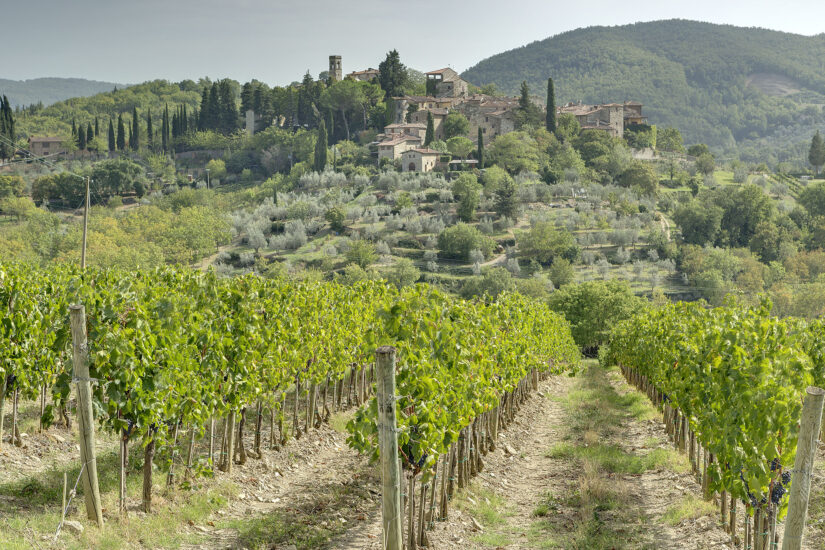
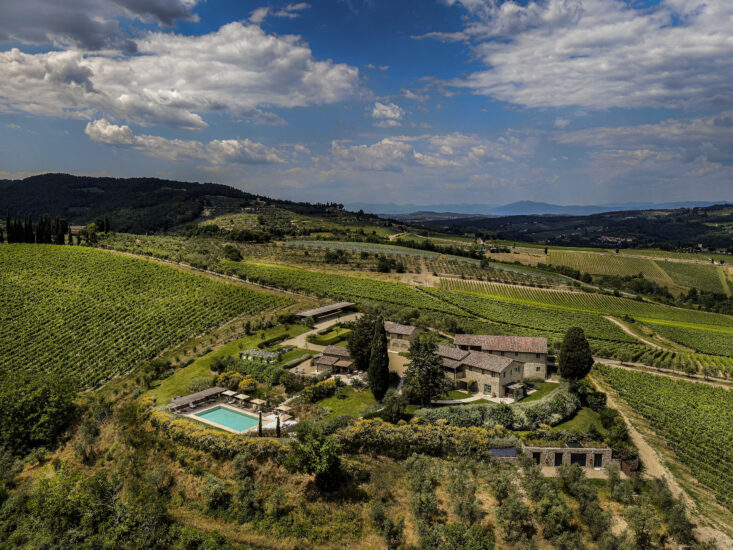
A territory capable of attracting investments which turn into economic activity, which in turn generates further value, whether from international investors or from families who, for generations, have been dedicated to vineyards, with Sangiovese at the forefront, and hospitality: Chianti Classico is an ancient intuition which continues to evolve in the present, with great hopes for the future. This is explained by the significant investment made by the Folonari family, owners of some of the territory’s iconic estates, who have decided to invest 7 million euros, a substantial figure, especially in these times, in the new winery at Tenuta del Cabreo, among the hills of Montefioralle, just a few kilometers from Greve in Chianti.
An investment which reflects both a desire to believe in the future and a deep attachment to a territory which tells the story of the region between medieval Siena and Renaissance Florence, an attachment which is also passed down from generation to generation. After all, this is a family that, in addition to its “traditional” wine production, is increasingly more focusing on wine tourism, which is becoming more and more a key driver of wine sales in a time when the market performance of Bacchus nectar is less brilliant. Alongside Tenuta di Nozzole and the Relais del Cabreo, the new Tenuta del Cabreo will become another attraction for wine lovers from all over the world, combining the production side with design and transforming the “steel park” into a “refined interior”, following the insight of translating labor and the fruits of the land into beauty, as Chianti Classico has always taught. This new facility, inaugurated in Greve in Chianti in the heart of the Black Rooster territory, represents a major investment of 7 million euros, out of a total company turnover of 11 million euros. The family strategic goal is to raise the bar, going beyond the story of a single glass or bottle to tell the story of an entire territory and everything behind it.
Giovanni Folonari, the eighth generation of the family in the world of wine, recalled that his family has been involved in this sector for many years, starting in the early 20th century in 1913 with Ruffino. Today, after a period of consolidation and a family division, the focus is exclusively on origin wines linked to the territory and produced entirely in-house through a complete supply chain, starting from the vineyard, as happens in all five company estates (Nozzole and Cabreo in Chianti Classico, Torcavallo in Montepulciano, Campo al Mare in Bolgheri, La Fuga in Montalcino, and Vigne a Porrona in the Maremma, for over 210 hectares of vineyards, ed).
According to his vision, the future lies in so-called fine wines, which represent the cornerstone of the future wine economy, as the current trend shows that people are drinking less but drinking better, a factor he finds rewarding for those who put great passion into their work. “The modern consumer is not only looking for elegance, but also wants a wine with character and identity, and wants to know the production area, the story, and the family behind the label”, as Giovanni Folonari told WineNews. Who adds: “our family maximizes the value of Sangiovese, a precious grape variety used in its pure form at Nozzole for the Annata, Riserva, and Gran Selezione, while also developing, in parallel, innovative wines capable of expressing character, both with the Super Tuscans and within the denominations of Bolgheri and the Maremma”.
This approach fits perfectly within the broader project called the “Cabreo world” aimed at creating a coherent wine tourism experience and communicating it consistently. Newly appointed ceo of Tenute Folonari Davide Profeti (in office since late April), told WineNews that “the family has made a tremendous financial effort to carry forward the idea of a true Cabreo ecosystem, a microcosm which brings together excellence in production and hospitality, integrating the two existing boutique relais, Borgo del Cabreo and Pietra del Cabreo, the restaurant which reinterprets traditional cuisine, and finally, the new winery. The inauguration of the facility officially completes the estates’ wine tourism project, offering visitors an immersive experience in close contact with the family, where the winery itself has been redesigned within the territory to make guests feel welcomed as if they were entering a private home, but in a setting of the highest level”.
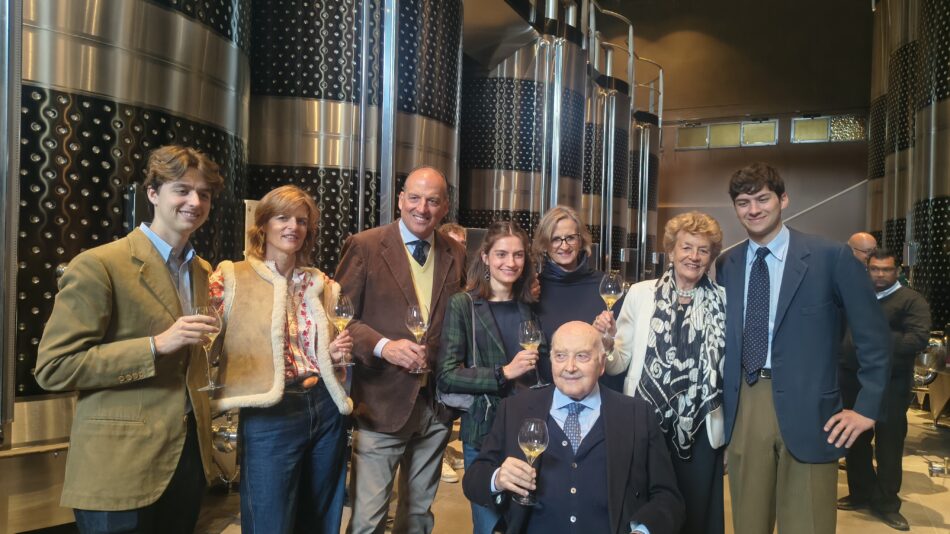
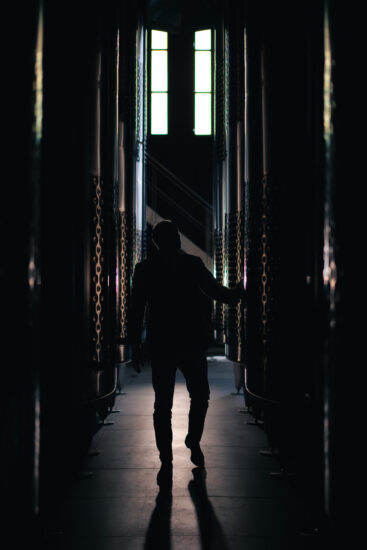
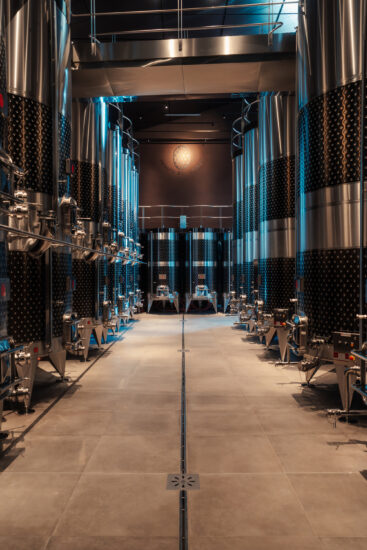
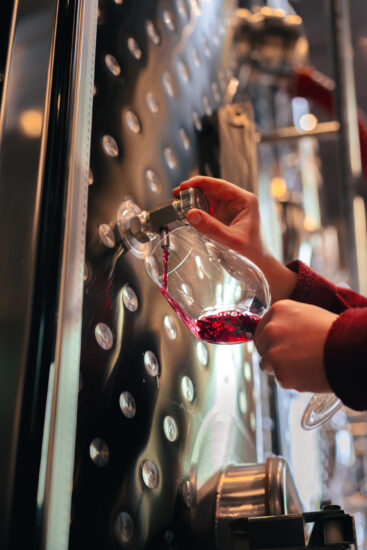
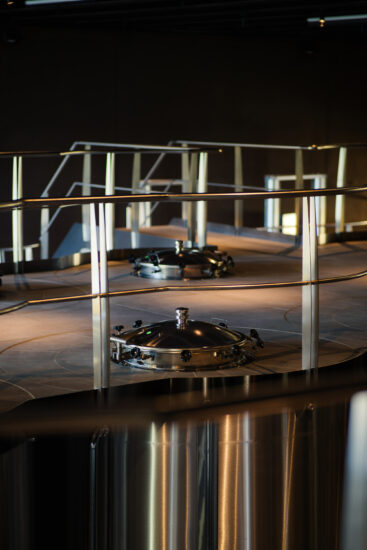
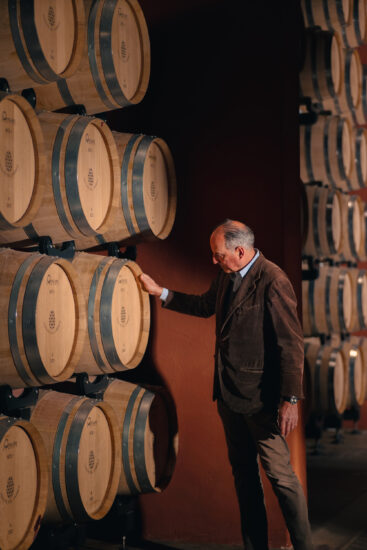
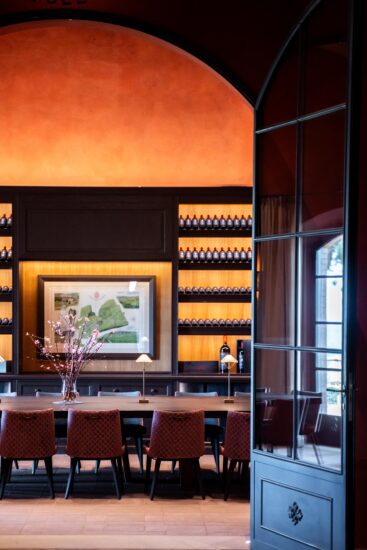
The new Cabreo Winery, designed by Florentine architect Carlo Ludovico Poccianti, is divided into three distinct and functional areas: the first is entirely dedicated to the winemaking process, with “gravity-fed” stainless steel tanks finished with bronze inserts that transform the steel installations into something visually pleasing. The second houses a barrel cellar, while the third and final space is the tasting room. The facility contains over 300 wooden vessels, including tonneaux, barriques, and aging casks, and is also equipped with steel tanks for both vinification and storage, with a total capacity of 4,500 hectoliters. In addition, there are stacked tanks that allow for the separation and preservation of different vineyard crus. Significant emphasis has been placed on technological innovation, as demonstrated by the introduction of an optical sorter that analyzes each individual grape berry to optimize harvesting. The project is further completed by an archive of historic vintages entirely dedicated to the Super Tuscans produced at the Cabreo estates. The decision to invest heavily in luxury hospitality also aims to attract a specific clientele that shows a clear tendency to escape the high tourist congestion of art cities, what is commonly referred to as “overtourism”. “After spending an entire day visiting the urban beauties of Florence, just 30 minutes from the estate, tourists feel the need to escape, to step away, and to relax in the countryside, surrounded by greenery and vineyards” - still underlined Giovanni Folonari, who talking about the new project, he added: “the new Cabreo winery represents the perfect synthesis of corporate identity, entrepreneurial vision, and future outlook. It is an immersive experience rooted in Tuscan tradition, yet deeply innovative, with cutting-edge technologies that optimize the winemaking process. The inauguration of the winery completes our wine tourism project at the Cabreo estates, where we have created the two charming relais, Borgo del Cabreo and Pietra del Cabreo, as well as a restaurant that reinterprets traditional cuisine. Thanks to this hospitality project, we have received the prestigious “Vinitaly Territory Ambassador” award, which celebrates the company commitment to the territory and our work in authentically promoting made in Italy”.
It is also a strong signal of confidence in the future, further explains Giovanni Folonari: “undertaking such an investment in an unstable macroeconomic context, marked by international tariffs, conflicts, and disinformation campaigns about the risks associated with alcohol consumption, represents a deliberate and carefully considered countertrend move”. Moreover, as Folonari points out, “for an entrepreneur with the necessary financial resources, times of crisis are actually the best possible time to invest. This is because there is less competition in the market, and suppliers and external contractors have fewer operational distractions, allowing them to focus more on details and deliver higher-quality work, often at a lower price due to the general contraction in orders. Our family is fortunate to have internal resources which allow us to support these efforts without relying exclusively on loans or bank debt, which would make the operation difficult to sustain. The main driving force remains pure passion and the firm determination to carry forward the family tradition”.
The official inauguration also featured an important institutional moment, during which the mayor of Greve in Chianti, Paolo Sottani, awarded honorary citizenship to the company founder, Ambrogio Folonari, in recognition of his historic and strategic contribution to enhancing the territory and to the renaissance of Tuscan wine. “I am moved by this honor. I was born in Brescia, which I left at the age of 19, and after a period in Florence, in 1967 I purchased this 110-hectare estate for 15 million lire, thinking about it today, it seems absurd. I have followed this entire evolution, becoming increasingly more rooted in this beautiful town of Greve in Chianti, where I have many friends and admirers. The beauty of this new winery serves the quality of the wine, our absolute and primary goal is quality”, declared, moved, Ambrogio Folonari.
Copyright © 2000/2026
Contatti: info@winenews.it
Seguici anche su Twitter: @WineNewsIt
Seguici anche su Facebook: @winenewsit
Questo articolo è tratto dall'archivio di WineNews - Tutti i diritti riservati - Copyright © 2000/2026