

Saturday 24th of October 2026 - Last Update: 14:37



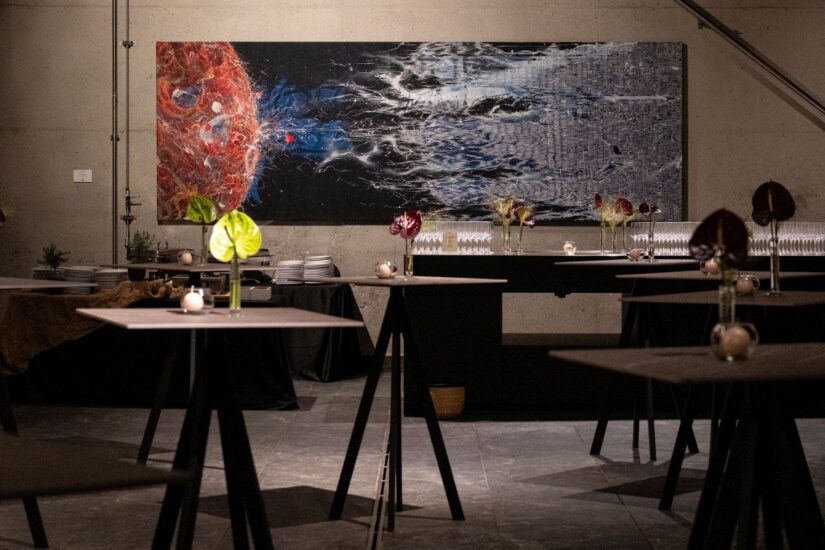
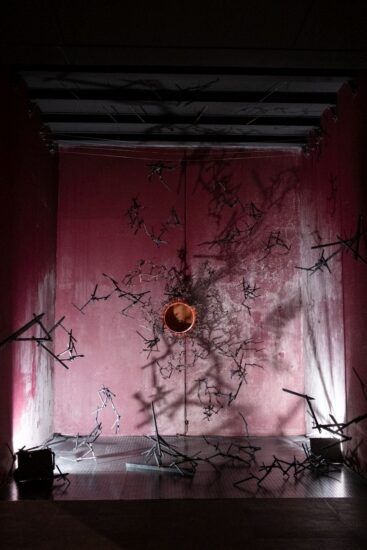
In a moment like the current one, when wine seeks and must assert its distinct identity as a cultural beverage, its association with other forms of creation - from art to music, from theater to poetry - has become increasingly compelling and widespread. Many wineries embarked on this path years ago, and more recently, it has happily expanded, involving in Italy - according to the mapping by MetodoContemporaneo, the first permanent Italian observatory on art and wine landscapes promoted by the University of Verona together with Bam! Strategie Culturali - over 60 wineries that have built and maintain a close liaison with the world of art (as also reported by WineNews in a video). Wine thus becomes a cultural medium, and art finds new spaces for expression, helping to redefine the role of wineries as active players in the contemporary landscape. Almost always, the wine & art liaison evolves into collecting, transforming the winery into a privileged meeting place between contemporary art and winemaking tradition. This is the case with “Art Ferment” by Farina Wines, one of the most historic wineries in the Valpolicella Classica area, with a production embracing major denominations such as Amarone, Recioto, Ripasso, Valpolicella Superiore, and Valpolicella Classico. The project, now in its fourth year, recently inaugurated exhibition “Transitum Frugum, l’antico patto” - “Transitum Frugum, the ancient pact” by artist Federico Ferrarini, represented by Kromya Art Gallery, perfectly “integrated” into the beautiful winery in Pedemonte di San Pietro in Cariano, which lends itself very well as an exhibition space. This marks a new phase involving the biannual selection of an artist and a gallery to create a site-specific exhibition within the winery spaces, along with the acquisition of one artwork by the featured artist for each edition.
“The goal of this artistic project, arisen in 2023 in collaboration with the Artericambi gallery - explained Elena Farina, who runs the company with her cousin Claudio, continuing a wine tradition that began over 100 years ago - is to celebrate the dialogue between wine and contemporary art, both expressions of human creativity and craftsmanship. Everything revolves around evolution, the spirit of continuous research that drives people to improve and transform matter. Even tasting wine is never a static experience: emotions and sensations evolve, influenced by mood, environment, and moment. The same happens in front of a work of art: moods change and everything is in constant evolution”.
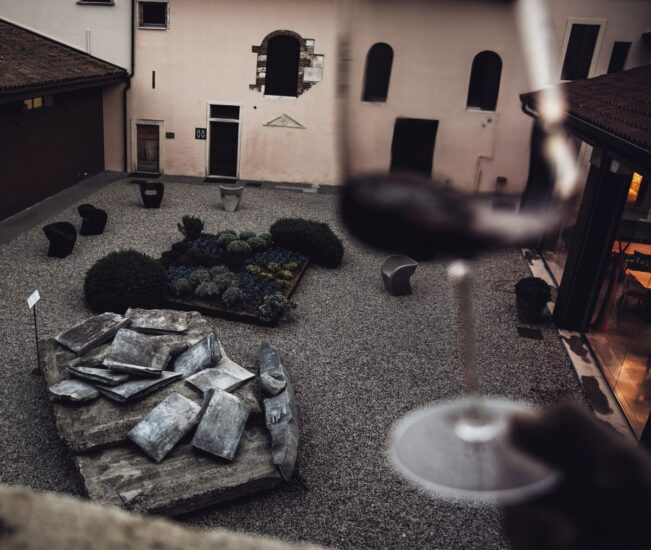
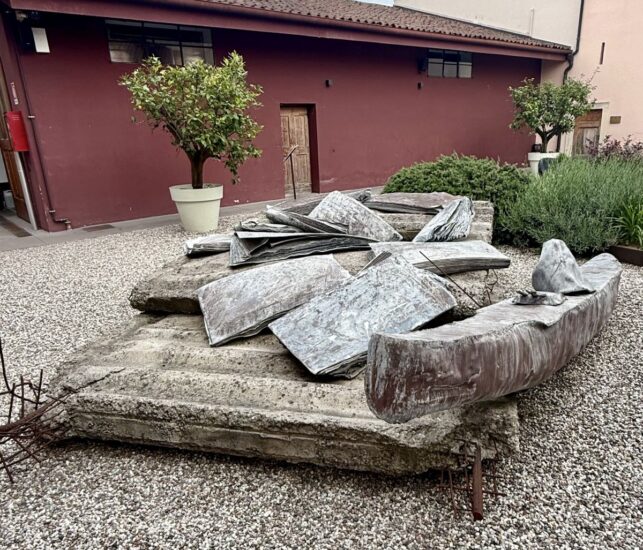
And, Francesco Pandian, founder of the Artericambi art gallery in Verona, played a key role not only in introducing the fourth generation of the Farina family to contemporary art but also in enabling the permanent display of artworks in the company Renaissance courtyard, such as a sculpture by Anselm Kiefer - among the most important artists of the 20th and 21st centuries - dedicated to Paul Celan, an influential German-language poet of the post-war period, a Romanian Jew and Holocaust survivor. “It was the Farina family contagious enthusiasm which led to our collaboration - Francesco Pandian told WineNews - Elena and Claudio desire to support artists, in a world often cynical and reluctant to value them, motivated a shift in the “Art Ferment” project: from simply exhibiting works in the winery to acquiring some of them to build a private collection. Art and wine share the ability to construct narratives and the importance of time in reaching full expression and being truly appreciated”.
“Art Ferment” debuted in 2023 with the installation of Anselm Kiefer work which, like other sculptures from the “Lead Books” series, is monumental: the lead books symbolize inaccessible knowledge, the weight of history, and the loss associated with the Holocaust. At the same debut, works by Argentine artist and physicist Mariano Sardòn were also placed in the courtyard. Sardòn explores the intersection between art, science, neuroscience, and technology, creating interactive installations and data visualizations that investigate perception and cognitive processes, exhibiting globally and collaborating with scientists. In 2024, the focus shifted to Fabrizio Gazzarri, a painter known for his large, vividly colored abstract canvases, a professor and longtime collaborator of Emilio Vedova, and director of the Archive and Collection of the Emilio and Annabianca Vedova Foundation in Venice from 2006 until his passing in 2023. In 2025, the Valpolicella winery hosted Roberto Bigano, an eclectic photographer whose work ranges from still life to landscape photography, characterized by exceptional technical skill, meticulous attention to detail, and a deep understanding of light and composition.
“It is not a given that a company so deeply rooted in its territory decides to associate its name with contemporary art - underlined Riccardo Steccanella, director of Kromya Art Gallery Verona - also because this is a project that will not make the family richer but will add significant cultural value to its daily work”. This point is particularly relevant for all companies that combine art with wine. Only in the long term, a return can be expected in terms of increased winery visits, and reputation growth is necessarily slow, given the limited overlap between wine lovers and contemporary art audiences. Time and communication are needed to expand the perception of winery activities “beyond” wine. These considerations make the commitment of producers who invest in art even more commendable.
“Once initial doubts are overcome, enthusiasm takes over when embarking on this path - said Claudio Farina - and it is wonderful to open up to other worlds where we find affinities. About 11,000 visitors pass through here each year, and not all are interested in art: our goal is to keep their attention alive and to increase interest in the contemporary works we display in this unique setting”.
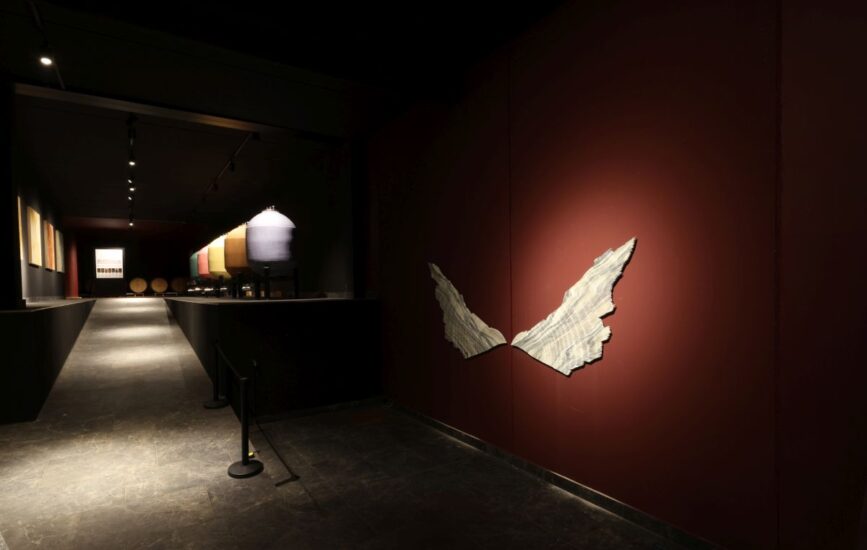
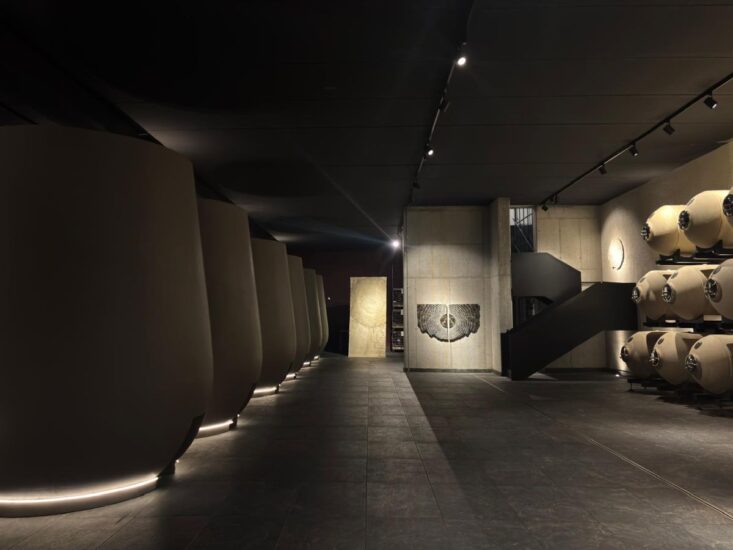
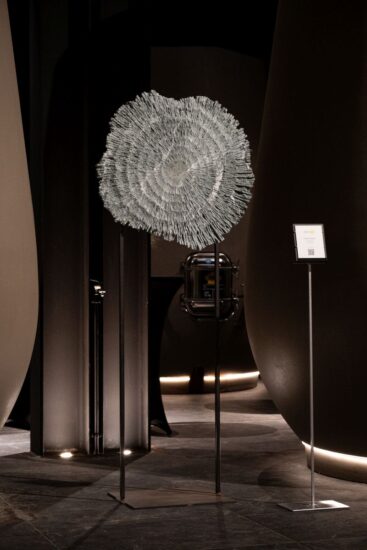
Federico Ferrarini exhibition will accompany daily winery visits until September 15th, 2026, enriching tours and tastings dedicated to enthusiasts, wine lovers, and wine tourists. Alongside this, the “Art Ferment Wine Tour” combines a visit to the winery and exhibition with the artist, followed by a tasting. The selection of twenty works - between painting and sculpture, some of them previously unseen - has been conceived in relation to the monumental scale of the winery spaces. They are installed between the Wine Boutique and the barrel cellar, up to the evocative “Salone delle botti” - “Hall of Barrels” among the concrete Tulipe vats and the colorful ceramic Clayver vessels used for wine aging, creating a unique multisensory itinerary for discovering the winery.
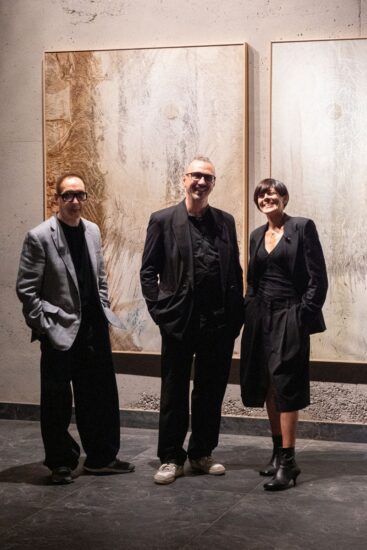
“The title of the exhibition evokes the transition and transformation of matter - explained curator Silvia Congari - Federico research is deeply alchemical and moves between marble sculptures, minerals, and installations which explore the relationship between time, space, and matter. The sculptures originate from marbles of various origins, including local ones, and embody an idea of elevation, like bridges between heaven and earth. The material is carved, engraved, transformed, and in this transformation we rediscover harmony and poetic tension”.
Finally, Federico Ferrarini shared his vision, describing the exhibition as the result of years of collaboration and creative exchange with the Farina family. “Many of the works arose thanks to the stimuli I received here - underlined the artist - contamination is at the heart of my research: combining different materials, ideas, and suggestions to create new perspectives and pose new questions. Each work holds an “emotional temperature”, the very pleasure of sculpting, engraving, painting. This exhibition brings with it new works, many created specifically for this space. I hope they can convey the same vibrations that I felt while creating them”.
Copyright © 2000/2026
Contatti: info@winenews.it
Seguici anche su Twitter: @WineNewsIt
Seguici anche su Facebook: @winenewsit
Questo articolo è tratto dall'archivio di WineNews - Tutti i diritti riservati - Copyright © 2000/2026