


Sunday 20th of September 2026 - Last Update: 21:50





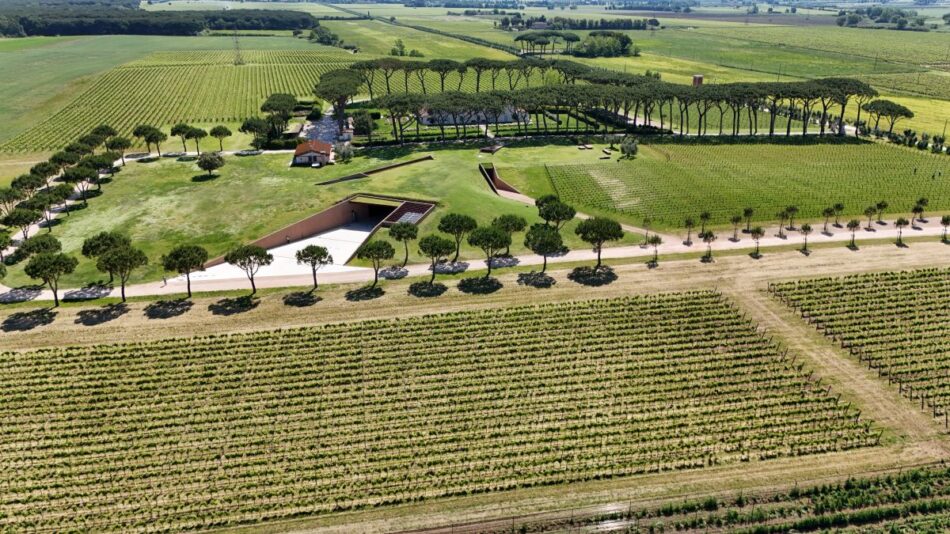
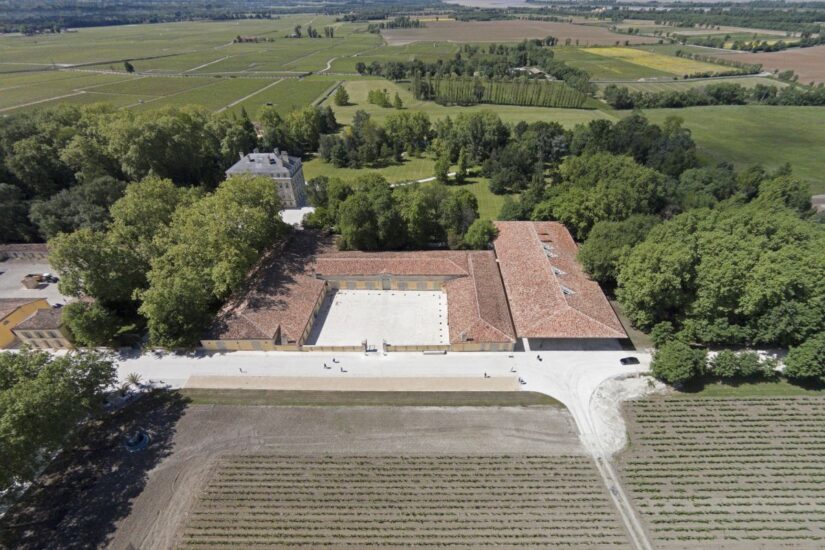
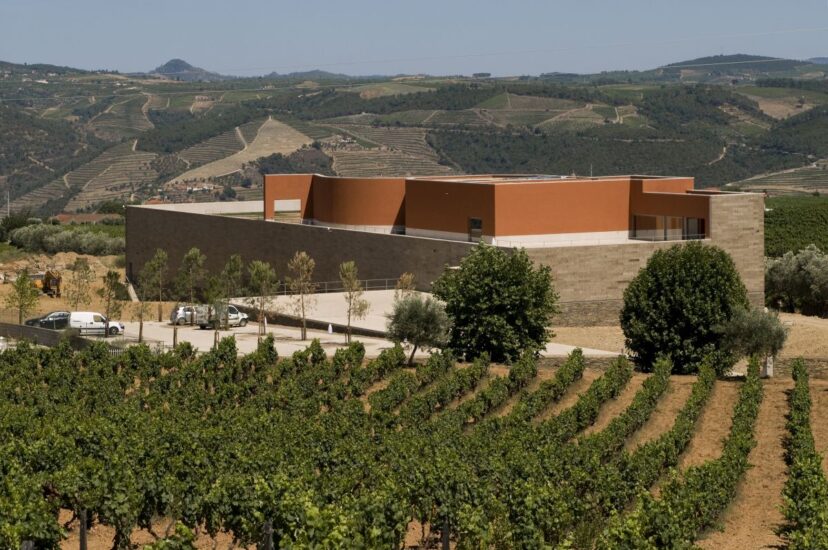
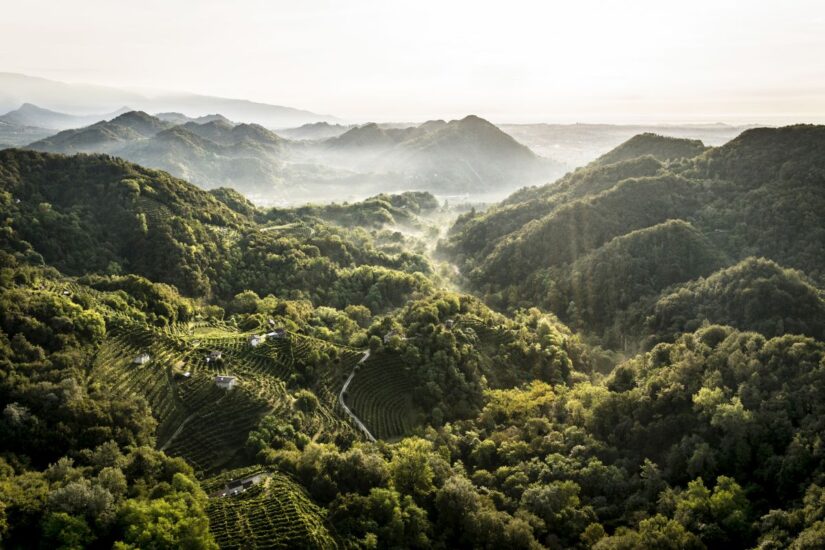
A journey which intertwines the historical evolution of the landscape with voices which narrate cultivation experiences, including new practices that translate into improved wine quality, focusing attention on the contribution that the figure of the architect can bring to this sector, not only through their ability to work on spaces, both those of production and those dedicated to welcoming visitors, but also by offering producers a different way of communicating themselves through a structure capable of embodying their values. This is the focus of the exhibition “Culture e paesaggi del vino. Il senso della terra e la voce dell’architettura” - “Cultures and landscapes of wine. The sense of land and the voice of architecture” at Ca’ Scarpa in Treviso (May 23rd - August 2nd), curated by J.K. Mauro Pierconti and organized by the Benetton Studi Ricerche Foundation in collaboration with the Order of Architects, Planners, Landscape Architects and Conservators of the Province of Treviso. The aim is to encourage visitors to adopt a multifaceted approach to the world of wine and to address the question “what can architecture bring to the sector” through case studies of territories such as the Conegliano Valdobbiadene Prosecco Superiore DOCG Hills, and through renowned wineries designed by internationally acclaimed architects - selected by the historic magazine “Casabella” (with which we previously presented pioneering examples in Italy in a video) - ranging from Guado al Tasso by Marchesi Antinori, designed by Fiorenzo Valbonesi asv3 in Bolgheri (2023), to Château Margaux by Foster + Partners in Bordeaux (2015); from Dominus Winery by Herzog & de Meuron in Napa Valley (1998), to Bodega Propiedad de Arínzano by Rafael Moneo in Navarra (2002); from Gantenbein Vineyard by Bearth & Deplazes in Switzerland (2006), to Quinta do Portal by Álvaro Siza in the Douro (2008), and Vik Winery by Smiljan Radić in Chile (2014), named The World’s Best Vineyard 2025 (awarded in the host region of Margaret River, Western Australia, where WineNews was also present, organized by Tourism Western Australia, ed).
The exhibition is accompanied by a rich calendar of related public events. The first event anticipates the opening on May 22nd, involving experts from various backgrounds and professions at Palazzo Bomben in Treviso in the roundtable “La rivalsa del vino” - “The comeback of wine”, which aims not only to capture the current state of the wine sector but also to identify themes and possible future scenarios (with contributions by Attilio Scienza, one of the leading experts in viticulture and professor emeritus at the University of Milan; Danilo Gasparini, agricultural and food historian at the University of Padua - whom we interviewed about the concept of “terroir” - Umberto Marchiori, PhD agronomist and enologist; Diego Tomasi, director of the Conegliano Valdobbiadene Prosecco Superiore DOCG Consortium; and Fabio Piccoli, director of “Wine Meridian”).
Subsequent meetings will instead address vine cultivation, landscape, architecture, sustainability, territorial protection, and wine tourism, each concluding with a small tasting, “so that words don’t remain merely words”.
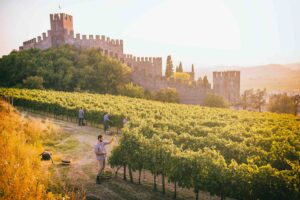
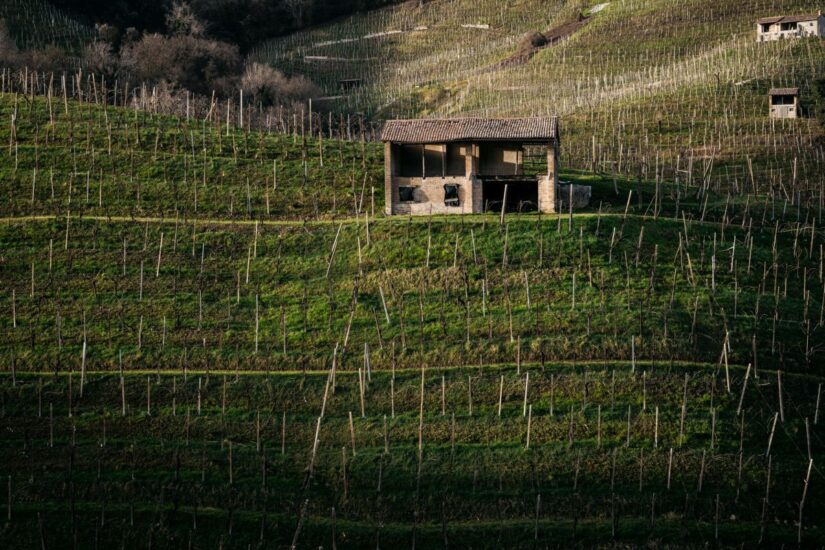
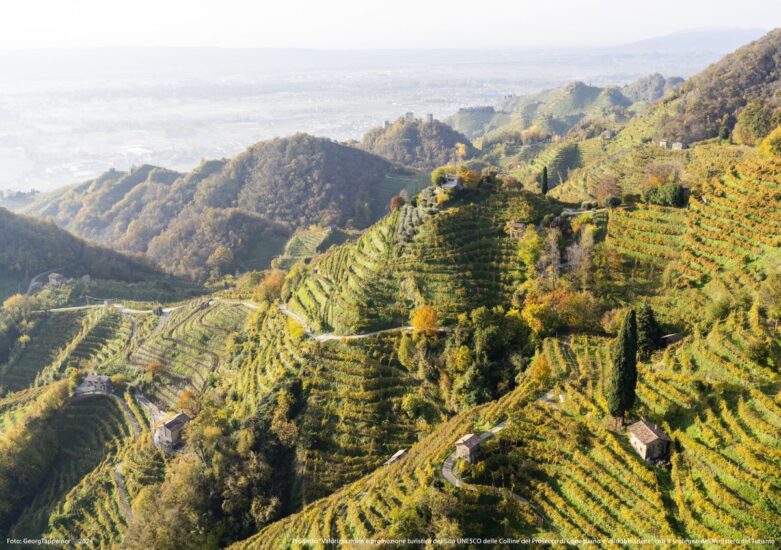
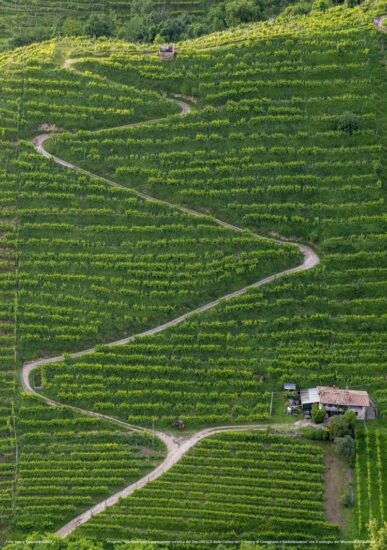
The exhibition is structured into a historical-geographical section, curated by Massimo Rossi, geographer at the Benetton Foundation, dedicated to reconstructing the transformations of the landscape over the past 200 years in the area of the Conegliano Valdobbiadene Prosecco Superiore DOCG Hills, now a Unesco World Heritage Site, and specifically in the localities of San Pietro di Barbozza and Colbertaldo. Through the analysis of maps from the Napoleonic Cadastre of 1812, reworked for the exhibition, the transformation of the territory will be highlighted—from centuries-old mixed farming gradually shifting toward monoculture viticulture starting in the mid-20th century. Thanks to a video reconstruction comparing 19th-century maps with aerial photographs from 2025, it will be possible to observe changes in land use over the past two centuries, during which social relations, economic systems, and cultivation techniques have deeply evolved.
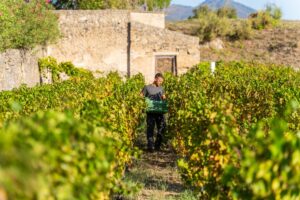
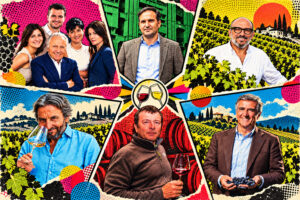
The following section, curated by J.K. Mauro Pierconti, gives voice to those who study and work in the area producing Prosecco Superiore DOCG: enologists, agronomists, producers, historians, and scientists. Multiple voices, many experiences; knowledge and practices rooted in the land yet projected toward the future. Indeed, new developments in viticulture are being grafted onto tradition, addressing contemporary and future issues such as biodiversity, climate change, water management, and the replacement of chemical fertilizers with approaches which enhance soil richness through bio-sustainable and natural interventions. In some cases, these practices revive ancient techniques such as green manuring, the autumn sowing of specific plants that enrich the soil and provide nourishment for insects and microfauna. Today, the imperative is that the soil be alive, and the techniques employed allow the vine to grow strong and healthy in a soil that provides all necessary nutrients without chemical fertilizers. The photographs by Arcangelo Piai and Georg Tappeiner accompany the texts: the places take shape and reveal the precise and characteristic forms recognized by Unesco in 2019 as a World Heritage Site.
Alongside the figure of the farmer, and all those who, over time, have made the wine sector a success story of Italian excellence and a symbol of Italian taste, the figure of the architect has recently emerged. What can architecture contribute to the world of wine? This question is the focus of the third section, curated by architect Filippo Bricolo of Bricolo / Falsarella, a studio known for designing numerous wineries, especially in the Lake Garda area. Bricolo responds by presenting six “treatises” for visitors, rich in reflections, drawings, photographs, and thoughts, along with many hand-drawn works created specifically for the exhibition. These elements shape part of the exhibition space, depicting the moraine landscape on the Venetian side of Lake Garda, which has given rise to several outstanding wines. The noble form of the architectural treatise, present since the time of Vitruvius and widely used during the Renaissance, here serves to describe and collect practical reflections on key aspects of the winery-design relationship. For example, the potential use of the brolo, the traditional open courtyard, conceived as a place where the vineyard landscape and visitors meet, an opportunity created by working with open spaces and natural materials. Another theme is light, or rather the dimness within the barrel cellar: the transition from external light to the subdued light inside the winery, as well as from warmth to coolness, heightens sensory perception and awareness of environmental changes. The architect must be able to harmonize these characteristics with spaces that interact with them, enabling visitors to perceive their continuous transformation through direct bodily experience. This is how the experience of visiting a winery is formed, not merely as a visual encounter with barrels and bottles, but as a conscious perception of a space dedicated to wine and its environment.
The final section of the exhibition focuses on this very theme, the ability of architecture to create real structures that also express the artistic sensitivity of designers, presenting 7 “rooted architectures”, curated by Francesca Chiorino and Roberto Bosi, editors of the international architecture magazine “Casabella” and authors of various publications and exhibitions on the subject. They present seven wineries built around the world over the past 25 years, thus spanning an entire generation and completing the exhibition progressive expansion of perspective across the floors of Ca’ Scarpa. The wineries have been selected according to three fundamental themes: landscape, production and winery, and hospitality. These themes are interpreted differently by the various architects, whose works are presented through photographs - by photographers such as Architekturzentrum Wien/Margherita Spiluttini, Roland Halbe, Ralph Feiner, Fernando Guerra/FG+SG, Cristóbal Palma/Estudio Palma, Nigel Young/Foster + Partners, and Pietro Savorelli - along with drawings, sketches, and short texts displayed both inside and outside a specially designed exhibition structure.
A dual exhibition design interweaves sections and themes: that of Bricolo / Falsarella for the section reflecting its architectural production, and that of the remaining exhibition path, conceived by Kopio Office + Bovo, a group of young architects selected through a dedicated competition organized by the Order of Architects of Treviso and the Benetton Foundation, reserved for architects under 35 from the province of Treviso. Kopio Office + Bovo merit also lies in their ability to integrate the two different exhibition designs within a single display, creating a network of connections rooted in materials actually used in vineyards. Through their forms and physical consistency, these materials contribute to an additional layer of landscape interpretation, actively interacting with the exhibited works. The graphic design, created by the studio Iknoki, interprets the various stratifications present in the exhibition by developing a typographic “landscape” which is never static, but is constantly evolving.
Copyright © 2000/2026
Contatti: info@winenews.it
Seguici anche su Twitter: @WineNewsIt
Seguici anche su Facebook: @winenewsit
Questo articolo è tratto dall'archivio di WineNews - Tutti i diritti riservati - Copyright © 2000/2026