


Wednesday 11th of March 2026 - Last Update: 17:12




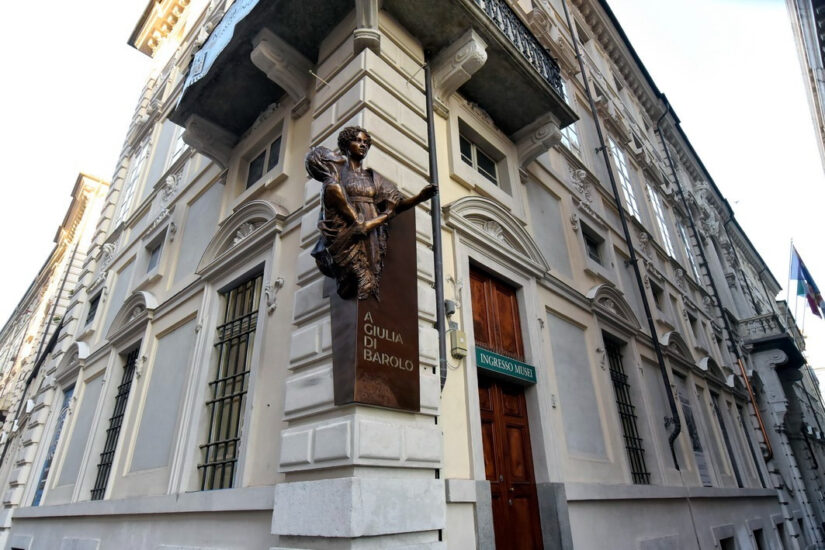
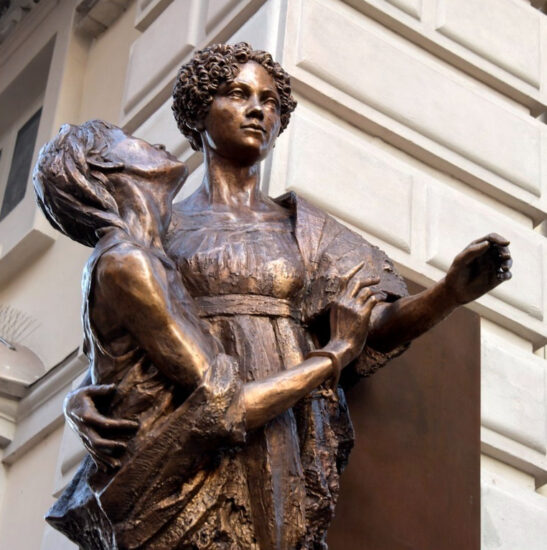
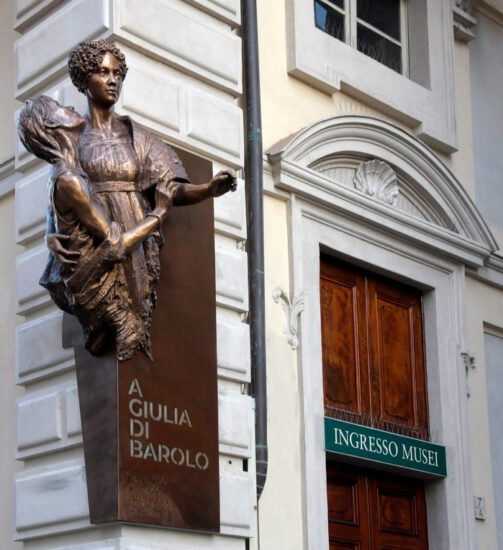
“The world of the defeated has won: it was the Langa of Resistance and peasant toil, today it is the Langa of Barolo”: these are the words by Slow Food founder Carlin Petrini, a true native of the Langhe, perfectly capture the sense of reverence felt toward this region, an emblematic territory of Piedmont and its rural yet noble soul, immortalized in some of the finest pages of Italian literature by authors like Cesare Pavese and Beppe Fenoglio (and which accompanied WineNews on our latest journey through the Langhe). It is a soul which inspires doing things properly, taking the quality of what is produced in these Unesco World Heritage hills very seriously, starting with wine, the “king” of Italian wines, Barolo, arisen in the mid-19th century thanks to the intuition and methods imported from France by Juliette Colbert Falletti, the last Marquise of Barolo, in the historic cellars of the Falletti Castle (where figures of the Italian Risorgimento, such as her friend Silvio Pellico, who wrote part of “My Prisons” here). But the noble and enterprising Giulia, the “Lady of Barolo”, divided her life with Turin, where, from the 17th-century Barolo Palace, she became the first in Italy to raise the issue of women prisons, even as the country was moving toward unification. Her commitment is commemorated by a sculpture of the Marquise by artist Garbolino Rù, the first monument dedicated to a woman in Turin history (women to whom, as we showed in a video from the Langhe, the future of Italy wine regions is, for the most part, also closely tied), commissioned by Opera Barolo, sponsored by the City of Turin, and supported by the Abbona family, custodians of history in the Marchesi di Barolo cellars. The sculpture was unveiled just days ago on the façade of the Palace, now home to the Barolo Social District, which hosts various volunteer associations offering daily assistance and essential goods to individuals and families, many of whom are poor, vulnerable, and on the margins of society.
Upon her death in 1864, the Marquise of Barolo, a woman of deep faith and philanthropic spirit, declared venerable by the Church, being widowed and without heirs, established the Moral Entity Opera Pia Barolo, donating all her assets to perpetuate her charitable initiatives. Today, Opera Barolo continues her legacy. So much so that the Archbishop of Turin, Cardinal Roberto Repole, has proposed nominating for Unesco World Heritage status “Chilometro della Carità” - the “Kilometer of Charity”, the stretch of Italy first capital which includes the charitable works of Don Bosco Valdocco, Sermig, Cottolengo, Consolata, and the Barolo Social District.
Meanwhile, a unique opportunity to retrace the fascinating life of the Marquise of Barolo, lady-in-waiting to Empress Joséphine Beauharnais, born in 1786 in Maulévrier, Valdea, second daughter of the Counts Colbert and descendant of Jean-Baptiste Colbert, Minister of Finance to the Sun King Louis XIV, who met Carlo Tancredi Falletti di Barolo, of one of Piedmont most prominent aristocratic families, at Napoleon Bonaparte lavish coronation in Paris - as narrated in novel “Sangue delle Langhe. La saga dei Barolo” - “Blood of the Langhe. The Barolo Saga” by Marina Marazza.(Solferino Editions, 2025) - is the event “Il Barolo a Palazzo Barolo” - “Barolo at Barolo Palace, now in its edition No. 5, promoted by the Strada del Barolo e Grandi Vini di Langa, which will open the doors of the historic Turin residence of the last Marchesi di Barolo to the public on February 7th, where producers of this great Italian red wine will personally present their wines in an exclusive tasting of different crus and vintages.
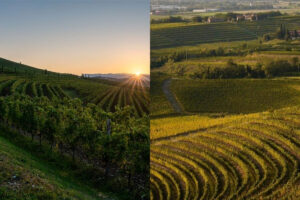
Today, Barolo strength lies in its diversity within unity: spread across 11 municipalities, each with its own crus, over a production area of just over 2,200 hectares, yielding more than 13 million bottles. In 2024, Barolo saw growth of +3.8% (awaiting 2025 data at “Grandi Langhe e Piemonte del Vino” 2026, the edition No. 10 of the showcase organized by the Consortia of Barolo, Barbaresco, Roero, and Piemonte Land of Wine, in Turin on January 26th and 27th at Ogr - Officine Grandi Riparazioni). In just over half a century, marked by the milestone of DOCG recognition in 1980, the wines arisen in the Langhe crus, whose vineyards command the highest prices in Italy, rank among the most traded labels on Liv-ex, the most auctioned off lots at major international auctions, and the most sought-after Riserve for collectors worldwide with stellar valuations thanks to vintages of extraordinary longevity and remarkable aging potential, an insight first grasped by the Marquise of Barolo.
Copyright © 2000/2026
Contatti: info@winenews.it
Seguici anche su Twitter: @WineNewsIt
Seguici anche su Facebook: @winenewsit
Questo articolo è tratto dall'archivio di WineNews - Tutti i diritti riservati - Copyright © 2000/2026